
|
|
|
|

corregidor the treasure island of wwii Edward michaud © 1999
|
|
AUTHOR'S DISCLAIMER: The history of Corregidor has many facets, and one of them has been its use as the transit point for the evacuation of the Philippine Treasury and U.S. funds in the face of the invading Japanese Army. Ever since, when the lamps have been lit and the beer chilled, there have been tales of magnificent treasures that could not be evacuated in time and had to be buried, or dumped - and never recovered. Some are true. Most are not. Stories always get better as the memories get worse. As a collector of rumors I have run to ground many of these tall tales over the years. The "real" treasures have long ago been located and disposed of. As a professional salvage diver I have visited the wrecks off Corregidor's coast and have recovered silver pesos sufficient to pay only my trip expenses. On Corregidor itself, I have found the real treasure of the island - a place of quiet and violent history that calls me back to enjoy its charm. The following article was originally penned in 1989, one year after I had visited the Rock. It was accurate then, but it has remained unpublished until this time, and the opportunities of which it spoke are no longer available to us in 1999. Times have changed, and what was once there is no longer - except echoes of Corregidor's history. After a little editing it was decided to submit this work to "Corregidor: Then and Now" for the purpose of adding a bit of ‘accuracy’ to an aspect of the island’s history that, for the most part, has been plagued by liars, thieves and grafters. Perhaps the following accounts can help fill in some real history and at the same time provide a bit of informed story telling. |
|
| © 1999 Edward Michaud | The
contents of this page are copyright because the author and publishers want to
ensure that no part of this page shall be reproduced except with permission and
with the full text of an approved disclaimer. Many a historic site is despoiled due to
comments or extracts which are printed out of context. Whilst we desire to ensure
historical accuracy, we make no apologies for changing certain pertinent informations
contained herein. Don't bother asking, we love Corregidor too much to tell you.
|
 Corregidor with Inset Showing Manila Bay
AERIAL VIEW OF CORREGIDOR ISLAND
USS Trout arrives at Pearl Harbor February 1942
South Mine Dock 1988
Recoveries from South Mine Dock 1988 |
Every war that has ever been waged by mankind has always spurred on the stories and legends of lost or stolen fortunes. In fact, there isn’t a country or territory on the face of this earth that doesn’t have at least one legend concerning treasure as a result of military conflict. World War Two was certainly no exception. (1) At the entrance to Manila Bay in the Philippine Islands and bordering the South China Sea lies a tiny island only nine square kilometers in size; a rocky outcropping that was to play a significant role in the war with Japan between the years 1942 – 1945. Corregidor Island, often remembered with mixed feelings by most World War Two veterans who were there during those years, is to most historians and followers of the Pacific war the Gibraltar of the Far East. The destiny of this lonely outpost was to drastically change the one-time paradise into a bomb-cratered apocalypse. On December 8th, 1941, the Japanese Imperial Army and Navy brought World War Two to the Philippine Islands, only a few hours after the now famous attack on the United States Naval base at Pearl Harbor in the Hawaiian Islands. At this time the American general Douglas MacArthur was in command of some 170,000 combined American and Philippine troops scattered in various locations throughout the Philippine islands. Over the next three weeks these forces were to lose ground to overwhelming Japanese forces on a daily basis. On December 23rd Manila, the Philippine Capitol, was declared an open city by General MacArthur in order to prevent further civilian casualties and unwarranted property destruction. Subsequently, the general instructed his men to destroy all of the ammunition, equipment, and supplies which could not be removed to the Bataan Peninsula or the fortified islands in Manila Bay. All military personnel and dependents, along with a great many Philippine civilians, evacuated the city for Bataan. A number of military personnel, along with their equipment, were also transported to Corregidor; commonly referred to in those times as "The Rock". One of general MacArthur’s aides, Col. Willoughby of the US Army Intelligence Bureau G-2, was to arrange for the transportation of the Philippine National Treasury and the contents of the Philippine Central Bank to the relative safety of Corregidor Island. A Colonel Vance of the US Army Finance Office was to assist Willoughby and his Treasury staff in liason duties between offices. This vast horde of securities, consisting of Gold & Silver specie and bullion, along with bearer bonds, Treasury certificates, precious stones, as well as privately held gold items and momentos, did indeed make it to the island, but with a great many excertions and hardships on the part of many individuals. (2) Willoughby and his combined American / Philippine Treasury staff had been collecting and accepting securities for safe keeping from around the Province since the opening of hostilities. Keeping track of the Government property and personal valuables was indeed a monumental task. The Government securities alone consisted of over 51 tons of gold bullion, 32 tons of silver bullion, 140 tons of silver pesos & centavos, and millions of paper Treasury notes, bonds and corporate stocks. The civilian property, otherwise known as ‘private holdings’, consisted of approximately two tons of gold bullion in various sized ingots, along with an unknown amount of precious stones and foreign currency. When orders were received to evacuate the city the many paper inventories and records were still incomplete, with many private citizens not even being given receipts for their valuables. (3) At one point just prior to the city’s evacuation, the old part of Manila within the old Fort Santiago area had been severely bombed during a Japanese air raid. The storage rooms of the rather large holdings of silver pesos was hit, scattering completely the crated and bagged coins throughout the room. Clerks were inundated and actually buried with silver coins for a short time. However, it didn’t take long for the Treasury workers to re-pack the coins for shipment. The Treasury staff appropriated whatever vessels they could lay their hands on for the transportation of the securities to Corregidor, which consisted mostly of out-dated US Navy harbor tugs and small civilian boats. The ‘Don Esteban’ was one such vessel, along with the Presidential yacht ‘Cassiano’, which received a rather substantial shipment of silver ingots and pesos. The government gold bars loaded onto these vessels alone was worth a cool $ 41 million dollars US, (at $ 32.00 US per oz.). Overseeing the last of the night time loading of the large metal boxes of gold bullion was Admiral Hart of the US Navy. He had been there to see the MacArthur family off to Corregidor and had hung around long enough to ensure the speedy departure of the valuable shipment. (4) In general, ingots, coins, and other precious metals were stuffed into foot-lockers, metal cabinets, and any other container which could take the weight; then thrown down unceremoniously onto the decks of the small fleet. The loading process took four days to complete and was done only at night due to the incessant bombing raids received in the city during the daylight hours. With the loading completed, the little flotilla sailed down the Manila Bay headed for Corregidor Island on the night of December 27th, 1941. Upon arrival at the island’s North Dock the small vessels had a difficult time maneuvering for pier space among the larger refugee and supply ships. As a result, each boat would pull up, throw its cargo containers onto the dock, and then vacate the space for the next boat in line to repeat the procedure. In this manner it took two nights and one day to deliver the valuables from the North Dock to the two designated "vault" areas on Corregidor Island. (5) North Dock was piled a good ten feet high with ammunition boxes, gas cans, food & medical supplies – and the Philippine National Treasury securities. The US Army personnel were cooperative in assisting to move the many containers of wealth but they naturally considered gold & silver less important than weapons and ammunition. At that time Corregidor was not under direct assault, but the defenders knew that it was only a matter of time and getting caught with a pier full of open containers of fuel, food and treasure would not have been a welcome situation. Many a Marine and Army private viewed the precious crates with incredulity and would have traded it all to be back home out of harms way. In a relatively short time, however, the 140 tons of silver pesos, packed inside canvas bags with two bags to a crate, were transported safely from the dock to the US Navy Quartermaster sections of the large underground complex known as Malinta Tunnel. The private holdings of gold, consisting of two tons in various sized ingots and packed loosely in a motley mix of containers, was sent on for storage inside what was known as the "Stockade", located at the Middleside section of the island. The ‘Stockade’ was formerly the island’s brig consisting of two small rooms of concrete construction, all of which was above ground. The building was located just below one of Corregidor’s largest batteries of twelve-inch mortars and was subsequently referred to as the "vault" due to its contents from this day forward. The remaining 51 tons of government gold bullion, consisting of 2,542 ingots of 42lbs each, (20 kilos), along with the balance of the paper currency & securities, were stowed in several of the interior laterals of the Navy Tunnel on the South side of the Malinta tunnel complex. (6) While the battle raged on for the Bataan Peninsula across the Bay, Col. Willoughby and his staff tried their best to complete the volume of securities inventories inside the Malinta Tunnels and at the "vault" down at the Stockade on middleside. Occasional bombing raids on the island by the Japanese didn’t make the job any easier and by February, 1942 Corregidor was undergoing a constant bombing during the daylight hours. Although the gold, silver and stocks were packaged and bundled after the inventories, the paper currencies and notes had their serial numbers recorded and then the bills them selves were destroyed with the intention of re-issuing them at a later date in the United States. Three different metal cans were used as incinerators for the burning of the bills just outside the western entrance of the Malinta Tunnel system at bottomside. These notes were sometimes burned a trunk-full at a time. (7) Well over 15 million silver peso and centavo coins were catalogued, tagged, and bagged within the Navy Tunnels. This complex assemblage of passageways also housed the island’s reserve food supply within an area known as the Quartermaster’s storage section. Thousands of cans of pre-cooked ham were stored in one of the laterals of the later. The island defenders considered these food stocks even more valuable than the securities and as a result, a series of heavy iron and wooden doors were installed at each entrance to the interior lateral passageways; not for the security of the valuables, but to ensure the longevity of the canned ham! (8) Back at Pearl Harbor the confused military staff were trying to clean up their mess after the Japanese air attacks of December 7th, as well as schedule what relief they could for the besieged troops on Bataan and Corregidor. By this time the Imperial Japanese Navy possessed complete control over the South China Sea and sending surface ships to re-supply Corregidor was out of the question. There was only one alternative – to attempt a supply run by submarine. Since the United States submarine fleet had their hands full trying to stem the tide of Japanese conquest in the South Pacific, only four subs were available to do the job. (9) On February 1st and 2nd, 1942, the US subs "Swordfish", "Seadragon", and "Seawolf" surfaced inside Corregidor’s San Jose Bay on the south side of the island. These vessels were re-directed to Corregidor during their regular war-time patrols for the express purpose of evacuating certain key individuals. Since these submarines didn’t actually tie-up to the dock the opportunity to remove at least a portion of the heavier securities was not available. When the ‘Tambor’ class American submarine USS Trout arrived in the area on the night of February 3rd she was met just outside San Jose Bay by the US Navy tug USS Pigeon and escorted through the mine field to the island’s South Mine Dock. After tying up to the small dock, the submarine off-loaded 3,517 three-inch high altitude anti-aircraft shells and over 500 cases of food and medical supplies. The Trout was the first vessel sent express from the US Naval Base at Pearl Harbor for the specific purpose of supplying the island and her skipper, Cdr. Fenno, had been ordered to proceed on his regular war-time patrol after the night time transfer of the supplies. (10) After the unloading was completed Fenno requested some type of ballast from the Corregidor dock party so his sub would be able to dive quickly upon leaving the area. During a brief conference with the officer in charge at the dock it was decided that Fenno and one of his other officers were to hold a quick meeting with Admiral Rockwell and General MacArthur about this matter. Apparently, the command staff on the island had an idea about that required ballast. It was mutually agreed that this would be the perfect opportunity to ship out at least part of the Philippine National Securities from the island. Col. Willoughby and his Treasury staff were awakened and arrived down at the South Mine Dock shortly thereafter. (11) At this time a curious historical note is in order. When Cdr. Frank W. Fenno met MacArthur and Rockwell at the ‘Queen’s" section of the Navy Tunnel the topic of conversation eventually changed to the earlier attack on Pearl Harbor. Evidently, the Japanese had been dropping propaganda leaflets on the island bragging about how they had destroyed the United States Navy’s fleet during their raids. Fenno confirmed to General MacArthur that at least the part about the overwhelming devastation incurred on the Fleet’s major ships was true. According to Lt. Frederick Gunn, who was the Trout’s engineering officer and who was there with Fenno, when MacArthur heard this his mouth dropped open and stated: "You mean those leaflets they’ve been dropping on us are true?" Whatever the history books may say about when MacArthur realized the full extent of the Pearl Harbor attack, at least we can put a date on "when" he knew exactly "what" happened – February 3rd, 1942. (12) Two open-ended trucks were quickly sent up to the "vault" at the Stockade on Middleside to bring down to the South Dock the two tons worth of ‘Private Gold’ ingots. A combined loading party of Treasury officials and Philippine Scouts immediately commenced the loading of the gold bars onto the Trout, with the Trout’s crew receiving the gold on their decks by literally catching the bars as they were thrown over to them from the dock. At the center of the submarine a gangplank had been set up to ease the passing of the heavy material, but since time was of the essence, the crew started catching the ingots at the forward part of the vessel as well as at the after-battery hatch. The bullion was eventually stowed in the Trout’s forward battery, after battery, and in the midship armory compartment. (13) When the gold was completely loaded, the trucks proceeded to the Quartermaster Area of the Navy Tunnel and loaded up a small portion of the Silver pesos. When this arrived at the dock it too was added to the already valuable ballast on board the Trout. A total of two tons of gold ingots and sixteen tons of silver pesos in canvas bags were loaded onto the vessel, along with four spare torpedoes sent down from the Navy tunnels. Daylight was coming quickly and still there were bags of currency, stocks, bonds, certificates, and Government dispatches to be placed aboard. Since there was no more time to load these items, Fenno made arrangements with Col. Willoughby to rendezvous at a designated point inside the San Jose Bay the following night in order to complete the transfer. Capt. Fenno was in a hurry to avoid being caught at the pier by Japanese planes during the daylight hours. He wanted to proceed out into the bay and "dunk" for the day to wait out the daylight, then surface after sundown to complete his task. The first portion of the transfer being completed, Trout proceeded silently from the dock and submerged. The following night Willoughby and the staff loaded up a small boat at the South Dock with the treasury securities they intended on loading onto the Trout. Their motor launch proceeded out into the Bay and after waiting a number of hours eventually rendezvoused with the submarine. The President of the Philippines Manuel Quezon was on the launch that night as well. According to Lt. Gunn of the Trout’s crew, an additional nine large bags were brought aboard. After this, President Quezon attempted to crawl aboard the vessel for some unknown reason. However, Capt. Fenno made it clear that no person from the "Rock" was allowed on board and so the President was assisted back into the launch. Upon completion of the transfer, the Trout engaged her surface diesels and proceeded out of the Bay, eventually dipping down into a submerged run. (14) The USS Trout, now a submersible "National Bank", proceeded on her regular war-time patrol around the outer Philippine Islands. Since the skipper had no orders other than to proceed on a regular patrol, he did not head directly back to Pearl Harbor. Instead, Fenno brought his vessel towards Mindanao and eventually sank two Japanese vessels before heading home to Pearl. It has been stated from reliable sources that while on the patrol during a lull in activity the crew actually pulled out a few of the bags of silver pesos and played poker, using the coins as betting chips! However, virtually all of the coins were replaced in their respective containers prior to arriving back at base. Over the next year or so Capt. Fenno would attempt to claim salvage on this cargo according to the accepted maritime practice of the times. But the Navy suspiciously changed these regulations only one month after the Trout’s successful securities evacuation, which made his claim null and void. The Naval Command at Pearl Harbor ruled that the operations were an official Government to Government Transfer and required no such Salvage award to participants. As one officer from the Trout would state years later: "I wouldn’t call two Philippine Scouts throwing gold bricks to me in the middle of the night a Government to Government transfer!" (15) Upon arrival at Pearl Harbor, the Trout pulled up alongside the heavy cruiser USS Detroit and off-loaded her precious cargo, which was eventually transported safely to the US Mint storage facilities in San Francisco. At the end of the war this securities shipment, or at least its monetary equivalent, was subsequently transferred back to the Philippine Government. The balance of the securities on Corregidor Island were not so fortunate, however. There were still well over 125 tons of silver and at least 51 tons of Government gold bullion to dispose of on the "Rock" before it fell into the hands of the Japanese. In a last-ditch attempt to hide this vast horde, the entire silver consignment was dumped into the deeper waters of San Jose Bay at the end of April and during the first days of May, 1942. The US Navy tug Pigeon and Mine-Sweeper Harrison, each towing a barge full of silver pesos & centavos, made several trips out of Corregidor’s South Mine Dock in order to complete the dumping. In this way approximately 115 tons of silver were disposed of. During the loading process onto the barges at South Dock two cases of silver were dumped down the stack of a small ‘Dap-Dap’ boat tied up to the pier. According to surviving veterans, this particular two cases of silver were recovered later on by the Japanese.The remainder is still unaccounted for, perhaps just thrown off the docks or dumped in the shallow water of the nearby beach of Barrio San Jose. (16) The Japanese were well aware of this clandestine dumping very soon after the island’s surrender on May 6th, 1942. Within a month they were forcing US Navy Diver prisoners of war to dive for the coins at bayonet-point. But the divers did not want these coins to fall into the hands of the Emperor’s troops that easily, and instead of sending to the surface whole bags or cases of silver, they purposely broke open the cases on the bottom, ripped the bags, and sent up only partial containers. The sabotage attempts proved somewhat successful and the Japanese command only recovered about two million pesos, only a fraction of what was on the bottom.
|
Post War Recovery Operations: 1945 - 1988  |
|
|
|
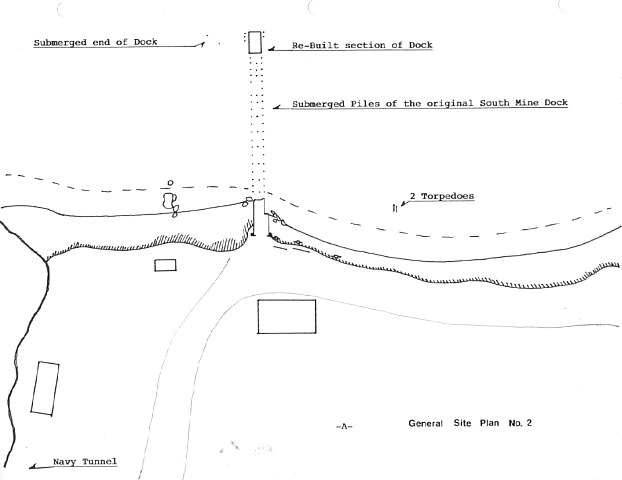
After the end of the Pacific war in 1945, most of the remaining silver was recovered by the US Navy through elaborate diving and dredging techniques, but there were still over five million silver pesos unaccounted for. A small group of American divers attempted to work the site during the early 1960’s. Over two months of diving resulted in the recovery of about one-half million coins. Their original agreement with the Philippine Government allowed them to keep only about one-third of the haul, so recovery operations were suspended. The balance of these coins still remain at their original dumping locations inside San Jose Bay. (17) After a great deal of research through Government Archives and interviews conducted with the participants of the various incidents described thus far, the Author was able to actually visit the scene of these activities on and off Corregidor Island in 1988. At the time of my visit the island appeared from the distance to be the typical island of tranquility with its lush jungle foliage. The attractiveness of its green carpets belied the terrible beauty of its war-torn history. In 1945 the island resembled the surface of the moon with shell-pitted scars from one end of the island to the other. According to the interviewed veterans who participated in the island’s wartime history, there wasn’t any living thing left on the "Rock" by the time it was all over and done with. Now, nature has reclaimed and covered the sins of man - At least most of them. During my one-month stay I was able to view the many sights on the island that were normally off the standard tourist tracks. I also had the opportunity to explore the waters off both the North and South Docks. The bottom terrain in the water really tells the truth of what happened there so many years ago. Remnants of the "toys" of war, such as rusted machine-guns, ammunition, parts of wrecks, along with pieces of what used to be the docks themselves, litter the bottom. Occasionally, a silver peso or centavo would come to light after fanning away a few inches of sediment, along with personal momentos such as watches and trolley tokens. At one point I even came across two US Navy torpedoes lying side by side just off the Barrio San Jose Beach, (called Black Beach by some). Needless to say, I fanned the sand back over them and left the area rather quickly; at the same time trying not to have a stroke! While on the island I was also able to query the local
inhabitants about the various legends regarding the lost treasures. One must keep in mind
that most of these inhabitants were not around when the events they describe supposedly
took place. In general, the island of Corregidor itself no longer contains any large
treasure-trove to search for. Research and personal inspection on my part has convinced at
least myself of that. However, I note the following stories because there is at least a
fabric of truth in all of them. |
"Speedy
Gonzales": |
|
"Speedy Gonzales" was a tour-bus driver on Corregidor Island not many years back and he never failed to impress or astonish the many visitors to the island. He knew all of the small stories associated with the place, not to mention his familiarity with the lay-of-the-land off the normal tourist track. According to one of his stories… On a hot and humid afternoon back in 1951, when the island was home for only a few dozen villagers amid the jungle-covered fortifications, Gonzales was taking his daily siesta inside one of the bomb-proofs of Battery Geary up on Topside. While he was laying down on the concrete floor he was awakened by twelve armed American soldiers. They politely, but firmly, requested him to move aside. There before his very eyes they lifted the concrete slab that he had been laying on to reveal two large boxes. When the boxes were lifted out of the hole one of the soldiers opened the box to check the contents, which revealed two large gold ingots! Speedy stated that an American Major was in charge of the group, who promptly thanked him for moving and being quiet about it. The men quickly left the Battery and proceeded to Bottomside, where they boarded two different landing crafts tied up at the old South Dock. As Speedy watched them disappear around the Bataan Peninsula from atop his vantage- point at Battery Geary, he ruefully stated to himself: "And to think I had been sleeping there for three years!" The shock of this amazing event was to haunt Speedy Gonzales for the rest of his life. (18)
|
|
Battery
Morrison: |
|
Just prior to the capitulation of the island to the Japanese, thirty-six Philippine Scouts filled two metal lockers with gold ingots taken from the "vault’ located at the Stockade. After dragging them on foot over the island roads to a point just in front of the Morrison Battery the soldiers dug two large pits. After depositing the two large lockers in the pits, the men connected them with a small chain leading from one hole to the other. Unfortunately, just as they completed covering the lockers with earth a Japanese shell burst nearby, killing all but two of them. Before dying a few years ago the last survivor drew a map showing the location of the buried lockers and gave it to one of the Corregidor inhabitants. This man, along with a Philippine Army Colonel, has been searching for the elusive deposit ever since, but to no avail. During my visit to the island in 1988 I had the opportunity to help search for this treasure. The original map shows the location to be in the center of three large trees, set in a triangular pattern just in front of the battery. Since I believed that such a large target could not escape a good Pulse Detector that I had brought along with me, we believed that perhaps our chances in locating were pretty good. After scanning the entire area that these men claimed to be the spot I walked away, having discovered only the normal remnants of a battlefield such as spent ammunition, shell fragments, and pieces of American and Japanese helmets. If these lockers of gold were ever there on the island… they are certainly not there now!
|
|
"Ah – Moon’s": |
|
| During the peace-time activities of Corregidor Island
just prior to the war a flourishing village of dependents and laborers called Barrio San
Jose existed down at the Bottomside section of the island. A prosperous Chinese merchant
going by the name of Ah-Moon operated a local laundromat and grocery store just next to
the trolley-bridge crossing at the center of town. When hostilities broke out, and when
everyone was sending their valuables to the military for safe-keeping, Mr. Ah-Moon decided
to fill one of his larger cast-iron ‘wok’s’ with his life’s savings,
consisting of silver pesos, and buried it out behind his establishment. The
"Wok" reportedly contains almost a ton of silver coins. The exact location of this interesting horde was right next to the trolley track abutment, in the northwest corner of the crossing. A large tree now reportedly grows on this site. Alas… my pulse detector didn’t pick up anything unusual!
|
|
The Engineering Tunnel: |
|
The Army Engineering tunnel is located near the island’s Power Plant at the North end where Bottomside and Middleside meet. As obvious as it is on the Army survey charts, none of the islanders were able to locate the entrance to this tunnel up to 1988. A few years ago, though, a small 55 foot long tunnel was re-located right across the street from and only 25 yards southeast of the Power Plant buildings. Some people believe that the back wall of this cavern is an ‘emergency block’ put up by the Corregidor garrison just prior to the surrender in May of 1942. Although local historians are convinced that there should be many items concealed within this tunnel system, such as machinery, one of the islands original trolleys, and one of General MacArthur’s personal automobiles, this author could not confirm the hard research to back it up. The so-called emergency block was not evident upon inspection, but appeared rather to be just an uncompleted section, with drill holes but no continuation of the system. So much for this legendary stash of equipment!
|
|
Grave – Gold: |
|
This is a rather disturbing story, but deserves to be told for obvious reasons. Supposedly, Sons and Grandsons of Philippine Scouts who were lost on the island having been visiting the fortifications for the past few years and most of them, along with their friends, have been noticed frequenting the tail-end of the island. These people may not be relatives of the lost veterans at all, but just plain fortune hunters claiming to have relatives buried at the old Philippine Scout burial ground as well as some of the Japanese memorials. Reportedly, this general area is close to the old location of the one-time air strip. As the story goes, two twelve-pound gold ingots were supposedly stashed inside one of these graves or thereabouts during the siege in 1942. The author did not check this particular story out on the ground due to its rather sensitive nature, but cannot see any validation to the old claim.
|
|
The "Marcos" Connection: |
|
Around 1972 some of the military and Government men of the then-President of the Philippines Ferdinand Marcos reportedly landed at the Topside Parade Grounds by helicopter. They proceeded under arms down to the Ramsey Ravine and excavated two large holes about two feet deep each. After loading a certain amount of items into four ammunition boxes they returned to the Parade Ground at Topside and departed three hours later. In the pre-war days this ravine was utilized as a trash dump by the people of Barrio San Jose and it is assumed that the visiting men recovered and unknown amount of valuables from the old dump. In hindsight it would appear that an old dumping ground would indeed be the ideal place to hide valuables, especially since the original location of the gold ‘vault’ wasn’t all that far away. However, again, there is no conclusive evidence that this actually occurred.
|
|
The North Dock Gold-Hole: |
|
The National Bank of Manila hired a crew of divers and workmen to operate at Corregidor Island in 1985. The divers spent two days digging a hole in the mud bottom just off the northwest corner of the North Dock. In the attempt to find gold, the divers dredged a five-foot deep trench about nine feet along the bottom parallel to the dock. The water depth here is only about fifteen feet, but the local islanders still don’t know just how lucky these divers may or may not have been.
|
|
The Fourth Lateral: |
|
 The Navy Tunnel |
During my visit to the island I had the opportunity to tour the Malinta Tunnel system in detail with one of the local islanders who was very familiar with its internal arrangements. Just before we entered the main gate he requested that I bring along our Pulse-Detection unit, which I didn't hesitate to agree with. I had previously heard of some of the legends associated with this vast cavern and what he then told me sounded so very plausible. He stated that in 1987, when he was acting as a tour-guide for a rather large group of American war veterans, an older gentleman pulled him aside and related an incident that occurred in 1942. This man was assigned to the American 59th Coast Artillery at the time of the Japanese offensive. Just prior to the surrender the cases of American paper currency, then under storage inside the tunnels, were systematically burned in an incinerator just outside the western entrance of the Malinta tunnel. This old veteran further stated that he was in charge of one of those ‘burning cans’ and that there simply wasn’t enough time to completely destroy the millions of five, ten, and 20 dollar notes and gold certificates. As a result, some of the soldiers who were designated for the currency-destruction details buried small cashes of the money all around the Malinta Hill and San Jose area. According to this man, he found an empty five-inch powder canister close to one of the artillery batteries and carried it back to his allotted space within the tunnels. After stuffing the empty shell with wads of gold certificates, five-dollar notes, a few military documents and his personal war journal, he sealed the opening with a thick coat of wax. He then proceeded to dig a hole in the center of the Fourth lateral midway down the length of the compartment and ultimately buried the canister, covering the item with small rocks and mortar. This veteran stated that as far as he knew his little deposit was still there as he never had the opportunity to return for it and spent the next three years in a series of Japanese prisoner of war camps. Needless to say, the certificates and notes would be of considerable value today, but the personal and military documents that he mentioned would be worth even more to military and Government historians. The detector that I used within the tunnel system, however, picked up everything – including the reinforcing steel within the concrete floors and walls. It was impossible to differentiate between construction materials and dis-associated items. It is still not know wheather this particular story is actually true or not, but it sounds reasonable enough.
|
The North Harbor Salvage Barge: |
|
| As previously mentioned, the Japanese occupation forces
were well aware of the fact that the bulk of the Philippine silver stocks were dumped
overboard in San Jose Bay. The American divers who were forced to retrieve these coins did
everything within their power to prevent these stocks from falling into the hands of the
Emperor’s troops. Since the Japanese were successful in recovering only two million
of the fifteen million pesos known to have been jettisoned I would have to say that the
diver’s many acts of sabotage and trickery paid off! One of those US Navy divers involved in the dumping and subsequent ‘forced salvage’ of those pesos was US Navy 1st. class diver Morris Solomon. In an interview with this man many years after the fact I was to learn first-hand of some of the more interesting historical facts surrounding these events, as well as a couple of little unknown treasure stories. ‘Mo’, as his closest friends call him, was not immediately shipped to those infamous prisoner of war camps on the Philippine mainland as so many were, but was kept on the island in a small PW enclosure near the old Navy sea-plane hangers down at bottomside. The Japanese kept a 300-man prison labor force at Corregidor to help clean up the aftermath of war and re-build the more vital military areas of the installations. A dozen or two of these men were Navy divers and the Japanese command eventually transferred them to a barge moored just off the North Dock. The men were given a proposition that they could not refuse, and that was to help the local Japanese command recover the millions of silver pesos on the bottom of San Jose Bay. Every day the barge would be towed around to the South Harbor for the operations and ‘Mo’ described in detail how the PW guards would watch his small group as they entered and left the water in their attempts to locate raise the hundreds of boxes of silver. Each diver was issued an empty gas-mask bag and was expected to return to the deck of the barge and pour out the contents of his bag into a pot in front of the guards. Quite often, in fact every day, the divers would successfully smuggle most of the pesos off the barge at the end of the day’s work. It started with small lunch bags filled with silver while being escorted back to their enclosure, and when the lunch bags became lunch-pails, the guards seemed not to notice. However, one day, after the barge was secured to her mooring, the divers noticed that one of the higher-ranking Japanese officers was heading down the dock in their direction for a surprise inspection. Fearful of being caught with hundreds of silver pesos on their persons, the divers slipped the coins through an opening into the bilge of the barge. Since the barge was constructed of wood the coins made very little noise as they were poured in by the hundreds. After the inspection the Japanese inspection staff walked away shaking their heads. They knew that their land-based prison guards were being bribed and ‘bought-off’ for special favors with silver pesos by the prisoners in the enclosure, but they failed to find the source of the coins. Over the next couple of months ‘Mo’ and his fellow divers poured at least half of their recoveries down into the bilges of that wood barge before tying up to the mooring in North Harbor. In his own words, ‘Mo’ says: "We stole a million, we gave them a million, we had to! But they never got what was inside that barge!" Three years later that very same barge was photographed by US Army Ariel recon. Planes just prior to the retake of Corregidor Island by American troops in 1945. It was still sitting at its usual mooring near the North Dock, but by the next day, the barge had been sunk by American aircraft. Today, the remains of this heavily framed vessel is easy to find within the North Harbor waters. In 1988 I was able to actually dive on this wreck and was rewarded with hands full of silver pesos, which were clumped together in mass along the interior keel of the wreck. There are many pesos still left within this wreck waiting for the next diver. This, at least, is one treasure story of Corregidor that is true! (19)
|
|
The Presidential Yacht ‘Casiano’: |
|
The Presidential yacht ‘Casiano’ was anchored just off of Corregidor’s Engineering Dock when she was sunk by Japanese aircraft on January 26th, 1942. The Philippine President, Manual Quezon, had packed his entire wealth onto the ill-fated vessel prior to the evacuation of Manila. A number of Government silver ingots were also loaded on board by the Treasury staff as well. Although some of the valuables were removed to the safety of the Malinta tunnels, over twelve tons of silver bars and pesos were left aboard for "security reasons". After the fall of the island in May of 1942, a few of the captured US Navy Divers were forced to salvage the silver out of this wreck by the Japanese. However, all they brought up were silver pesos, leaving the silver ingots at the bottom of the wreck. The ‘Casiano’ resides in only twenty-five feet of water and on a sunny day one can clearly see the outline of the wreck only 50 yards off the Engineering Dock.
|
|
The "Lorcha" Dock: |
|
If six dozen cases of the finest liquor from the 1930’s is your kind of treasure, then this is the place to look. The Lorcha Dock, (sometimes referred to as ‘The Army Dock’ and ‘MacArthur’s Dock’), is the dock where locals believe General MacArthur departed Corregidor from. MacArthur actually departed the island from the South Mine Dock aboard the PT-41 with US Navy Lt. Bulkely as skipper before the surrender in May of 1942. This old collapsed wood and concrete dock, which appears more like a small boat pier, was the location for the dumping of General MacArthur’s personal possessions that were left behind after he departed the island. Ammunition, weapons, desks, chairs, and his entire stock or collection of prime liquor consisting of over 80 bottles were thrown off this dock. The condition of most of these items now, 57 years after the fact, remains somewhat questionable. However, since the bottom here is mostly mud, which acts as a preservative, chances are good that the bottles remain in very good condition. Water depth here is only around ten feet.
|
|
Conclusion |
|
|
There are so many more stories of lost treasures associated with Corregidor Island, but the stories outlined here are at least credited with ‘some’ basic known facts. The famous Japanese General Yamashita, (pronounced Ya-Mash-Ta), known as the "Tiger of Malaya", was said to have operated a smelting camp for precious metals near the Island’s power plant. This remains complete conjecture, but treasure hunters still flock to the Philippines in droves in the attempt to find his reputed wealth of gold bullion and jewels. There is no indication whatsoever that Yamashita ever ran such a smelting works here on Corregidor. Today Corregidor’s beautiful greenery and serenity tends to overwhelm all visitors and one is hard pressed in trying to imagine a panorama of shell-pitted hills and docks. Only when the jungle growth is pushed aside are the battle scars evident. If any readers ever have the opportunity to visit this Isle of Terrible Beauty they should first take the standard tourist guide trails, and then arrange, if possible for them, to stay a few days on the island and explore the off-trail sections of the island. It is there within the hidden areas that you will see the scenes of the stories I have just related. And remember, all of them do have at least a thread of truth. As regards to a great horde of gold and valuables on the island itself? It doesn’t exist, at least not any more. Anything that was once there is now long gone. The waters directly off the island is another matter, where one can still find bits and pieces of Corregidor’s past, including a coin or two here and there. I should know… I have found at least a piece of that rainbow. But, if you go there, enjoy the historical treasures you encounter. Of all my adventures on Corregidor Island it is the presence of the overwhelming personal and historical events that took place there that remains the most valuable treasure to me. I shall never forget. Edward michaud © 1999
|
| The
Author
The Author is a retired USN diver who now specialises in wreck recovery and professional salvage diving worldwide. He holds the wreck rights to a hitherto unknown U-boat. But that's another story, and you'll have to visit him at <insert> to find out about that one. |
|
Footnotes |
|
(1) There are literally hundreds of separate treasure stories emanating from World War Two. For a general overall understanding of just how monetary securities affected both the geopolitical and operational aspects of World War Two a good reference, although not directly related to Corregidor Island itself, are the series of reports recently published by the US Dept. of State regarding Germany’s clandestine attempts at hiding appropriated war booty. One such report, "Preliminary Study on U.S. and Allied Efforts To Recover and Restore Gold and Other Assets Stolen or Hidden by Germany During World War II", June, 1998. (The Author has often wondered why a similar study was not conducted on the Pacific War aspects of war booty). (2) The rather complete files regarding the Philippine Central Bank records, the National City Bank records, and the Army Finance records relating to the evacuation of the Philippine National Treasury to Corregidor Island can be found within the National Archives and Records Administration, (NARA), under Record Group, (RG), 104, Legal Records, Reports on Deposits of Foreign Bullion, (104.3.2). (3) A good account of Mrs. Willoughby’s experience in the inventorying and disposition of the Philippine National Securities can be found in her published transcripts, entitled: "Gold Is Also Ballast", 1969. (4) The involvement of the "Don Esteban" and the Presidential yacht "Cassiano", as well as the presence of Admiral Hart at the Manila docks is well documented within NARA, Record Group 313 (5.3); Records of the Pacific Fleet and Records of Commander – Submarine Force, Pacific Fleet, 1931-1959. (5)Willoughby, "Gold Is Also Ballast" (6)The accounts reflecting the exact inventory data of the Philippine National Treasury can be fond within NARA, Record Group 268, Records of the Philippine War Damage Commission. According to this data, the Treasury consisted of: 115 tons of silver specie, 32 tons of silver bullion, 51.385 tons of Government gold bullion, 2 tons of private gold holdings, 27 million in US Treasury Notes, and an unspecified amount of Bonds, Treasury Certificates, and precious gem stones. The gold bullion alone was valued at 40 million dollars US at $ 32.00 per oz. (7) The accounts of the burning of the US paper currency is reflected within many contemporary and official histories. However, this was also verified by ‘Mo’ Solomon in his interviews with the author in 1987.
|
|
|
|
| Sources: | |
| Interviewed
Personnel: Gun, Frederick A. – Rear Admiral, USN (ret.). Admiral "Pop" Gunn was a Lt. and Engineering Officer on board the USS Trout at the time of the latter’s visit to Corregidor Island on 3 and 4 February, 1942. His detailed accounts of the removal of part of the Philippine National Treasury was recounted in several audio-tape interviews with the author. Solomon, Morris – HTC/Diver, USN, (ret.). ‘Mo’ Solomon was stationed aboard the US navy Tug Pigeon when War War Two broke out in the Philippine Islands. Being a diver and a Prisoner of War held by the Japanese after the fall of Corregidor, ‘Mo’ was forced to dive for the silver pesos in San Jose Bay and was eventually transferred to various Japanese prison camps on the Philippine mainland. The vivid accounts of his various experiences were recorded on audio-tape by the author. Inhabitants of Corregidor Island, R.P. – Many individuals living on the island were interviewed by the Author for this collection of stories. If not for their accounts this small collection of data would have no continuity or foundation. |
|
Published
Sources:
|
|
Archives /
Documents:
|
|
MORE READING ON THIS TOPIC - GOLD IS ALSO BALLAST - the true story |
|
|
|