|
|


 |
| A Walk Through Wildwood
Signs make the difference in a South Jersey shore town's revival
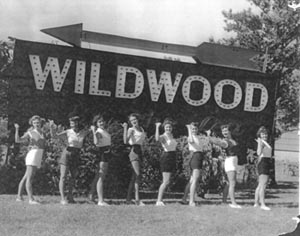
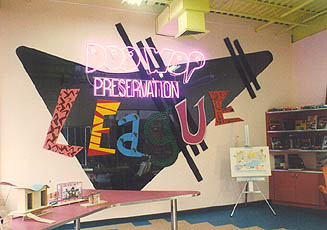
The Wildwoods on the southern New Jersey coast, identified by architect Steve Izenour, AIA (Venturi, Scott Brown and Associates) as America's most significant concentration of "Doo Wop" architecure, is undergoing a revival. The five-mile stretch of towns that make up the area had been a popular vacation spot for a century, particularly in the post World War II era, offering a taste of the exotic and faraway through its manufactured island paradise setting. But in the 1980s, the Wildwoods suffered a decline. Places with names like the Martinique Motel were forced to compete with the real thing a la Club Med and the magic didn't seem to work anymore. Enter first, Jack Morey, whose family name is well-known in the amusement industry, and then the Doo Wop Preservation League, formed in 1997 to celebrate and promote the area's genuine uniqueness. Morey and League Executive Director, Ellen Collins, AIA, are betting the public will want to relive that magic.
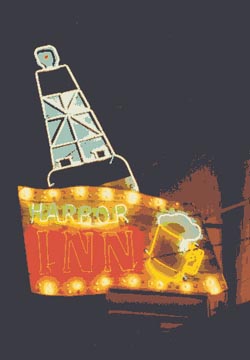
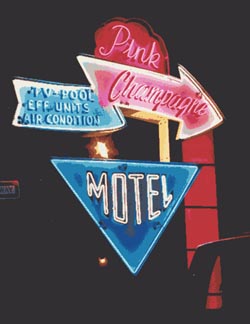
Pivotal to the restoration project are the more than 300 free-standing and facia signs. Much like Las Vegas, the signs of Wildwood tend to be larger than life--especially for the 200+ motels where the buildings seem to serve only as backdrops for the signs. But it's also the case for the other tourist businesses which vie for the vacation dollar. A notable example is the 30-foot waitress presiding atop the Wild Wheels Pier and the huge barrel identifying James' Salt Water Taffy. In fact, larger-than-life is a design element that Wildwood strives to maintain. Students engaged by Izenour to create proposals for the restoration project strongly encouraged size minimums for signs and "absolutely no design control . . . the wackier, the better!"
Many of the Wildwood signs have been restored, but finding homes for all of them is an ongoing project. Some are displayed in the Doo Wop Preservation League complex; others may follow or be placed with local businesses. The whereabouts of the majority of the signs were listed by Musso and obtained by volunteers from the Morey organization. Some have been dismantled by A.B.S. Signs, a local company that originally fabricated and installed many of the signs. Musso provided the following commentary on the signs that have survived as well as some that didn't.
|
Home | News | Exhibits | Events | Links | Talk | FAQ | Contact Us