
Biography
Mithridates
Alexander the False Prophet
On Texts
Aristotle, The Poetics
Xenophon's, Education of Cyrus
Alexander the False Prophet
I spent a lot of time in graduate school thinking about Alexander of Abonoteichos (a.k.a. Alexander the False Prophet, Alexander the Paphlagonian). In the near future, I plan to add Lucian's Life to my Classical Library, with commentary. Meanwhile, here's everything I could find on the web.
Texts
"Alexander the Oracle-Monger" Translated by H.W. & F.G. Fowler (1905), hosted by www.atomic-swerve.net (!). Nicely-formatted. Mirrored at Epicurus.net.
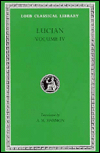 Amazon. Loeb edition of "Alexander the False Prophet," translated by A. M. Harmon. Amazon site has a fun review by Courtney J. Angermeier. See the
Harvard UP page. Loeb editions have the Greek on the left side and a readable English translation on the right.
"Alexander ou le Faux Devin," a new translation by Joseph Longton, with some good annotations.
Comprehensive discussions
Catholic Encyclopedia: Alexander of Abonoteichos by John A' Becket.
"He shows that while high and low were being led astray by the false mysticism of Alexander of Abonoteichos, the Christians held aloof from him, and with the Epicureans, with whom Lucian markedly contrasts them in the "Peregrinus", shared the full measure of the arch-hypocrite's hate. It is the testimony of an enemy, who here, at least, is no slanderer, but an unwilling apologist of Jesus Christ and His persecuted adherents."
"Lucian, Alexander the False Prophet -- Its Relevance for New Testament Studies" by Michael Morrison. Short summary with some interesting parallels. See also his page on Perigrinus.
Britannica: Alexander The Paphlagonian. Very brief.
Chance-mentions
"'Of Miracles', Lord Lyttelton, and Alexander the Miracle Worker" by John Gill, concerning Hume and Lord Lyttelton's use of Alexander, not ancient history per-se.
"The New Testament and Greco-Roman Mystery Religions" by Greg Herrick, Ph.D. Includes a brief an entirely unsatisfactory discussion of "Alexander the False Prophet and Paul's Ministry"
"Why I Don't Buy the Resurrection Story" by Richard Carrier, at Infidels.org (an atheist site).
"[Traditional pagans'] form of argument is relevant: they did not conduct historical investigations to refute factual claims of distasteful cults, but argued against them solely on ethical, aesthetic, and philosophical grounds ... Lucian, by chance a keen-minded Epicurean and prolific and talented writer, just happened upon the scene of this new cult as it was beginning."Also see his "Kooks and Quacks of the Roman Empire: a look into the world of the gospels"
A footnote by Gibbon where he lays bare some reasoning about the numbers of Christians in Pontus, during Alexander's time and under Gregory Thaumaturgus.
Karl Kautsky, Foundations of Christianity, online book briefly touches on Alexander of Abonoteichos. The reference to "Zucian" is probably a typo, but the reference to Alexander giving his "predictions for something like twenty-five cents in our money" is wrong, even though the author wrote in 1908. From www.marxists.org.
One of many pages on "Extra-Canonical Sources Confirming the Historicity of Jesus." These guys falsely lump Alexander the False Prophet in with the attack on Peregrinus as documents of Lucian's contempt for Christianity.
Classics-L group: "Re: use of disparaging group titles" post by David Lupher touching on Lucian's use of the term "fatheads" (applied to Paphlagonians).
Other
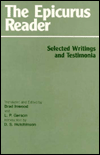 Amazon. The Epicurus Reader: Selected Writings and Testimonia, edited by Brad Inwood and L.P. Gerson. Also available in
hardcover.
Review by Pamela Gordon, Bryn Mawr Classical Review 1995. Gordon notes that the authors didn't include "Alexander the False," (a rich source for the "social and cultural location of Epicureanism") but otherwise praise the selection.
Catholic Encylopedia: Ionopolis (Abonoteichos).
Detailed relief map of Ineboli (Ionopolis/Abonoteichos), with weather information.
All material © 2001-2002 Tim
Spalding. Presented in association with Amazon.com
Herodotus on the Web. Linked guide to the life and writings of the Herodotus of Halicarnassus, the father of history.
Ancient Astrology and Divination on the Web. Kook-free links to information on ancient, primarily Greco-Roman, astrology and divination.