Also go to the page of Maritime Books published by Newcastle City Library
|
9 x 6 inches 128 pages, over 40 photographs. Price 14 pounds 95 pence
Wordsmith Publications
Tel: 01494 782376
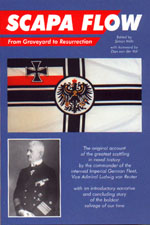
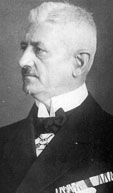 Ludwig von Reuter | SCAPA FLOWFrom Graveyard to ResurrectionEdited by Simon MillsOn the 18th November Ad. Ludwig Von Reuter was appointed to command the surrendering sqadron and two days later had managed to assemble his ships from their scattered harbours. At 3 AM on the 21st the whole Grand Fleet under Sir David Beatty started to leave Rosyth and formed two lines six miles apart and stretching for over eight miles in a position about 70 miles into the North Sea. They were all at action stations with battle ensigns hoisted. At 7.40 the German fleet was sighted and sailed betwen the lines, the German crews waving at the British destroyers when they came near, to anchor off Inchkeith. At sunset that day, following an order from Beatty, the German flag was hauled down for the last time. At the end of the month the German ships were moved to a more sheltered anchorage in Scapa Flow. Seven months later, on the afternoon of 21st June 1919, the High Seas fleet began to sink as the ships were scuttled by their crews.
This book, appropriately issued on 21st June 2005, tells the story of the surrender and the
scuttling. A wreck historian, Simon Mills, the editor, has contributed an introductory chapter
which sets the scene and sketches in the life and career of Von Reuter alongside an account of
the development of the Prussian Navy from its beginnings in the 1850s. |
| Publication
22 pounds plus 5 pounds p&p (UK and Europe) or 6 pounds overseas surface mail.
Address orders to
Payment by cheque in GBPounds or worldshipsociety.org | ADMIRALTY SALVAGE VESSELSby David SowdenAfter the war several of the class were available for charter by civilian salvage firms and one, Risdon Beazley, became the most successful British salvage company of its day. The remaining vessels stayed in Admiralty service, conducting operations such as the raising of the Dover blockships and other wartime obstructions, as well as helping the salvage effort after Suez. Four of the class were converted to diesel in the 1960's and became known as the "Kin class";, a familiar sight to many around the naval ports of the UK. This A4, hard laminate cover volume contains 127 pages of well-researched information about the long service of the vessels and is well illustrated with over 50 photographs, plans and maps. The author draws on many primary sources as well as the first hand experience of former crew members of these very popular and durable vessels. |
8 x 5 inches 127 pages
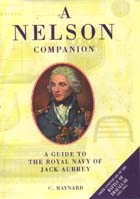
Michael O'Mara Books - | A NELSON COMPANIONCompiled by C. MaynardA Guide to the Royal Navy of Jack Aubrey - The ships, and their design, construction and fittings. - The officers and men, the organisation that enabled them to remain at sea for many months and how they lived and died; - The guns, the batteries of smooth bore cannon which turned the ships into efficient mobile gun platforms with a world-wide range. - Navigation, battles, medical matters, nautical phrases and much more.
This is not a history, but "a collection of interesting, arcane, or extraordinary
information about life at sea in the heyday of fighting sail." It is
illustrated throughout with contemporary drawings.
|

9 x 6 inches 176 pages
Send cheque for Aus$23.00 within Australia (post paid)
or US$23.00 or equivalent plus postage from overseas.
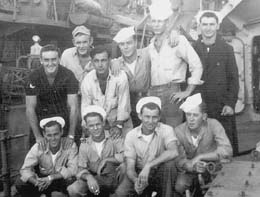
See the website at | PEARL HARBOR to TOKYO and Beyondby Eugene McClartyMemoirs of a Tin Can Sailor. Eugene McClarty, now 86, was born on a small cotton farm in Missouri and joined the US Navy in 1940. On 7 December 1941 his ship, USS Downes was badly damaged in dry dock during the Japanese attack and he transferred to the USS Bagley. His story nicely complements George Sallet's account of the same period on board Bagley which I am slowly serializing, See here . In 1946 he married his Australian sweetheart and they moved to Australia in 1946. His niece has taken the rough manuscript describing his experiences and turned it into a book with 26 black and white photos and 5 maps, which is a must for anyone interested in personal. memoirs of WW2 in the Pacific.
 The Torpedo Gang |

ISBN: 1550549367 6.25 x 9.25 inches 213 pages
Also to be published by
To purchase on-line search for
See also | The Wreck of the WILLIAM BROWNby TOM KOCHMy article on the Dreadful Shipwreck of the William Brown gives an outline of the beginning of the story as it was recounted in the newspapers in June of 1841. The source for much of their information was a joint report by the American and British consuls in Le Havre. The American, Beasley, realized the complex political and economic ramifications of what could be regarded as the murder of British passengers on an American ship, while the British consul, Gorden, younger and less experienced, saw it as just another accident at sea in which some survivors had drowned to save the rest, until the Foreign Secretary, Lord Palmerston, pointed out his error. Letters and reports in newspapers were followed by demands that someone should be brought to justice. One of the seaman in the lifebat, Alexander William Holmes, was Swedish, and thus fitted the requirements of being Caucasian, but neither British or American. He could expect some sympathy for having returned to the WILLIAM BROWN to carry a young girl into the boat. In April 1842 he appeared in Philadelphia charged with manslaughter on the high seas Tom Koch's book provides a gripping re-creation of this notorious nineteenth-century case of shipwreck and murder on the high seas which makes absorbing reading. His fascinating exploration of the political motives which led to the trial of the one man who performed a heroic act shows that the same considerations are often affecting ethical decisions made today in unrelated fields. The so called "lifeboat ethics" which decide how scarce resoures should be distributed. |
Hubert Cance
e-mail
[email protected]
http://unicorn.artshop.monsite.wanadoo.fr
|
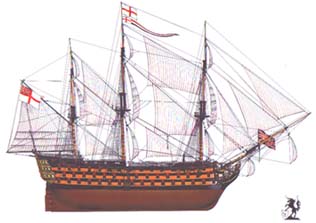
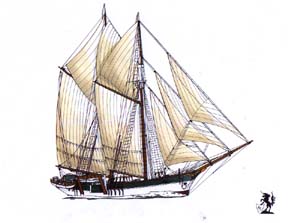
Colour Prints of Vesselsby Hubert CanceHubert Cance has produced a catalogue of his colour artwork featuring vessels old and new. They include the Mayflower and a Boston Whaler schooner of the 1870's. Soleil Royal, l'Astrolabe and Pourquoi Pas? from the old French navy. Cutty Sark, a Dutch Fluit and the Danish Drakkar plus many views of HMS Victory including deck plan and cross section. Modern vessels include the Monitor M-112-1 from the USA and patrol boats from the modern South Vietnamese navy. They are beautifully printed on white Bristol card and are available in two sizes, A3 and A4.
Prices are:- |
|
New from Annabelle Publishing
Annabelle Publishing
ISBN 0-9673936-3-9
See www.annabellepublishing.com |
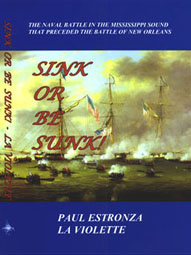
Sink or be Sunkby Paul Estronza La Violette
Paul Estronza La Violette and his wife live on the shore of Mississippi
Sound. If they had been there in 1814 they could have sat in the branches
of a still-existing live oak on their property and watched a flotilla of
British barges row past to give battle to a small fleet of American gunboats. Also published by Annabelle are two delightful books of essays by Paul La Violette, Waiting for the White Pelicans and Where the Blue Herons Dance. Tales of life on the Mississippi Gulf coast and Blueberry Peaches, Red Robin Pie by Stella La Violette (Non-Maritime but delicious Mississipi Gulf Coast recipes). Jane and I found all these books most enjoyable.
|
|
W.W.Norton & Company
Castle House, 75/76 West Street
191 pages. 10 x 11.25 ins.
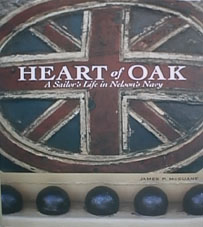
| HEART OF OAKby JAMES P. McGUANEThis handsome book is a glorious photographic essay on artifacts from Jack Aubrey's Royal Navy. No object is too mean not to be treated as a work of art in its own right. James McGuane has combed through the maritime museums of Britain to photograph, for example, not only the guns, but the wooden stopper that went in the vent hole; in each section the larger picture is always complemented by the detail. Every photograph brings us a moment, frozen in time, from the life of a sailor two hundred years ago.
We find the commonplace of everyday life on board - ship's biscuits,
trousers hand sewn from sailcloth, wooden bowls and mugs, a square eating
plate, contrasted with the implements of war, ranging from the great guns
to pistols, boarding pikes and swords.
|
|
produced in conjunction with The Royal Navy Submarine Museum (HMS Dolphin)
MILITARY PRESS
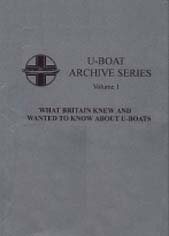
| What Britain Knew and Wanted to Know About U-BoatsEdited by Jak P. Mallmann Showell
By the outbreak of war in 1939 16 German U-Boats were on station in
the Atlantic and the submarine attacks on shipping continued until the very
end of the war in May 1945. Throughout the whole of this period The
Monthly Anti-Submarine Report, which was circulated secretly among
selected officers of the Royal Navy, provided vital intelligence to the
escort forces striving to counter such attacks. |
108 pages, 210x290mm
ISBN 0-85420-042-6 Cased Edition 25.00 pounds.
ISBN 0-85420-047-9 Paperback Edition 15.00 pounds
|
In association with The Royal Navy Submarine Museum The Royal Marines Museum The Royal Naval Museum and HMS Victory. History lives in the archives.
Manuscript Press
Telephone & Fax 02392 863799 |
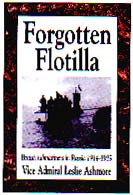
FORGOTTEN FLOTILLABritish Submariners in Russia 1914-1918Vice Admiral Leslie Ashmore
This is the first first-hand account to be published of the small
band of submariners, who took their boats into the
Baltic from October 1914 to operate successfully against
the Germans. Based at Reval, they suffered
from isolation, the extreme cold of the winter which
closed all the Russian ports, and the completely alien
environment with not only an impenetrable language barrier,
but also a social one. British officers and the lower deck
in the submarines worked closely as comrades in a team,
knowing they were dependent on each other for their safety.
The Russian officers treated their men with contempt and
abuse which was repaid in the excesses of the 1917
revolution.
416 pages, hardback, with over 300 photographs, maps,
diagrams and previously unpublished documents.
A QUIET LIFEA Royal Marine in the Great WarPat Francis
Pat was seven years old when her father, Jack Watson, died in 1942,
a quiet Londoner who liked tending his small garden. He had served in the
Royal Marine Light Infantry between 1914 and 1918 and, since he never
talked about his experiences, she childishly believed that he and his
friends had only been engaged on the periphery of the battles
of Gallipoli, the Somme and Passchendale.
304 pages, paperback, 6.8 x 9.5 in. with over 130 maps, diagrams,
photographs and previously unpublished accounts.
|
|
E.C. COLEMAN Author of Captain Vancouver, etc.
ISBN 0-9541443-0-9
Available only from:
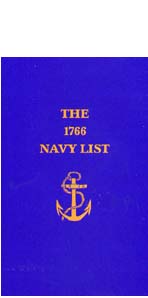
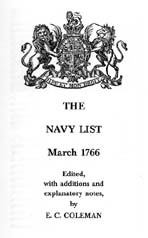
| THE 1766 NAVY LISTEdited with additions and explanatory notes byE.C.ColemanIt is rare to find a mid-eighteenth century Navy List with such a wide scope as the one for March 1766. It lists the 380 ships of the Royal Navy, both in commission and laid up in "Ordinary", 1,530 living sea-officers with their dates of seniority and the officers of the Royal Marines, and the staff employed by the Admiralty, the Navy Office and the Royal Hospitals, together with their rates of pay. E.C. Coleman not only gives the whole text of the original, plus a section on Uniform Regulations, but introduces each section with explanatory notes and contemporary anecdotes, explaining, for example, what the role of the Sixpenny Receiver`s Office was and why the Admiralty Court had a King`s Advocate General. His edition of the 1766 Navy List is a valuable tool for anyone interested in the Royal Navy of the eighteenth century.
|
Copies available from the author |
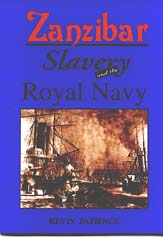
ZANZIBAR, SLAVERY AND THE ROYAL NAVY
For over forty years in the latter part of the nineteenth century, the
Royal Navy was engaged in anti-slavery patrols along the East African
coast. In conditions of considerable hardship and danger sailors waited
in fever-ridden creeks and esturies in small sailing cutters to board
slave dhows taking their cargo of human misery to Arabia and the Indian
sub-continent. The cost in sailor`s lives was heavy, their bodies, if
not buried at sea, lie in small cemeteries up and down the East African
coast. The colonial developmentof British West Africa led to uprisings
along the coast, and 1890, 1893 and 1895 the Navy mounted punative expeditions
to qwell unrest. On 26 August 1896 the usurper to the throne in Zanzibar
was evicted by the bombardment of the sultan`s palace. 17 x 24cm softback, 108 pages, 115 photographs, 6 maps and an appendix which incudes profiles of the warships and some of the officers and civil servants involved and a description of the orders and medals awarded.
Publication Price 9 pounds 50 pence inc. P&P within U.K.
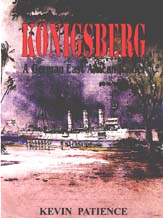
K�NIGSBERGA German East African Raider
|
Price 15 pounds plus 2 pounds P&P within the U.K.
15 pounds plus 6 pounds P&P outside U.K.
Avalable after 15 October 2001
 ISBN: 81-7304-350-2
Manohar Publishers 4753/23 Ansari Road, Daryaganj New Delhi 110002
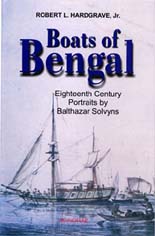
Distributed in the U.S.A. through | Boats of Bengal:
by |
 Illustrated with maps, photographs and drawings
Published by
ISBN 0 905355 53 9
Price 20 pounds.
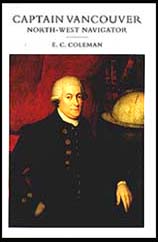
(If ordering from publisher Captain Vancouver, North-West NavigatorbyE.C. Coleman
This handsome book looks again at Vancouver`s story - a gallant story
of enterprise and initiative. He was very badly treated by his
contemporaries, and by history, with the result
that all subsequent biographies have followed the well-worn path of
vilifying a man who, in fact was a superb navigator and maritime
surveyor. He was a midshipman with Cook on his second and third voyages of
discovery and in 1791 he commanded an expedition in Discovery and
Chatham to the north-west coast of America, on the way
surveying King George`s Sound in Australia, and Dusky Bay in New Zealand.
He passed through Juan de Fuca Strait and surveyed a deep inlet, which he
named Puget Sound after the lieutenant who commanded Chatham from
November 1792. He then determined that the land that bears his name is an island.
In 1794 he accepted the cession of Hawaii to the British Crown, although
this was not officially ratified. Later in the same year he carried out
surveys on the Alaskan coast. The author, a member of the Royal Navy, has been on four of the Arctic expeditions searching for traces of Sir John Franklin, and paid two visits to South Georgia. He is currently working on a biography of Collingwood. |
400 pages. Price Ca$35.00 plus mailing - Ca$10.80 by sea, Ca$28.30 by air.
Available from D.R. Crandall, 97 Brydges St. Moncton N.B. Canada E1C2E9