Main menu

Home Page
1st Battalion
2nd Battalion
4th Battalion
5th Battalion
6th Battalion
7th Battalion
8th Battalion
Other battalions
Hertfordshire Regiment
History of the 16th Foot

Photo's and Bio's

Researching an Ancestor
Graves and Memorials
Links to useful sites
Contact

2nd Battalion pages

1914 War Diary
1915 War Diary
1915 Appendices
1916 War Diary
1916 Appendices
1917 War Diary
1917 Appendices
1918 War Diary
1918 Appendices
1919 War Diary
Biographies of those Officers who fell in the 2nd battalion
Biography of Captain Charles Calveley FOSS, V.C., C.B., D.S.O.
Officers Photographs and Biographies
"Other Ranks" Photographs and Biographies

The Bedfordshire Regiment in the Great War


Officers who died serving in the 2nd Battalion

(This roll of honour is in chronological order)
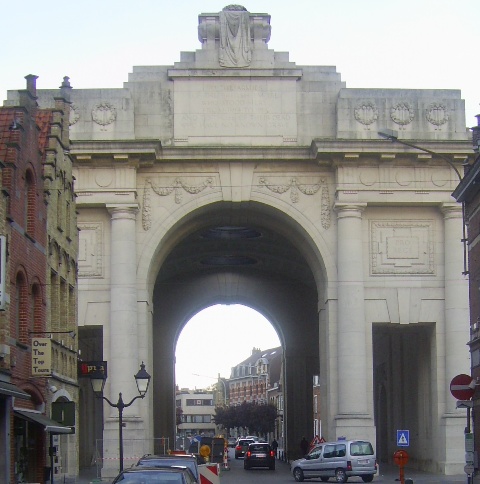

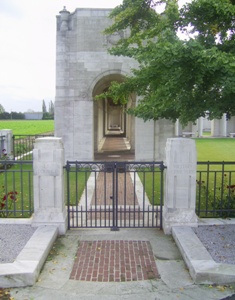
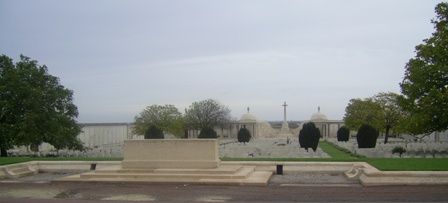
The Ypres (Menin Gate) Memorial to the Missing
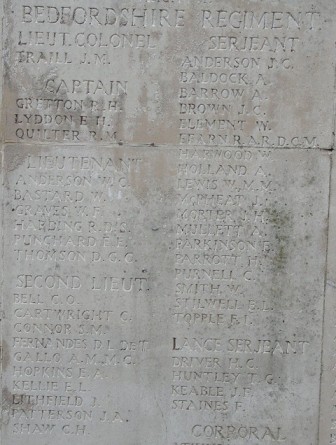
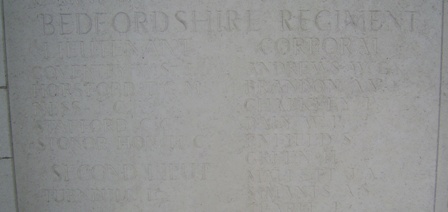
The section from the Ypres (Menin Gate) Memorial showing the officers from the regiment whose final resting places are unknown.

The battalion were heavily engaged during the First Battle of Ypres, which saw their baptism of fire.

Twelve infantry battalions comprised the 7th Division; the Bedfords lost 29 officers and 550 men, with only the Gordon Highlanders losing fewer men from the entire division. Over 9,300 (more than 70%) of the division were lost in the fighting east of Ypres which rendered the division incapable of any significant actions for some months.

Of the 29 officer casualties from the battalion, the following thirteen officers lost their lives:
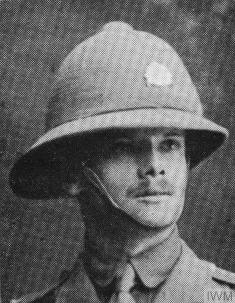

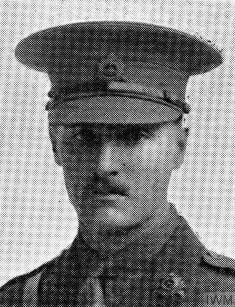
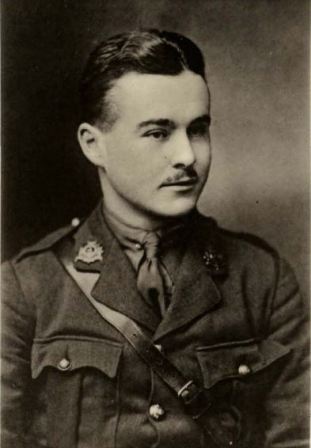
Second Lieutenant Charles Ockley BELL

Killed in action 18th October 1914 [although CWGC records the 12th October)

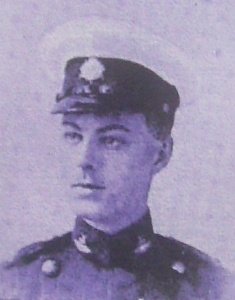
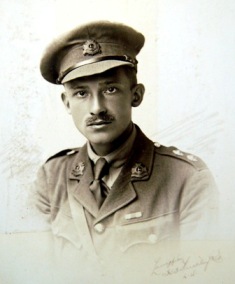
Charles was born at Grimsby in 1891, the son of Alfred Frederick and Sarah Susanna Bell. He was educated at Alford Grammar School in Lincolnshire and initially enlisted as a Private into the South Staffordshire Regiment in late 1909 or early 1910. His prominent leadership abilities resulted in him being commissioned as a Second Lieutenant in the Bedfordshire Regiment on the 20th May 1914 and he was believed to be the first soldier to be promoted under the regulations introduced in 1914.
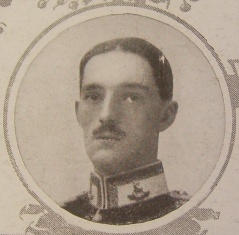
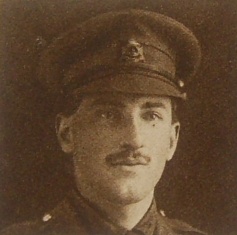
Charles joined the 2nd battalion in South Africa (which was when the photograph opposite would have been taken) but within months was recalled to Europe, landing with the battalion at Zeebrugge in October 1914. Their division moved south to join the British army who were moving into the area around a little known Belgian city called Ieper (Ypres), when the advanced units of the battalion crossed a rise in the Menin Road and were met by rifle fire. Orders were issued and the company advanced astride the Menin Road to engage the Germans, when they were met by a heavy shrapnel fire.

Lieutenant Bell was the battalion's first officer death of the war from their first contact with the German army, when he was killed by a burst of shrapnel as his company advanced. Although it was reported that he was buried at Le Touret, his grave was either lost or destroyed as he is now remembered on the Ypres (Menin Gate) Memorial to the missing (above).

(Photograph courtesy of the Imperial War Museum, reference HU 113635)


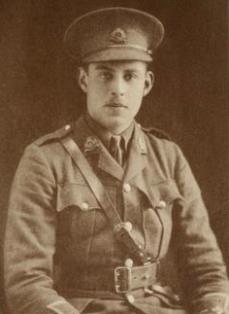
Second Lieutenant Dudley Luis De Tavora FERNANDES

Killed in action 23rd October 1914, aged 21

Dudley Luis de Tavora Fernandes was born 3 September 1895 in Great Crosby, Lancashire, the son of Thomas Weddell Luis Fernandes (a Lieutenant in the 4th Yorkshires) and Emily Margaret Fernandes (formerly Heywood). He was educated at St. Peters School in York and applied to become an officer cadet at RMC Sandhurst on 24 March 1912.

Gaining his commission on 17 September 1913, Dudley became a Second Lieutenant in the Bedfordshire Regiment and was posted to the 2nd Battalion, who were stationed in South Africa. Returning to Europe when war was declared in August 1914, he was fitted out for European warfare with the battalion and landed in France 6 October 1914. Days later his division were heavily engaged in the fighting east of Ypres, which would later be called the First Battle of Ypres.

On the morning of 22 October 1914, two platoons of D Company were sent to support the Royal Scots Fusiliers. After a day under fire, they returned to the rest of the battalion 'late in the day' and were heavily shelled once spotted by German artillery observers. In a letter to Dudley's guardian, Great Aunt and ward, Mrs Blanche Pontifex, Lieutenant Fanning told of how he had been 'struck by a shell' and 'lived for only twenty minutes afterwards', having not 'regained consciousness'. Captain Wetherell, who was attached to the same company, added how he was killed on 23 October and that he had been present at his burial. As 23 October is the date he is recorded as dying, it would appear he died shortly after midnight, having been mortally wounded in the last moments of 22 October.

Second Lieutenant Fernandes was among those mentioned in despatches for his gallantry during the battle. Although his burial was marked and the information returned to his next of kin, his grave was later lost. As a result, Second Lieutenant Fernandes is remembered on the Ypres (Menin Gate) Memorial to the missing (above).

As is often the case with the early deaths of the war, Dudley's estate was a complicated affair. Initially the War Office overlooked his death administratively until his Great Aunt took them in hand, ensuring they published his death officially in the Times. His sword was mixed up with another officer's and both bereaved families arranged an exchange, not before sharing their thoughts with the War Office once more! With both parents dead, his only sister was his closest relative but had not 'come of age'. Dudley himself only 'came of age' during the voyage from South Africa, so was unable to create a legal will, leaving his Great Aunt to handle the affair. Dudley's estate was split equally between his only sister (Marjorie Luis Fernandes) and Elizabeth Sutton, who had been the family nurse for over forty years.

Dudley's service record is held by the National Archives, under reference WO 339/9336.


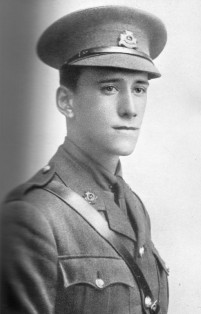
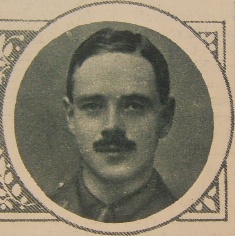
Second Lieutenant George Drennan Cron WRIGHT

Killed in action 23rd October 1914, aged 23

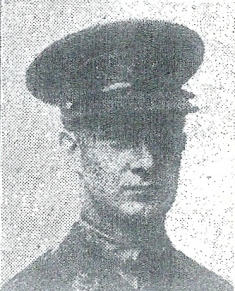
George was born at 15 Girdler's Road in Hammersmith on the 4th April 1891, son of George Archibald (a Solicitor, who died in 1892) and Letitia Sarah Wright (nee Drennan, born 15 June 1862). His mother's father was the late William Theodore Drennan C.E., of Cape Town.

He was gazetted as a Second Lieutenant on Christmas Eve 1913 and joined the 2nd battalion in South Africa in the New Year. Second Lieutenant Wright arrived back in Europe with the battalion and landed at Zeebrugge on the 6th October 1914.

Early in the morning of the 23rd October Second Lieutenant Wright advanced with C Company to fill a gap between the positions of two other regiments. They came under such a heavy fire that their positions could not be maintained and George was one of the men killed during their advance.

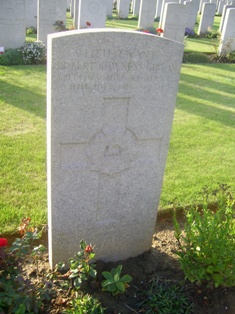
He lies in the Dadizeele New British Cemetery, 16km east of Ypres centre and is remembered on the Bedford County School War Memorial, the Church of St. Mary and St. Helen, Elstow, Bedfordshire.

His service record is held under National Archives reference WO339/9416.

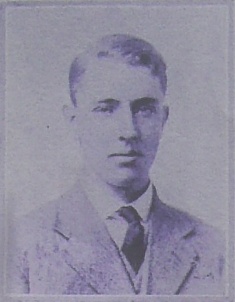
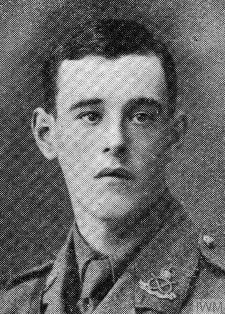
[Photograph from Bond of Sacrifice Volume 2. London: The Anglo-African Publishing Contractors, 1915, p. 453]


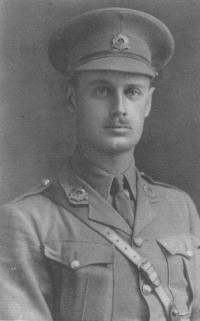
Captain Arthur Gordon HALL

Killed in action 26th October 1914, aged 34. D Company.

Arthur was born 20 November 1914 in Mysore, India, the son of Edward Hall (a coffee planter) and Anna Hall. Education at Bradfield School in Berkshire followed and in 1899 he joined the Militia, moving into the Bedfordshire Regiment soon after. Second Lieutenant Hall served in the Mounted Infantry during the 1899 to 1902 South Afrcan Wars and was mentioned in despatches for gallantry (London Gazette 10/9/1901).

He gained promotion to Lieutenant in 1900, rising to Captain in 1906 and serving as the Depot's Adjutant from 1909. Captain Hall was posted to the 2nd Battalion in Gibraltar, moving with them to Bermuda, South Africa, then to northern Europe when war was declared in 1914.

An extract from a letter shared by his widowed mother tells of his death; "He was waiting with his company, in support at the time, having just come down from the chateau close by, and had sent junior officers to the rear to ask for his orders of the day. While looking through his glasses for snipers he was himself shot by one of them through the neck and fell at once without any pain."

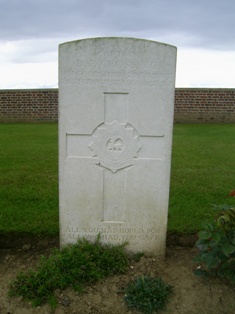
Captain Hall was mentioned in despatches for his gallantry during the fighting at Ypres and although initially buried on the battlefield, was later moved and now lies in the Perth Cemetery (China Wall), 3km east of Ypres centre.

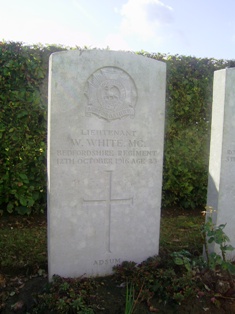
A photograph of his gravestone can be seen here.

(Image courtesy of the Imperial War Museum, taken from the Bond of Sacrifice, reference HU 122692)


Lieutenant William BASTARD

Killed in action 26th October 1914, aged 23.

William was born on the 20th April 1891 at Higher Coltscombe, Slapton in Devon, the son of William and Helen Bastard (nee Atkins). His father was a farmer by trade and he was the nephew of Devon's Medical Officer, Dr. Atkins. William was educated at Blundell's School in Tiverton before gaining a degree from Exeter College, Oxford.
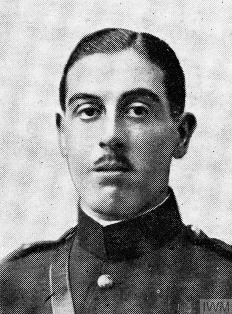
He was commissioned as a Second Lieutenant in the Bedfordshire Regiment on the 19th January 1912 and promoted to a full Lieutenant on the 22nd January 1913. William was serving with the battalion in South Africa when war was declared and arrived in France with them on the 6th October 1914.

During the First Battle of Ypres, as the battalion held their lines around Becelaere, he was directing his platoon's fire in support of another regiment's assault when he was shot and killed by a German sniper or machine gunner (depending on the source). Lieutenant Bastard was buried by a fellow officer at the foot of Becelaere hill that evening.

His mother received a condolence letter from the battalion C.O. stating that "from the day he joined I recognised that your son was one of the best types of officers; very keen on his work, thoroughly sensible and willing to take responsibility. I always had him in my eye as being well fitted for the Adjutancy role later on. He was very popular with both officers and men and I can assure you his loss to the battalion is very, very great."

He was also mentioned for his gallantry in Sir John French's despatch of 14th January 1915.

At the time of his death, his mother lived in Oakhill, Slapton, Devon. Amongst the correspondence within his service record is a letter from his mother thanking the Army Council for letting her know where her son had been buried. In it she politely apologies for troubling them with such questions concerning his burial - despite the heartbreak she must have felt at the time. Sadly, his grave was later lost as he is now remembered on the Ypres (Menin Gate) Memorial to the missing (above).

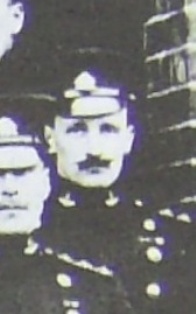
His service record is held by the National Archives under reference WO339/9208 and he can be seen in the group photograph here.


Lieutenant Edmund Elgood PUNCHARD

Killed in action 29th October 1914, aged 24

Edmund was born on 21 October 1890, at Christ Church Vicarige in Luton, the son of Elgood George Punchard (formerly the Vicar of Linslade, then Christ Church in Luton, later the Canon of St. Mary's in Ely) and Catherine Mary Punchard.

He was educated at Haileybury (1902-1908) before going onto R.M.C. Sandhurst in 1909. Edmund was commissioned into the Bedfordshire Regiment in October 1910, serving with the 2nd Battalion in Bermuda then South Africa. He was promoted to Lieutenant in June 1912 and served as the Brigade Signaller in Pretoria from 1913-1914.

Lieutenant Punchard landed with the battalion in France 6th October 1914 and was mentioned in despatched for gallantry during the battle in which he was killed.

His initial resting place was recorded and passed onto his parents but was later lost in the fighting which continued in that area for a further four years, so he is remembered on the Ypres (Menin Gate) Memorial to the missing.

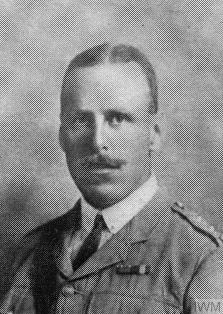
(Image courtesy of the Imperial War Museum, reference HU 117254)


Lieutenant-Colonel John Murray TRAILL

Killed in action 30th October 1914, aged 49

John was born 30th October 1865 and was educated at Trinity Hall, Cambridge.

He was initially commissioned into the Militia, joined the Bedfordshire Regiment in 1887 and served in the Isaza campaign of 1892. In July 1889 he was promoted to Lieutenant, becoming a Captain in February 1896. From that July until August 1904 Captain Traill served as the Adjutant to the 1st (Volunteer) Battalion, Essex Regiment, becoming a Major on 8 December 1906. John was the battalion's second in command in South Africa in August 1914 and had been mentioned by the C-in-C for his handling of native uprisings in South Africa earlier that year.

When the 2nd Battalion landed in Hampshire September 1914. Lieutenant Colonel Coates (the 2nd Battalion C.O.) was categorised as being medically unfit for combat service, so Major Traill became the battalion's commanding officer when they mobilised and arrived in France.

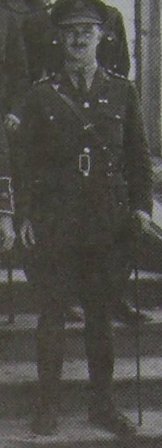
Lieutenant Colonel Traill was killed on his 49th birthday in the vicious hand to hand fighting east of Ypres, along with his second in command (below) and was mentioned in despatched for his gallantry during the battle.

John was the son of James Christie Traill of Hobbister, Rattar, Caithness, and of Julia Traill (nee Lambarde). His final resting place was lost and he is remembered on the Ypres (Menin Gate) Memorial to the missing. His name on the memorial panel can be seen here.

(Image from 1905, taken as he led his company during the march, Aldershot)


Major Robert Percy STARES

Killed in action 30th October 1914, aged 47
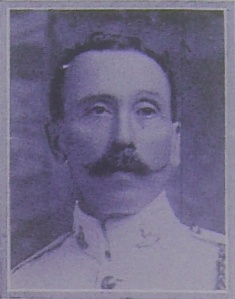
Robert was born 22nd November 1866 and educated at Weymouth College before continuing his education overseas.

He was gazetted into the Bedfordshire Militia in November 1888, gaining his Lieutenancy two years later. Also serving in the Isazi expedition of 1892 along with John Traill (above), Robert also served with the 1st Battalion during the Chitral campaign of 1895 and was engaged during the storming of the Malakand Pass as well as during the action near Khat and the Swat Valley.

Between May 1892 and April 1896 he served as the battalion Adjutant, becoming Captain in October 1896. Between August 1896 and May 1900 Captain Stares served as an Adjutant of Indian Voluneers, serving in expeditions on the North-Western frontier; he was also the Brigade Transport Officer during the Tirah expedition between November 1897 and April 1898.

Between January 1907 and January 1911 he served as Brigade Major, then D.A.A.G. in India, being promoted to Major In October 1908.

Major Stares was posted as the battalion's second in command when they were mobilised and fell alongside the commanding officer (above) during the desperate, close quarters fighting that day. He was shot and killed at close range, being mentioned in Sir John French's January 1915 despatches for gallantry.

Robert was noted for his fondness of polo, hunting and fishing, remaining unmarried throughout his life. He was the son of John Twynam Stares from Manor House, Upham in Hampshire and lies in the Perth Cemetery (China Wall), 3km east of Ypres centre.

During Major Stares' long service, he was awarded the Indian Medal with four clasps in addition to his Great War campaign medals.

He can also be seen in the 1st Battalion 1893 group photograph here seated in the middle of the front row, alongside Lieutenant Colonel A.M. Paterson (CO 1st Battalion), in addition to the group photograph here.


Lieutenant Wilfred Cruttenden ANDERSON

Killed in action 30th October 1914, aged 22

Wilfred was born 14th August 1892 at 16 Augusta Road, Ramsgate, the only son of Wilfred Turner Anderson (a retired Colonel of the 2nd battalion, 80th Foot, later the South Staffordshire Regiment) and Elizabeth Regis Anderson (late Cox, formerly Mahon). He was educated at Portsmouth Grammar School from 1906 and later at St Laurence College where he was a Private in their Officer Cadet Corps prior to being accepted to the Royal Military College, Sandhurst in March 1910.

Second Lieutenant Anderson joined the 2nd Battalion of the Bedfordshire regiment and was promoted to Lieutenant on the 1st April 1913. He served with them in South Africa, returning to Europe with them when war broke out. He can be seen in the group photograph here.

Lieutenant Anderson was in No.3 platoon, A Company during the First Battle of Ypres when he was mortally wounded alongside Captain Ernest Lyddon (below) during the battalion's ferocious stand against an overwhelming German assault from three sides. He was initially reported as being wounded and missing on 30th October 1914 and enquiries into his fate revealed nothing. Several witness statements are still within his service record including those of two Privates in his platoon.

Private 9373 Herbert Seekings wrote from No.13 Stationary Hospital in Boulogne two weeks later that "I was with Lt Anderson during the retirement at the First Battle of Ypres on about the 24th or 25th October 1914. I saw him just before we were ordered to retire and he was not wounded then. The Germans came upon us suddenly and seemed to come from all sides of us in the morning and we had to get away as best we could. Almost all his Company believe he is a prisoner but I do not think he has been heard from. One thing I do know is that no-one saw him shot. He was extremely well liked by everyone in the battalion."

Private 9484 Charles Alfred Robinson wrote from a hospital bed in Le Treport, December 1915 that "At 5 o'clock that day we were compelled by superior numbers to evacuate the position … I did not see Mr Anderson hit but as I ran along the top of the trench I saw him lying in the bottom of it. He was wounded I think, in the body or the head, but at any rate badly. Three or four yards away Capt. Lyddon was lying also wounded. I don't know what sort of wound he had but it prevented him getting away."

His sister, Alicia Anderson of 8 Cavendish Rd., Southsea, continued to write to the Missing Officers Enquiry Department of the War Office. Although it was accepted that he had died a year later, even as late as April 1919, enquiries were still being made as to his fate, despite the fact that no evidence had been forthcoming over the preceding four years.

Wilfred's body was never found so he is remembered on the Ypres (Menin Gate) Memorial to the missing (shown above), along with many of his comrades who fell during the battle. His record is held at the National Archives under WO339/8257.

As a nice touch which illustrates his personal taste a little more, in amongst the papers is a bill from one of his chosen Saville Row outfitters which includes lounge suits, dress suits and a golfing suit.


Second Lieutenant John Agar PATERSON [PATTERSON]

Killed in action 30th October 1914 (CWGC incorrectly records the date as 30th November)

John Paterson was born on the 19th November 1893, the son of William Morison and Margaret S. (nee Agar from Glasgow) Paterson of 27 Baskerville Road. William was a manufacturer's agent of 80 Great Portland Street.

He was educated at Dulwich College and Sandhurst before being gazetted a 2nd Lieutenant in Bedfordshire Regiment on the 17th September 1913. John was with the battalion in South Africa when war broke out, and can be seen in the group photograph here.

Second Lieutenant Paterson was killed in the fierce fighting during the Prussian Guards attack and has no known grave but is remembered in the Ypres (Menin Gate) Memorial to the missing.


Captain Ernest Hugh LYDDON

Killed in action 31st October 1914, aged 27

Ernest was born 14th May 1887 at 10 All Saints Terrace in Cheltenham, the son of Frederick Strickland Lyddon (a Bank Clerk) and Jane Woolcon Lyddon (formerly Elbrow). From 1899 to 1902 he was educated at Stubbington House in Hampshire, then at Weymouth College until 1904.

He applied for a postion at the Sandhurst Royal Military Academy 4th September 1905 at which time he lived at 22 College Road in Bristol.

On 16 October 1913 he was made a Captain and was with the 2nd Bedfordshires in South Africa when war was declared in August 1914 and can be seen in the group photograph here.

Captain Lyddon was in command of A Company when the Germans launched their massed assault against British positions east of Ypres that day.

Captain Lyddon was reported as being wounded and missing during the desperate fighting 31st October 1914. He was later mentioned as being within yards of Lieutenant Anderson in Private Seekings' letter (above). Private 10101 William Henry Laws added to this in a letter he penned from an Etaples Convalescent Camp 15th December 1914, saying "He was my Company Commander and I was close to him when he was wounded by shrapnel in the side, I think. We were entrenching and had to retire and leave him, but he said 'I shall be all right, boys' and he must have been taken. It was on the Menin Road".

Although enquiries continued for over a year, it was finally accepted that Captain Lyddon died from his wounds that day.

Ernest has no known grave, so and is remembered on the Ypres (Menin Gate) Memorial to the missing.

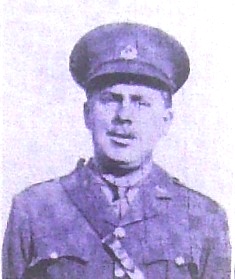
(Image courtesy of the Imperial War Museum, reference HU 124419)


Lieutenant Donald Godrid Campbell THOMSON

Killed in action 31st October 1914, aged 21

Donald was born in Penrith, Cumberland, on 3 February 1893, the son of Daniel Gibson Pearce Thomson (a surgeon and physician) and Clara Thomson (formerly Karran). He was educated at Queen Elizabeth's Grammar School in Penrith, and later at King William's College on the Isle of Man.

At the time he applied to become an officer cadet at RMC Sandhurst on 12 October 1910, he lived with his parents in Lark Hall, Penrith. By the time war broke out, his home was given as Croft House in Penrith, although he was physically serving with the 2nd Bedfordshires in South Africa.

Lieutenant Thomson was commissioned into the Bedfordshire Regiment on 19 January 1914 and joined the 2nd Battalion who were stationed in South Africa at the time.

He landed in France with a small reinforcement draft almost three weeks after the bulk of his comrades had landed, on 26 October, and was killed within days.

Donald was last seen wounded in the hand and head, lying in the bottom of a trench held by his battalion during their stubborn defence that day. Once the order to retire reached the troops around him, the manoeuvre had to be conducted with such urgency that Donald and those around him could not be collected and carried back to the new line being established further west.

Despite years of enquiries from his then widowed mother, Lieutenant Thomson's body was never found and he is remembered on the Ypres (Menin Gate) Memorial to the missing.

He can be seen in the 1914 group photograph here.

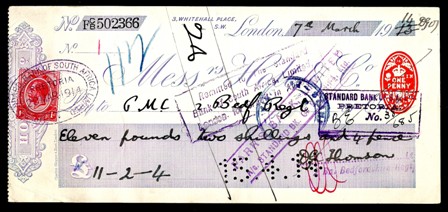
In 2014, Trevor Jones made contact as he was producing an article for the local Penrith newspaper telling the story of how two of the three brothers who enlisted were killed during the war. As a nice personal addition to his story, in Trevor's possession was this cheque, tendered by Donald in March 1914 while stationed in South Africa. Given that Donald had only recently been commissioned, he must have presented it not long after his arrival with the battalion.


Captain Charles Sidney GARNETT-BOTFIELD

Died of wounds 14th December 1914, aged 27

Charles was born at home (187 Drake Street, Rochdale) on the 5th October 1887, the son of Charles Ramsey Garnett-Botfield and Ida Mary Botfield (nee Aldersey). At the time of his birth his father was a Clerk of the Holy Orders. Charles was educated at Elleray Park, Wallasey between 1898 and 1902, then at Rossall School until 1906.

In March 1906 Charles applied to become an officer in the Royal Military College, Sandhurst, by which time his father was the Reverend at Moreton Vicarage near Oswestry. Following officer training, the Second Lieutenant joined the Bedfordshire Regiment in February 1908 and was promoted to Lieutenant on the 5th March 1910.

He was serving with the 2nd battalion in South Africa when war broke out and landed in France with them early in October 1914. Having been promoted to Captain on the 15th September 1914, he became the battalion Machine Gun Officer and fought in the most intense areas of the First Battle of Ypres.

Captain Garnett-Botfield was wounded during the ferocious fighting on 31st October 1914. Initially he was wounded in the left elbow but carried on fighting alongside his hard pressed men. Later in the fight his right thigh was shattered and he was transported to the Christol Base Hospital in Bolougne. Telegrams to his parents reported he was in a serious condition throughout his stay at the hospital and that his wounds stopped any possibility of moving him back to England until he was stabilised. He finally succumbed to his wounds on the 14th December 1914.

In a letter to Charles' parents, the battalion Adjutant remarked how proud Charles was of his machine guns and he was mentioned in Sir John French's despatches 14th January 1915, for his gallantry during the battle.

There was a mix up between his baggage and that of a Private Stanley after his death and numerous letters were passed between the Reverend, the War Office and Private Stanley's brother on the matter. Once their son's trunks arrived, they had all been broken into, causing understandable distress to his parents. In the event it transpired that the Private's brother had opened them all not realising they had been sent to him in error, given that he was a 2nd battalion Officer's servant. Although Captain Garnett-Botfield died in the Base Hospital in Bolougne, his body was apparently returned to England and he lies in the Moreton (Morton) Churchyard, near Oswestry.

His service record is held under the National Archives reference WO339/6998.


Lieutenant (Captain) Lewis Henry SHAPTER

Killed in action 31st January 1915, aged 28

Although the CWGC records his death as being in the 3rd (Reserve) Suffolks attached to the 1st Hants, Acting Captain Shapter was serving in the 2nd Bedfordshires at the time of his death.

He had originally landed in France on 3 December 1914 and transferred into the 2nd Bedfordshires on 28 January 1915, having presumably served in the 1st Hampshires in the interim. Just three days later Lewis was killed.

He was the son of the late Dr. Lewis Shapter, Exeter and lies in the Y Farm Military cemetery, Bois Grenier. What remains of his service record is held at the National Archives, reference WO 339/9462.


The following four officers fell during the battalion's involvement in the Battle of Festubert:


Captain Harold Edward HUNTRISS

Killed in action 17th May 1915, aged 24

Harold was born 23rd May 1890 in East Markham, Nottinghamshire, the son of William Huntriss, J.P. and Charlotte Elizabeth Huntriss. He was educated at Uppingham between 1904 and 1908, after which Harold applied to the Sandhurst Royal Military Academy on 29 September 1908, giving his address as Mattersey Hall, Bawtry, Yorkshire.

He was gazetted into the Bedfordshire Regiment in April 1910 and promoted to Lieutenant on 3rd May 1911. Lieutenant Huntriss joined the 2nd Battalion as they refitted for European operations in the New Forest and sailed with them to France 6th October 1914. Lieutenant Huntriss was hit by shrapnel in the left thigh on the 29th or 30th October, during intense fighting east of Ypres and returned to England to recover after an operation.

Harold returned to the 2nd Battalion in April or May 1915 but was killed at the head of his Company as they advanced to the second German trench line, Major MacKenzie and Lieutenant Hutton-Williams being killed close by. All three were buried together despite the difficulties their men had recovering their bodies after the battle.

At the time of his death, he lived at Harlsen House, Belvedere Road in Scarborough, his widowed mother being his next of kin (resident at 116 Wheelwright Road, Gravelly Hill in Birmingham). There also seems to be a link to Huntriss and Huntriss Solicitors in Halifax who handled his mother's affairs, his brother William seemingly being a partner within the firm.

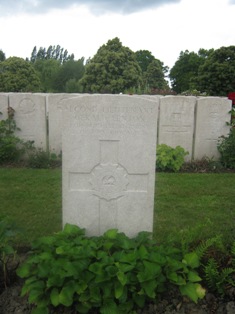
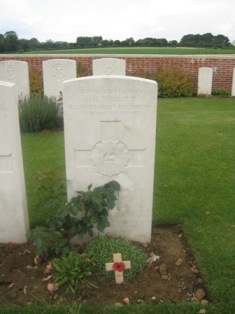
Lieutenant Huntriss is buried in the Guards Cemetery, Windy Corner, Cuinchy, 7km east of Bethune. A photograph of his gravestone can be seen here.


Major John Henry MACKENZIE, V.C., D.C.M.

Killed in action 17th May 1915, aged 44
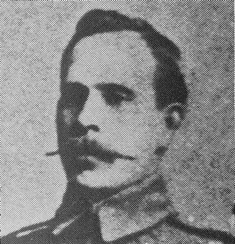
Major Mackenzie was from the 1st battalion, but attached to the 2nd when he was killed and had served in the army as far back as the 19th century. Starting his career as a Private, he won both his Distinguished Conduct Medal and Victoria Cross as a Sergeant in the Seaforth Highlanders and served King and Country across three decades, on several continents and during many wars.

His DCM was won whilst serving in the Highlanders in the Niger Territories in the Autumn of 1899 and was recorded in the London Gazette 9th January 1900. Page 1 of the London Gazette 2nd January 1900 includes an element of the dispatch from Lt-Colonel James Willcocks which refers to Sergeant Mackenzie's distinguished service:

"I have also to specially mention the good service rendered in September and October 1898, by Sergeant John MacKenzie, Seaforth Highlanders and West African Frontier Force."

Within a year whilst serving in Ashanti (Ghana) in June 1900, John Mackenzie had become a Colour Sergeant and won the coveted Victoria Cross. An extract taken from the London Gazette dated 15th January 1901 records the following:

"On the 6th June, 1900, at Dompoassi, in Ashanti, Sergeant Mackenzie, after working two Maxim guns under a hot fire, and being wounded while doing so, volunteered to clear the stockades of the enemy which he did in the most gallant manner, leading the charge himself and driving the enemy headlong into the bush."

On page 11 of the London Gazette 4th December 1900, the dispatches written by Colonel Sir James Willcocks, K.C.M.G., D S.O., Commanding Ashanti Field Force, to the Secretary of State for the Colonies shows Colour Sergeant Mackenzie's actions in some more detail:

"On 6th June Lieutenant-Colonel Carter and Major (local Lieutenant-Colonel) Wilkinson, Gold Coast Constabulary, with three hundred and eighty men, left Kwissa to join hands with Hall at Bekwai. I reached Prahsu on the 8th June, and the following day received a despatch from Lieutenant-Colonel Carter, stating that he had been opposed by the Adansis at Dompoassi, and had been obliged to return to Kwissa. The enemy had built five stockades about two hundred yards, long and nearly parallel to the road at a distance of only thirty yards from it; lying perfectly still behind the ordinary thick bush, which remained untouched between the stockade and the path, they waited until the advance guard was just opposite, and then opened a terrific fire which staggered our men they also fired from the surrounding trees. The guns and Maxims came into action at once, and a regular duel took place, our men falling fast; no one knew then, as we do now that the enemy were probably behind strong stockades, and there was no indication of it; the officers believed the enemy were firing from the thick bush, and thus swaying backwards and forwards the fight went on for two and a-half hours, by which time Lieutenant-Colonel Carter had received a severe wound, which incapacitated him from command. Lieutenant-Colonel Wilkinson then took command and was himself slightly wounded; Captain Roupell, 3rd West African Frontier Force, was dangerously wounded in several places; Lieutenant Edwards, R.A., West African Frontier Force, received two severe wounds, but continued to work the guns till the entire gun detachment were disabled. It was at this stage that it was found the enemy were posted behind breastworks, as the bush had become partially cut away by the fire. Lieutenant O'Malley, 2nd West African Frontier Force, was severely wounded while working the Maxim, nearly the whole detachment being disabled; Dr. Fletcher, Medical Officer, and Colour-Sergeant Mackenzie (Seaforth Highlanders), 1st West African Frontier Force, were also wounded, a total of seven Europeans hit out of eleven' present; three men were killed and eighty-nine wounded (some of whom have since died). Lieutenant-Colonel Wilkinson, seeing that the gun and Maxims were by this time out of-action, that his ammunition was running short, and the enemy's fire did not slacken, determined to retire, But Colour Sergeant Mackenzie came up to him and volunteered "to carry the stockade with, the bayonet" if his own company (Yoruba Company, 1st. West African Frontier Force) was placed at his disposal. Wilkinson at once ordered the Company, which was to the rear of the column, and on the arrival of the first two sections without hesitation, Mackenzie, charged at their head followed splendidly by his own men and all others in the vicinity, their officers of course leading them. The enemy did not wait the rush, but fled in confusion, and never rallied, and it is perhaps not too much to say a disaster to our arms was thus averted, for a retirement under the circumstances might have ended in a panic.

For this act of distinguished bravery I consider Colour-Sergeant Mackenzie is deserving of the highest reward a soldier can receive, and am making a recommendation accordingly. It was only last year that Colour-Sergeant Mackenzie earned the medal for distinguished service in the field on the Niger. The column then returned to Kwissa, being unable to advance owing to the numbers of wounded."

Colour Sergeant Mackenzie was commissioned as a Second Lieutenant in the Black Watch the year he won his VC, presumably in recognition of his bravery and obvious leadership abilities. On the 29th November 1900 he was given the local rank of Lieutenant whilst serving in the West African Force and went on to become a Captain in the Royal Scots 22nd January 1904, later serving in the Northern Nigeria Regiment. He was mentioned in dispatches 12th September 1902 for his involvement during the Aro Expedition in the Anglo-Aro War of 1901 to 1902, his activities in the Kano-Sokoto Expedition of 1903 and again during 1906 when he was staff officer of the Munster Field Force. He also appears in the London Gazette under the following dates:

3rd May 1910 "Captain John Mackenzie, V.C., is seconded for service as an Adjutant of Indian Volunteers. Dated 8th April, 1910."

18th September 1908 "The Royal Scots (Lothian Regiment), Captain John Mackenzie, V.C., is placed on temporary half-pay on account of ill-health. Dated 18th September, 1908."

29th December 1908 "The Royal Scots ''(Lothian Regiment}, Supernumerary Captain John Mackenzie, V.C., to be Captain, vice G.W.G. Neill, deceased. Dated 16th December, 1908."

4th August 1911 "To be Brigade-Majors. Captain J. H. Mackenzie, 1st Battalion, The Royal Scots, vice Captain L. Hume-Spry, D.S.O., West Yorkshire Regiment. Dated 6th June, 1911."

On the outbreak of war, Major Mackenzie was mobilised once again and arrived on the Western Front 23rd November 1914, initially serving in the 1st Battalion. He moved to command the 2nd battalion on the 20th March 1915 as a replacement officer for the battalion's losses during the Battle of Neuve Chapelle and remained in charge until the 17th April. During the opening day of the Battle of Festubert (16th May 1915), he led D Company superbly throughout bitter fighting and until the battalion were relieved and given a few hours rest in support positions. The following evening saw the battalion launch an assault in the dark against well defended German lines. Major Mackenzie put himself at the front of his Company and led their charge but as soon as they appeared from their trenches, the entire line was met by a wall of bullets and artillery fire.

After an incredible career serving King and Country on many continents, Major John Mackenzie, V.C., D.C.M. was killed at the head of his men, where he had always been. Eight days later a party of three Bedfords returned to the area he fell and recovered his body under cover of night, so that he would receive a burial deserving of one who gave so much. At the time he was buried with his fallen comrades in front of the Old British Line, 250 yards east of Festubert East Keep and 200 yards west of Yellow Road which ran north from La Plantin. After the war, during the concentration of burial sites into the beautiful CWGC cemeteries we are so familiar with today, his remains were moved and he now lies in the Guards Cemetery, Windy Corner, Cuinchy, 7km east of Bethune. A photograph of his gravestone can be seen here.

His Victoria Cross can be seen in the Regimental Museum of Queens Own Highlanders at Fort George in Scotland and his pipe banner is on display at the Edinburgh Castle Museum in Scotland.


Lieutenant Alfred Edgar KUHN

Died of wounds 18th May 1915, aged 20

Alfred was gazetted a Second Lieutenant 17th September 1913 and arrived in France from South Africa with the 2nd Battalion on the 6th October 1914. He was wounded 29th to 30th October 1914 and returned to the battalion 12th March 1915, having recovered and been promoted to a Lieutenant. Alfred was mortally wounded during the Festubert assault, dying from his wounds on the 18th May.

He was the son of Alfred and Marie Kuhn (later renamed to Kean) of 75A Lansdowne Place, Hove in Brighton and is buried in Bethune Town Cemetery.

Second Lieutenant Kuhn can be seen in the 1914 group photograph here and a photograph of his gravestone can be seen here.


Lieutenant William HUTTON-WILLIAMS

Killed in action 18th May 1915, aged 40.

Lieutenant Williams initially enlisted as Private 3513 in the East Surreys before being commissioned as an officer. He embarked in France on the 2nd November 1914 and arrived in battalion 19th December 1914, being attached from the 3rd East Surreys.

William was killed leading his Company as they advanced to the second German trench line, Major MacKenzie and Captain Huntriss being killed close by. All three were buried together despite the difficulties their men had recovering their bodies after the battle.

William was the son of Alfred and M. A. Hutton Williams, the husband of Violet Woodfall Hutton Williams of Holcombe, Caterham Valley, Surrey and is buried in the Guards cemetery, Windy Corner, Cuinchy, 7km east of Bethune. A photograph of his gravestone can be seen here.


Le Touret Memorial to the missing

The battalion were next engaged during the Second Action at Givenchy, losing almost 150 men in the battle. The following five officers were those who were killed during the assault:


Lieutenant Thomas Gavin Moor HORSFORD

Killed in action 16th June 1915, aged 22

Thomas was born 2 August 1892 in Penryn, Cornwall, the son of Colonel T.M.A. Hosrford who was the commanding officer of the Cornwall and Devon Miners' Royal garrison Artillery for 34 years.

After education at Beaumont College in Old Windsor, Thomas became an Army Student at Wimbledon College before being commissioned into the 3rd (Reserve) Bedfordshires in March 1913. Promotion to Lieutenant followed in May 1914 and he was transferred into the Regulars in August 1914, being posted to the 2nd Battalion when they returned from service in South Africa and going with them to France in October 1914.

He was invalided home with a wounds in October 1914, returning to the battalion in France the following May. Lieutenant Horsford was killed during the Second Action at Givenchy on 16 June 1915; his Officer Commanding wrote: "We had gone up to the trenches previously to an attack and your son and another officer were in the trenches talking, when the Germans started shelling the trenches and your boy and the other officer, Lieutenant Fix, were killed outright by the same shell … your son and Lieutenant Fox were buried side by side behind the trench they were in"

Lieutenant Horsford's grave was lost in the fighting and he is remembered in the Le Touret Memorial to the missing. A photograph of the panel bearing his name can be seen here.


Lieutenant Walter Henry FOX

Killed in action 16th June 1915, aged 20.

Walter was born in Walsall on 13 November 1895, the son of Dr. George Martin Fox and Emily Fox (formerly Vaughan).

After gaining a commission in the South Staffordshire Regiment, he was transferred to the 2nd Bedfordshires, arriving with them in the field on 28 May 1915, bringing a draft of 90 men with him.

Two weeks later, during his first battle, Walter was standing in a trench holding a discussion with Thomas Horsford (above) when they were killed by the same shell.

Lieutenant Fox's final resting place was not identified and he is remembered on the Le Touret Memorial to the missing.

What remains of his service record is held by the National Archives, reference WO 339/23579.

(Image courtesy of the Imperial War Museum, reference HU 122343)


Second Lieutenant Laurence TURNBULL

Killed in action 16th June 1915, aged 29.

Laurence was born 1st March 1886 at 7 Summerhill, Sunderland, the son of Henry Bishop Turnbull (an Insurance Agent) and Agnes Moir Turnbull. He was educated in the Stevens Preparatory School, New Jersey, before continuing his education in the Stevens Instiute of Technology until 1907, at which time he graduated with a degree in Mechanical Engineering.
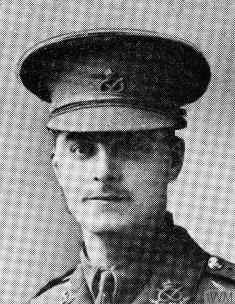
Laurence applied for an commission in the Special Reserve of Officers on 21st November 1914, specifying his preference as the 3rd (Reserve) Battalion of the Bedfordshire Regiment, being an Electrical Engineer at the time. Lord Ampthill accompanied his application with a personal letter, including the remark that he "has given up a very good position in America in order to offer his services", which was in the Westinghouse Electric and Manufacturing Company in Pittsburg, America.

Second Lieutenant Turnbull joined the 2nd Battalion on 5th June 1915, being attached from the 3rd Battalion but was killed eleven days later. He has no known grave but is remembered in the Le Touret Memorial to the missing. A photograph of the panel with his name on can be seen here.

At the time of his death, his widowed mother was the next of kin, living at 17 Goldington Road in Bedford as did his surviving brother, Denis.

(Image courtesy of the Imperial War Museum, reference HU 119357)


Second Lieutenant Claud William MaCFIE

Killed in action 16th June 1915

Claud was born 8 December 1892, the son of Claud MacFie (of Gogar Burn in North Berwick by 1915). He was educated at Cargilfield in Midlothian before going on to Marlborough College, then New College, Oxford.

Still a 21 years, 8 months old Student when war broke out, Claud initially enlisting into the Lovat Scouts on 9 September 1914, becoming Private 2361 and being posted to D Squadron at Huntingdon. He applied for a cmmission on 30 October 1914 and was discharged to commission as a Second Lieutenant in the 3rd Battalion, South Staffordshire Regiment on 6 November.

Arriving in france May 1915, he was posted to the 2nd Battalion, Bedfordshire Regimment, joining them on 27 May 1915 and was killed just over two weeks later. The Bond of Sacrifice records that he was leading his platoon in an attack on a German crater but the position was later lost so his body was not recovered, so is is remembered in the Le Touret Memorial to the missing.

Second Lieutenant MacFie was mentioned in Sir John French's despatched of 30 November 1915 for his gallantry

(Image courtesy of the Imperial War Museum, reference HU 117455).


Lieutenant Geoffrey Montagu Mason FLEMING

Killed in action 16th June 1915, aged 25.

Lieutenant Fleming was the RAMC Medical Officer who was attached to 2nd battalion when he fell, having joined them on the 20th May 1915.

He was the son of Alfred G. and Marie M. R. Fleming, of Beechfield, Blackrock, Co. Dublin. M.B. and B.Ch., Trinity College, Dublin and lies in the Buried at Guards Cemetery, Windy Corner


Lieutenant (Acting Captain) James Charles Alexander NESS

Killed in action 27th June 1915, aged 19.

James applied for a commission on 4 January 1914, giving his address as The Old Manor House, Chilworth in Surrey. He initially served in the 1st Battalion and was lightly gassed at Hill 60 in April 1915, having arrived in France on 12 April 1915.
After a spell recovering in England, he was promoted to Lieutenant and posted to France.

Lieutenant Ness was killed within hours of his arrival with the 2nd Battalion as he went out on patrol and did not return. Enquiries continued for many years as no noises had been heard from the patrol so his parents hoped he had become a POW, but his death was later accepted.

He was the son of Major James Alexander Ness and Winifred Isobel Ness of Kinkell in Woking, Surrey and is remembered in the Le Touret Memorial to the missing.

His name can be seen on the memorial panel here.


The Loos Memorial to the missing, within Dud Corner cemetery
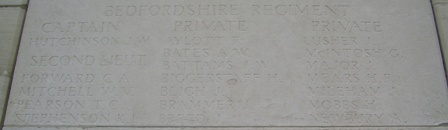
The battalion were engaged during the Battle of Loos, when they lost over 350 men in the opening phase alone. Included in the casualty toll were the following five officers:


Captain James Walter HUTCHINSON

Died of wounds 25th September 1915

James was born on the 25th November 1889 at Rooi Vaal, Harding, Natal, South Africa, the son of William Arthur (a farmer) and Charlotte Catherine Birch Johnstone Hutchinson (nee Walker).

He was granted a commission when war broke out and travelled to England to start his training. Second Lieutenant Hutchinson was posted to the 3rd battalion and was promoted to Lieutenant on the 18th December. He joined the battalion as a Lieutenant in May 1915 and was promoted to Temporary Captain over the summer whilst in charge of B Company.

Captain Hutchinson commanded B Company during the battalion's assault on the opening day of the Battle of Loos and they were met by heavy fire from two sides when they advanced across open ground. He was wounded during this assault and died from his wounds during the course of the day.

Captain Hutchinson was originally buried between the two original front lines from before the battle, just to the south of the Hulluch Road but his final resting place was either lost or disturbed as he is now remembered on the Loos Memorial to the missing.

His service record is held by the National Archives under reference WO39/14076.


Second Lieutenant Charles Arthur FORWARD

Killed in action 25th September 1915, aged 19

Charles was born in Calcutta on Christmas Day 1895, the son of Arthur and Ellen Gertrude Forward.
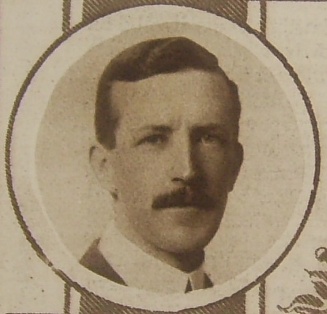
He was gazetted a Second Lieutenant on the 17th April 1915 and arrived in France on the 22nd June, joining the 2nd battalion in the field on the 11th July 1915. Charles was appointed Grenade Officer in August and served as such during the Battle of Loos the following month.

During the battalion's assault on the opening day of the Battle of Loos Charles led his men over open ground and came under heavy fire from German positions on two sides. Despite the heavy casualties, they continued to advance but Second Lieutenant Forward was killed as he led the platoon.

Private 15513 Hitchen testified from his hospital bed that "first of all he was shot in the leg during the German attack at Zonnebeke. He stopped for a short time then went forward until he was shot dead in the head. As we did not hold the ground he was not buried by our men but may have been buried later on as the ground was regained"

In the event, his body was not recovered and he is recorded on the Loos Memorial to the missing (photograph of the panel can be seen here).

His service record is held by the National Archives under reference WO339/43285.


Second Lieutenant Terence Charles PEARSON

Killed in action 26th September 1915, aged 22

Terence was born 2nd June 1893 in Bombay, India, the son of Charles Frederick and Ellen Mary Pearson. Educated at Bedford Grammar School, when war broke out he had been employed as an Estate Assistant for four years with the London Asiatic Rubber and Produce Company in the Semenyih Estate, Kajang, Selangor. He immediately resigned and returned to England to offer himself for service in the war.

He initially enlisted on 20th October 1914, becoming Private 756 in the 19th Royal Fusiliers. On 9th November 1914 he was discharged once he had been accepted as an officer at Sandhurst. Terence was gazetted as a Second Lieutenant on 17th April 1915 and after a brief posting to the 3rd (Reserve) Battalion, landed in France 22nd June. Joining the 2nd Battalion on the 5th July, Second Lieutenant Pearson was sick between 21st August and 2nd September.

Terence was killed in the battalion's attack 26th September, his body being lost in the fighting, so is remembered on the Loos Memorial to the missing.


Second Lieutenant Kenneth Langton STEPHENSON

Killed in action 26th September 1915, aged 23

Kenneth was unusually early joining the army, enlisted on the 6th August 1914 and becoming Private 1608 in the 28th County of London Regiment. At the time he was 21 years old, He worked on the Stock Exchange and lived in Bourne End, Buckinghamshire.

After training, Private Stephenson landed in France 26th October 1914 when his battalion were mobilised and served continuously on the Western Front. He was promoted to Lance Corporal from the 20th March 1915, becoming Corporal the following day. In July Kenneth reverted to Private at his own request but on 15th August he was commissioned in the field and posted to the 2nd Bedfordshires.

Second Lieutenant Stephenson joined the battalion on the 22nd August 1915 and was killed five weeks later, having been mentioned in despatched twice during his short period with the battalion.

He was the son of Henry Langton Stephenson of 5 Copthall Court, Throgmorton St., London and is remembered on the Loos Memorial to the missing.


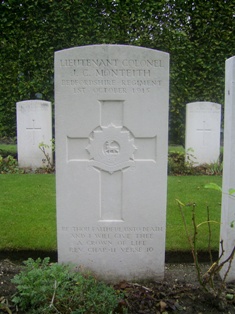
Lieutenant-Colonel John Cassells MONTEITH

Killed in action 1st October 1915, aged 39

John became Captain from 5th January 1910 and initially went to France with the 1st Bedfordshires, landing in the first wave of British Troops 16th August 1914. He commanded D Company through the Battles of Mons and Le Cateau.
During the battalion's stubborn defence of the woods east of Ypres on 7th November 1914, he was wounded having led baynet charges to regain lost trenches during the fighting. While in the UK recovering from his wounds, he acted as the chief instructor of the Cambridge O.T.C. during his convalescence.

Major Monteith returned to France, joining the 2nd Battalion on 26 August 1915, serving as their second in command from his arrival.

After the battalion's Commanding Officer, Cranley Onslow, was mortally wounded during the opening day of the Battle of Loos, John assumed command until he was killed days later whilst personally directing the formation of a bomb stop in Stone Alley on 1 October 1915.

He died from his wounds shortly afterwards, in the Chateau that was acting as a dressing station.

Lieutenant Colonel Monteith was the son of the late Rev. John and Ellen Maria Monteith and husband of Jane R. Monteith, of Glenluiart, Moniaive, Dumfriesshire. He lies in the Vermelles British cemetery, 10km north-west of Lens


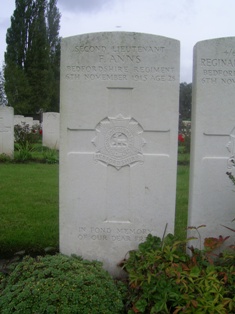
Second Lieutenant Frederick ANNS

Killed in action 6th November 1915, aged 28.

Frederick was born in Newport, Fife, on 8 April 1887, the son of Thomas and Mary Anne Anns.

Before the war he was a Merchant in Madras, India and from 1 April 1912, served as a Second Lieutenant in the Madras Artillery Volunteers.

On 16 September 1915, Frederick enlisted into the New Army and became a Private 733 in the 16th Battalion of the Middlesex Regiment. At the time of his application to become an officer, on 29 January 1915, he was single, just under 6 feet tall, and lived with his father at The Redlands, Ashwell in Hertfordshire.

Private Anns was gazetted as a probationary Second Lieutenant in the 4th Battalion on 20 February 1915, landing in France on the 30 September and arriving with the 2nd Battalion on 4 October. Just a month later a mine was detonated in the 2nd Battalion's sector and the Bedfordshires attempted to move their line forward as the opportunity allowed.

During the subsequent operations, Second Lieutenant Anns was killed by rifle fire while overseeing a digging party in one of the craters caused by the mine detonation.

He lies in the Guards Cemetery, Windy Corner, Cuinchy, 7km east of Bethune.


Second Lieutenant Evelyn Ernest Arnold COLLISSON

Killed in action 23rd February 1916, aged 22

Evelyn was the only son of the Reverend Thomas Collisson (the Rector of the Gravenhurst Rectory, Ampthill, Beds) and Florence Collisson.
Second Lieutenant Collisson was an officer from the Bedfordshire Training Depot and can be seen here in the Officers group photograph from the Training Depot in July 1915. However, he was attached to A Company of the 2nd battalion early in November 1915 and joined the 2nd battalion in the field on the 24th November 1915.

After only a few months in the trenches Second Lieutenant Collisson was killed during a "very quiet", cold, snowy day in the front line, by a sniper. He was originally buried in the Maricourt cemetery but appears to have been moved during the concentrations of the 1920's and now lies in the Cerisy-Gailly Military cemetery, Cerisy, 10km south-west of Albert.

His service record is held by the National Archives, under reference WO339/38053. In amongst the effects returned to his parents after his death were the usual letter cases, whistle and chain, cheque books and tobacco pouch but also the rather poignant "Touchwood" lucky charm.


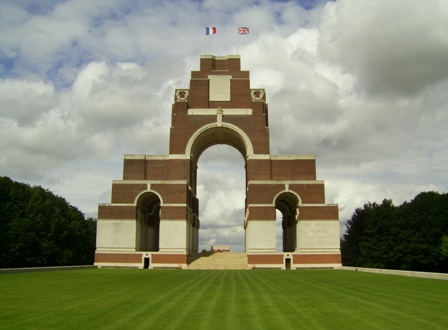
The Thiepval Memorial to the Missing

During the battalion's assault against German positions within the infamous Trones Wood, the following three officers were killed and a further 240 men were killed, wounded or posted as missing:
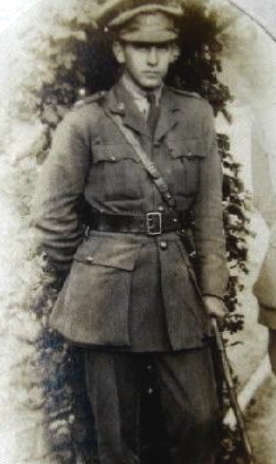

Captain Cornelius George TYLER

Died of wounds 11th July 1916, aged 39.

Cornelius Tyler was born in Waltham Green, London, in February 1877.

A Porter at the time, Cornelius enlisted into the British Army on 22 August 1895, joining the 2nd Battalion of the Devonshire Regiment as Private 4389. Steady promotion followed and having reached the rank of Sergeant by April 1900, he elected to remain with the colours for the full 12 years rather than moving into the Reserves. Further extending to complete the full 21 years, he rose through the senior N.C.O. ranks until becoming Colour Sergeant Major from 1908.

Sergeant Tyler served through the South Africa Wars, and he was Mentioned in Despatches in 1902, later serving on Crete and Malta. He was posted in Egypt when war broke out in 1914 and arrived in France 4 November 1914.

At the Battle of Neuve Chapelle on 11 March 1915, he was severely wounded in the thigh and returned to England to recover.

Company Sergeant Tyler was commissioned in the field on 5 March 1916 and joined the 2nd Battalion of the Bedfordshire Regiment on 25 March 1916. He survived the opening day of the Battle of the Somme but was among the officers lost in their attack against Trônes Wood.

Private 7079 [sic 4/7099] Archibald Parsley from Berkhampstead wrote that "we were advancing to take the first line German Trench when Capt. Tyler disappeared. He was last seen on the right of his company (C Company). The whole regiment was questioned afterwards but no-one knew anything about him. Captain Tyler disappeared about half way across No Man's Land. We took and held the trench so that he can hardly be a prisoner. We all put it down that he was blown to pieces by a shell."

However, the battalion diary records that he was in command of A Company and, having forced their way into the western edge of the wood that morning, he and 40 men were pushing northwards when they were held up by a strong position on the eastern edge of the wood. Although he was severely wounded during the assault, it was clear that their position was hopeless so he ordered the retirement of his men despite them being unable to carry him back.

He was not seen or heard from again and was posted as wounded and missing after the attack.

Although the War Office recognised his death in July 1917, his wife continued to make enquiries until 1918, hoping that her husband had been found among the prisoners of war in German hands. However, his body was not recovered and he is amongst the thousands of men believed to be lying in the wood even today.

Captain Tyler was the son of George and Sarah Tyler and the husband of Ada Augusta Clarke (formerly Tyler) of "Birtle Dene", Frances Avenue in Maidenhead, Berks.

In spite of his 21 years of faithful service, he has no known grave and is remembered on the Thiepval memorial to the missing.


Lieutenant (Acting Captain) Robert Bowness GIBSON

Killed in action 11th July 1916

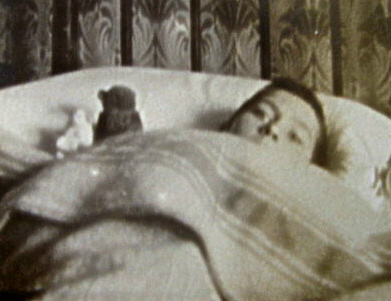
Robert Gibson was born 8th January 1895 at 139 Downshire Hill in Hampstead, the son of the Reverend Thomas William Gibson of Cranham Rectory, Upminster. His mother was Frances Georgina Gibson, nee Currey. Robert was baptised at St Sepulchre's, Holborn, March 25th 1895 and confirmed at St Giles, Oxford, April 15th 1908 by the Bishop of Oxford. His education started at the Oxford Preparatory School (Lynam's) between 1904 and 1908, after which he attended the Winchester College from September 17th 1908. In 1913 he won a scholarship at New College Oxford. Whilst at Oxford, Robert had double pneumonia, which was when the photograph of him in bed (below) was taken.
On the outbreak of war, he enlisted into the Territorial 28th London's (the "Artists Rifles") as Private 2605 on the 8th September 1914 and was discharged to Commission on the 26th October, into the 3rd South Staffordshires, aged 19 yrs 9 months. On the 3rd November 1914 Robert was posted to B Company of the 2nd Bedfordshires, arriving with them in France on the 20th May 1915.

2/Lt Gibson was mentioned in dispatches on the 16th June 1915 for his role in operations around Givenchy, when he was the only Officer to come out of the fight unscathed, and again by Sir John French on the 1st January 1916.

He was evacuated sick to Merville Hospital between the 12th and 18th July 1915 as well as being admitted to CCS1 on the 29th August 1915 with appendicitis. He was discharged again on the 3rd September 1915.

As a result of their assault during the Battle of Loose near Vermelles on 25th September 1915, Robert took command of B Company, being the most senior Officer left after the attack and was the Captain in command of B Company by November. His Captaincy reverted to 2/Lt the following month, along with Lieutenant de Burriatte (of the Xmas truce 1914 fame) & he was granted leave between the 11th December 1915 and 15th February 1916.

Having returned from leave on the 26th February, Robert took command of A Company, then C Company the following month.

In April, he was moved to Officer Commanding B Company but the next day was off to hospital sick again. After a short respite, he was back in charge of B Company again and enjoyed another spell of leave towards the end of May 1916.

The "brave and much loved" Robert was twice recommended for a Military cross (at Givenchy and Vermelles in 1915) but was sadly killed in action on the 11th July 1916 at Trones Wood on the Somme. A letter held in his service record dated 14th August 1916 said he was buried at Maricourt Cemetery (now called the Peronne Road cemetery) , near the Napiers Redoubt at 2.30am on Sunday 16th July 1916 after three men from his platoon volunteered to go and find his body.

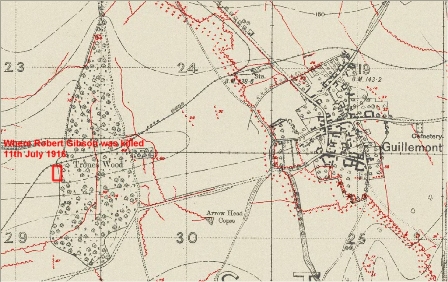
The Battalion War Diary for 11th July 1916 reads: "11 Jul 1916 - Trones Wood The Battalion were in position by 1.30 a.m. formed up in lines of 1/2 Companies with an interval of five paces between the men, and a distance of 150 yards between platoons, in the following order: - "A" Company commanded by Captain C.G.TYLER "B" Company commanded by Lieutenant H.A.CHAMEN "C" Company commanded by Captain L.F.BEAL "D" Company commanded by Captain R.O.WYNNE." Orders had been received that the Battalion was to enter the wood at 3.27 a.m., so the leading line commenced to advance at 3.10 a.m. towards the South eastern edge of TRONES WOOD. It being almost dark, the advance was not observed until the leading line was 400 yards from the wood, when enemy Machine Guns opened fire from Points Z and R marked on Sketch (Appendix "B"). The enemy quickly got their artillery to work and the Battalion suffered many casualties entering the WOOD, but by 3.45 a.m. the whole Battalion had gained the inside of the WOOD, but owing to Machine Gun and shell fire, had entered rather too much at the SOUTHERN END. Owing to the denseness of the undergrowth, it was not possible to see more than 4 yards in front of you, so the Companies had great difficulty in keeping touch. Lieut.R.B.GIBSON was killed entering the wood and 2nd Lieut.F.E.PLUMMER was wounded. It was found that the WOOD was strongly held and full of Trenches and Dug-outs."

Robert Gibson fell in the area shown on the trench map to the left, just as his platoon entered the wood. Most of his men were killed or wounded in the burst of machine gun fire that claimed his life, with very few of them making it into the wood itself.
Robert's obituary in the Times, dated Friday August 4th 1916, reads:

"Lt Robert Bowness Gibson, killed on July 11th, was the 5th son of the Rev. T W Gibson, rector of Cranham. He was educated at the Oxford Preparatory School, Winchester and New College Oxford. He was gazetted second lieutenant in the South Staffordshire Regiment in November, 1914, being attached and later transferred to the Bedfordshire Regiment, with which he had served at the front since May 1915. His name was noted for conspicuous gallantry in the field on June 16 1915 and was mentioned in Lord French's dispatch on January 1 last. His colonel writes of him:- "I cannot tell you how much he was loved by his brother officers and men. He was a most splendid officer, quite the best subaltern I had"."

A fellow Bedford Regiment enthusiast, John Wainwright, has a collection of letters and photographs detailing the life of the obviously brilliant and very popular Robert Gibson, a well as some of the pressed flowers taken from his grave in 1923. Below are a selection, including the circumstances surrounding his death at Trones Wood on the Somme, 11th July 1916.

Extracts from letters to Miss Clementson, written by Robert before he went out to the front:

"Pray for me .....that I may prepose myself physically and spiritually for the work, and may be ready to kill and if need be to be killed in the service of God and our country" "Of course our actual fate lies in God's hands and he will give us what he thinks best" "I can with absolute sincerity wish you a Happy New Year and a Happy Birthday, feeling that though the war may bring us sorrow, may even bring death among us, it will in the end bring greater faith and greater peace in God" "I like to think we are all united in worship, the Lord be with you and me and with all those whom we love, and all who are coming to England's help today. And may he overrule this war to the good of the world".

"From Lt Col HS Poynty. Commanding 2nd Battn Bedfordshire Rgt, BEF, 15-7-16. It is with the deepest regret I am writing to you how your gallant son was killed. A braver and better fellow never stepped (sic) and I can't tell you how much he was loved by his brother officers and men. He was a most splendid officer and quite the best subaltern I had. On July 11th at 3.27 am we were ordered to attack Trones Wood, where very heavy fighting has been going on. It had been taken by us and re taken by the Germans, so we were ordered to re take it again. The distance from us to the wood was about 1000 yards. D Coy in which your son was, was the third company to go over, and unfortunately your son's platoon was heavily fired into by a body of Germans hidden in the wood, with the result that the whole platoon was knocked out. Your son was shot through the head and I am thankful to say could not have suffered as death must have been instantaneous. Yesterday at 10.00 am the whole of the wood was captured, we only secured the southern end of it, as it was too strongly held. Your son's body lay on the edge of the wood about half way up on the western side, and several attempts were made to get him in, but each time we were driven back. We have sent a party out to try to recover it and I am anxiously awaiting the news that it has been recovered. We are going to have him buried in Maricourt Cemetary and I will write and let you know exactly. I can't tell you how much we miss him, and how very popular he was with everyone. We had terrific fighting in the wood and the regiment did magnificently in establishing a footing in the southern end of it. We lost 5 officers and 240 men in the attack. Please accept the sincerest condolences of the officers and all ranks of the battalion, a nicer and braver fellow never lived"

"From Capt Beal 2nd Bedfordshire Rgt. 17-7-16. By now you will have heard of the sad death of your son, nothing I can say can in any way express the deep sorrow of not only myself, but of every officer and man in this Regt. I have served longer with this Regt out here than any other officer and can safely say that your son's death in action has been felt more keenly than any other of the many this Regt has suffered. I can hardly realise yet what has happened, your son being my oldest ad best friend in the Regt. Many and many a time have we shared the same blanket and coat in trying to keep each other warm. If anything can help you bear your great loss, I am sure it will be the knowledge that his death was instantaneous and that he died at the head of his men, with whom he was so well liked. His body has been recovered and buried and buried in the British Cemetery near where he fell. With sincere sympathy to you and your family"

"From Major Bidder, 21st Brigade Machine Gun Coy.28-7-16. I have just got our address from Capt Wynne and wish to write to you about your son. I commanded the 2nd Brigade (sic?) from the last day at Loos (when they were holding Breslau Avenue) for a couple of months, I got to know your son well in that time , for he was one of my company commanders; and I got to think a great deal of him, he was so able and so dependable. One knew that anything he was given to do would be done and well done. He was brave as a lion and such a clever and interesting man as well. I liked him very much indeed and it was a real blow to me when I heard that he too had been called upon for the great sacrifice. I should like if I may to express my very real sympathy with you. I remember him so well under such varied circumstances. Cheerful and muddy in the trenches, toiling at almost impossible tasks in getting out ready made barbed wire obstacles; consolidating craters in the little attack we made in November; enjoying the comparative cleanliness of billets and (I don't know why one should be shy about it) kneeling to receive the communion on the meadow grass of a sunlit orchard. His is one of the many faces that will always stay by me, of my friends who have gone before. Your son and Capt Wynne lunched with me just before July 1st he was in the best of spirits"

"From Lieut B Primrose Wells, 2nd Bedfordshire Regt, BEF, 16-7-16. RIP. I must just write you a line and send you my sincerest sympathy in your great loss and in ours also. We all had a great affection for your son and considered him the bravest, most gallant officer in the Regt. He was extremely nice to me when I joined the battalion and the affection had continued all the time. We had a very hard job set us in attacking Trones Wood and received a good deal of opposition at first. We estimate there were quite 300 Huns in the wood when we attacked. Your son was on my left and he and his platoon were supposed to enter the wood a little way up on the W side. He was in his exact position, with his men round him when he got near the wood. The Germans had a trench all down the W side of the wood which we did not know about, and just where your son wanted to enter was one of their strong points. He quite saw what was up against him, and his platoon opened fire and he fired several shots himself with his revolver, but the Huns had the advantage from the trenches, besides being excellent shots. Your son was shot apparently through the head absolutely instantaneously not making a sound. I had to advance over the same ground and tried twice to get his body in, but lost men both times, so left it until we could finally get the whole wood. We were relieved after 48 hours of very hard fighting hand to hand - and very nerve racking. Two days after, when the wood was finally taken by the British, I asked the Colonel if I might go up again to get our son's body out and bury it in the Maricourt Cemetery, but he refused to let me go, and our Chaplain with 4 volunteers went up and found the body and buried him in Maricourt Cemetery. We are making and inscribing a cross down here as we are back a few miles having a well earned rest, and when we get it up I will try and get a photograph taken of the grave and send it to you. He died as he would like to die, in action and having done his duty to the fullest and with nearly all his platoon round him, two sergeants and two men surviving, the remainder killed or wounded. I have heard from Mr Turnbull, our chaplain that he is writing you. I take over your son's platoon or the remainder with reinforcements. I shall try and see you when I am in England, but don't expect any leave for sometime. Once again my sincerest sympathy. We miss the vacant place as he was always such a cheery fellow. Capt Beal, our company commander was quite cut up as "Jaspey" as we called your son, was to use the familiar phrase, was his :- "mucking in pal in dug outs etc", and were always seen together"

"From Mr Turnbull, Chaplain attached 2nd Bedfordshire Regt. 4th Sunday after Trinity 1916. I am writing to tell you that we have succeeded in recovering the body of your son and he was buried last night at 2.30 am, behind the line in a French village. When it was known that the wood where he lost his life was in our hands, we determined to try to recover him and so three of the remnants of his platoon came up with me to do so. I can only say that after a short search we found him where we expected, and brought him back to the cemetery. I should like to mention the magnificent spirit shown by those three men, who gave up a night of their much needed rest to do the last honour to a man that in their simple soldier's way, they loved. No greater tribute to your son's life and influence out here could be paid to him. The names of the men who brought him down are Sergeant [comment; 9544 E.] Pepper, Private [comment; 50626 Harry Otto] Riddell and Private [comment; unknown] Piggott, all of the 14th Platoon, 2nd Bedfordshire Regt. I am sure you will like to know who it was that came forward so readily. It has been a great comfort to us to have been able to do this and I feel sure it will help you in a small measure in your great sorrow. I hope you will allow me to say that his loss has been a great one to me personally. Though I have only been with the battalion since April I have learned to value his unselfishness and his wonderful cheerfulness, and I miss him sorely. But for you the sadness must be infinitely greater, and the only comfort I can assure you of is, that his example will not be forgotten by the men he led. He was a true soldier, and the men told me with pride that he never asked hem to do what he would not do himself, and he was always in the front to inspire them by his own personal example. You will forgive me not writing further, as I believe the Colonel will have sent you the particulars gathered from those who were near him when at the time. His grave will be photographed as soon as possible and the results sent to you. May I ask as a favour that if you can spare some small memento of him, I should be grateful, but knowing the small claim I have to such an honour, I hope you will not let those who knew him best be without them. He was present at the last celebration that we had on the Saturday before he went into action again."

Robert's servuce record is filed under WO339/446 at the National Archives.

Oxford student Robert Gibson in bed with double pneumonia.


Second Lieutenant Leslie Herbert FOX

Killed in action 11th July 1916.

Leslie was born 23 September 1896, the son of Robert and Edith Eleanor Fox of Vernon Hay in Ryde on the Isle of Wight. His father was recorded as being a Gentleman.

Educated at Berkhampstead school, Leslie left at the end of term in the summer of 1914; he was also a Sergeant in the school's O.T.C. at the time and had passed the Oxford and Cambridge School Certificate in German among other subjects. However, instead of continuing with his studies, Leslie enlisted into the 19th Royal Fusiliers on 18 September 1914, joining A Company as Private 19/352.

Standing almost 6 feet tall, the by then Corporal Fox applied for a commission 27 April 1915 and was discharged from the ranks when granted a commission on 14 May 1915.

Joining the 4th Battalion of the Bedfordshire Regiment for training, Second Lieutenant Fox was posted to France and joined the 2nd Battalion on 23 March 1916.

On the day of his death, he was with the advanced A Company during the assault on Trônes Wood and after they had secured their objective of the first German trench line inside the wood, told his men to hold their posts while he patrolled into the wood alone.

Private 9624 William Peck of A Company gave the following statement from his hospital bed 5 weeks after the event; "we were in Trônes Wood attacking and had been there about three hours when this officer went round the wood to see where he was going to place his platoon. We went out to find him as he didn't return and were surrounded by Germans, we managed to get out of the wood but 2nd Lieut. Fox was never seen afterwards."

Another witness added "Lt. Fox went out to see where the trenches were to be dug and he got past some of the Germans outside the wood. I went with a search party to look for him and got among the enemy too but we were able to bomb our way back."

He never returned and was posted as missing the following day, his death being accepted in 1917. At the time of his death, his father lived at The Rowans, Berkhampstead in Hertfordshire.

Leslie's body was not recovered and he is remembered on the Thiepval memorial to the missing.


Second Lieutenant Robert Francis Cooper BALLARD

Killed in action 30th July 1916, aged 20.

Following education at Oundle School, Robert Ballard was an Insurance Clerk from Lyndale, Balaclava Road, Surbiton in Surrey when war broke out.

He was one of the more unusual enlisters, joining the 28th London Regiment (the "Artist's Rifles") on the very first day of war - 4 August 1914. He became Private 1394, conveniently giving his age as exactly 18 years old. Private Ballard went to France with the battalion on 26 October 1914 and on 3 June 1915, lost his Lance Corporal stripe because of misconduct. Nevertheless, Robert was gazetted as a Temporary Second Lieutenant on 28 November 1915.

Following a short spell of leave, Second Lieutenant Ballard joined the 2nd Bedfordshires on 7 December 1915 and other than another period of leave in February and leaving briefly in March due to illness, he served with the battalion until his death.

Second Lieutenant Ballard was amongst the 192 casualties lost when their brigade assaulted the area around Maltz Horn Farm, defended by 11 fresh Bavarian battalions.

Robert was the son of George Robert and Ada Louisa Ballard of Lyndale, Surbiton in Surrey and is remembered on the Thiepval memorial to the missing.


Lieutenant Harold Ashcombe CHAMEN

Died of wounds 1st August 1916, aged 22

Harold was born 2nd March 1894 at Harlesden in London. He was educated at The Wells House, Malvern Wells in Worcestershire, then Lancing College in Shoreham and finally at the University College in Reading as an Agricultural Scholar.

After 3 years spent in the Lancing Officer Training Corps (Junior Division) whilst at Reading University, Harold applied for a commission in the Special Officers Reserve on 6th August 1914. He was a very fit and 5 feet, 11 inches tall. Although his preference was the Dorsets, then Gloucestershire and finally the Somerset Light Infantry, Harold was posted to the South Wales Borderers on 21st September 1914, whilst he trained at Sandhurst until his commission was confirmed in May 1915 and he was transferred into the Bedfords.

On the 8th July 1915 Harold arrived in France, finally joining the 2nd Battalion in the field on the 21st July. 10 days later Harold was returning to a trench in the dark, stumbled and accidentally impaled his right thigh on a bayonet. He was admitted to No. 2 General Hospital in Le Havre 4th August and shipped home on the troop ship "Oxfordshire", landing at Dublin on the 7th August.

His father reported that he had written to him, saying he had "met with a slight accident in which he got wounded in the thigh with a bayonet. He described it as a mere scratch and nothing serious".

Harold was posted to the 4th Bedfordshires, joining them on 2nd Octoebr 1915. By 1916 Harold was fit again and rejoined the 2nd Battalion on 7th February 1916. 5 days later he was posted to the 3rd Entrenching battalion and rejoined the 2nd Bedfords on 4th June.

He was in reserve during the 1st July Somme offensives and became commander of B Company when Captain Pearse sprained his ankle on the 10th July, just in time for the attack on the infamous Trones Wood the following day.

The morning of the 11th saw him lead B Company to take the north east section of the wood, but all Companies were later withdrawn to the southern end of the wood and over 300 casualties were inflicted on them by the galling German Machine Gun fire during their attack.

On the 30th July, the Battalion was ordered to take the German Second Line positions at Guillemont. Two hours into the attack Harold was mortally wounded, one of over 200 men of the battalion who became casualties.

Harold was moved to No. 5 Casualty clearing Station in Corbie. Sadly, he died from his wounds on the 1st August 1916, aged just 22. He was the son of William Ashcombe and Marion Mabel Chamen of 23 Victoria Square, Penarth, Glamorganshire. He is buried at Corbie cemetery on the Somme.

(My thanks to John Hamblin for the pre-war bio from Lancing College and his photo)


The following six officers were among the ten officers and 242 men from the 2nd Battalion who were lost in the Battle of Le Transloy, 11th to 12th October 1916.


Second Lieutenant Thomas Joceline Gordon REYNOLDS

Died of wounds 11th (12th) October 1916

Thomas Reynolds was born 23 November 1892, and educated at Eagle House College in Camberley.

A Rubber Planter in Canada when war broke out, Thomas joined the 15th Alberta Light Horse and rose to the rank of Sergeant before returning to England on 10 February 1912.

He applied for a commission on 3 January 1915, was gazetted a Second Lieutenant on 13 January 1915 and was posted to the 4th Battalion for training.

On 29 January 1916 Second Lieutenant Reynolds landed in France and was attached to the 2nd Battalion, although he must have enjoyed a spell of leave as he married Florence Helen Boughton Dickenson in Essex on 27 May 1916.

The battalion war diary records that he was wounded at 2 p.m. on 12 October, dying from his wounds at XV Corps dressing station later that day. Today, Thomas lies in the Thistle Dump cemetery, High Wood on the Somme. A photograph of his gravestone can be seen here.

At the time of his death, his widow lived with his parents (Major and Mrs Reynolds) at Greys, Kelvedon in Essex.

The date of his death being 12 October is supported by telegrams and other such papers within his service record. In contrast, the CWGC records his death as 11 October; at the time of writing, the matter is with the CWGC for their decision.


Second Lieutenant William Henry BIRD

Killed in action 12th October 1916, aged 26

William was born in Peckham, London, on 5 January 1889, the only apparent son of William and Florence Bird.

He joined the London Rifle Brigade in 1912, for a period of 4 years and when war broke out, was a Commercial Clerk living at 28 Portland Place North, Clapham Road, S.W. London.

William enlisted very early, joining the army on 7 August 1914, aged 25, became Private 9998 and served in the 5th County of London Rifles. Sailing to France on 4 November 1914, he was wounded by shrapnel in the left foot on 13 May 1915 and arrived in England on 3 June 1915.

Once recovered, on 18 August William returned ot training and applied for a commission on 7 September, which was granted 6 October 1915.

Joining the 10th Bedfordshires, he attended the Cambridge School of Instruction for officers and went to France a year later, where he was attached to the 2nd Battalion from 1 September 1916.

A month later, during his battalion's assault at the Battle of Le Transloy, Second Lieutenant Bird was killed in action. The battalion war diary records the moment William was killed:

"The two Companies on the Right, "C" and "D" Companies, made better progress and passed over the Southern end of GIRD TRENCH towards BAYONET TRENCH. they also came under heavy machine Gun Fire from GIRD SUPPORT Trench and got held up."

William was the son of the late William and Florence Bird, of 55, Rodenhurst Rd., Clapham Park, London and is remembered on the Thiepval memorial to the missing.


Second Lieutenant Francis Joseph CHADWICK

Killed in action 12th October 1916, aged 19

Born on 29 January 1897, Francis was the son of Samuel Joseph and Gertrude Chadwick.

Educated at Ratcliffe College, Leicester, he was a Cadet in the University College Nottingham's O.T.C. when he applied for a commission on 7 September 1915. Francis was gazetted as a Temporary Second Lieutenant and joined the 10th Bedfordshires for training on 25 September 1915.

Although not recorded in the battalion war diary, Francis was not with the battalion for many weeks when he advanced with them during the Battle of Le Transloy.

Second Lieutenant Chadwick was among the 250 casualties that day, being killed at 2.30 p.m. during an intense phase of the battle.

Francis was the son of Samuel Joseph and Gertrude Chadwick, of Field Rd., Ilkeston, Derbyshire. He has no known grave and is remembered on the Thiepval memorial to the missing.


Second Lieutenant Harold George FYSON

Killed in action 12th October 1916

Harold was born in Luton on 11 May 1890, the son of George Austin Fyson. Educated at Bedford Grammar School, Harold became an Engineer, having served an Apprenticeship in Germany from 1908.

He enlisted on 2 September 1914, joining the 19th Battalion of the Royal Fusiliers as Private 19/361 but on 27 April 1915 he applied for a commission and was discharged from the ranks 18 May 1915 to take up his commission.

He joined the 2nd Battalion in the field on 27 May 1916 and survived several phases of the Battle of the Somme that summer.

On the morning of the Battle of Le Transloy, a group of Germans made signs that they wanted to surrender. Presumably, because of his German apprenticeship, Harold could speak German so went over to discuss their surrender, which did not happen before the assault went in. During the battle itself, Second Lieutenant Fyson was among the long list of Bedfords known to have been wounded.

His father received a telegram on 16 October advising that his son had been wounded, followed by another one three days later advising how he was wounded and missing. After a letter to the War Officer asking for "the whereabouts and the progress towards recovery", they received a final telegram on 23 October telling them that he had in fact been killed

On 26 November, while aboard the hospital ship Newhaven, Sergeant 9884 Samuel Morris reported that Harold Fyson "was my platoon officer. Stretcher Bearer Sergeant Selby of 2nd Beds could give more information. Three of his bearers were been killed trying to get Lt. Fyson in, then he went out himself."

C Company's Sergeant Major 9323 George Fowler, DCM, added (from No.18 General Hospital in December 1916) "He was shot through the stomach and died the same night. He was lying out in the open and three men got killed trying to fetch him in."

Private 29200 Ezra Hardiman Jewson added further testament, having been directly involved in the events surrounding his death; "I saw him go over and ask a German Officer if his men might surrender. The German Officer stayed about a quarter of an hour close to our lines. I conclude he was making observations to enable his gunners to get our range. Mr Fyson consented to allow them to surrender and we went over to bring them in. I went over with the rest and saw Mr Fyson start too [sic]. When we were well advanced, the Germans opened fire on us with m.g.'s and mowed us down. I did not see Mr Fyson fall but we understood he was brought in."

At the time of his death, his father lived on Leagrave Road in Luton, Bedfordshire.

Harold's body was not recovered and he is remembered on the Thiepval memorial to the missing.


Second Lieutenant Laurence Hall (Hale) WALKER

Killed in action 12th October 1916, aged 23

Laurence Walker was born in Altrincham on 22 August 1893, the son of Thomas Walker (a Barrister-at-Law) and Maria Helen Walker (nee Hall). Educated at Malvern College, he was a Farmer in British Columbia when war broke out but returned to England to enlist on 25 August 1914.

Standing over 6 feet tall, Laurence became Trooper 386 in King Edwards Horse before being discharged to a commission in the 4th Bedfordshires 9 February 1915. That October he joined the 2nd Battalion in the field as a replacement for their losses at Loos and was later trained as a Grenade Officer

Second Lieutenant Walker survived the opening days of the Battle of the Somme, the battalion's assault on Trônes Wood, and several other phases of the battle, being "especially" recommended for accelerated promotion and a commission in the Regular Army by his C.O. (Lieutenant-Colonel Hugh Poyntz) at the end of July. He added "I have twice recommended him for reward for good work in the field and he has fully earned his promotion. His work during the recent operations has been invaluable."

During the Battle of Le Transloy, he was killed at around 3 p.m. during the battalion's assault against Bayonet Trench and was mentioned in despatches for gallantry the following January.

Initially buried at the McCormick Aid Post cemetery, his remains were re-interred at the Caterpillar Valley cemetery during the 1920's concentration burials


Lieutenant William WHITE, M.C.

Killed in action 12th October 1916, aged 23

William was born on 5 September 1893, the fifth son of Henry White and Alice Mary White (nee Warner), of Oakbank, Bishopstoke, Eastleigh, in Hampshire. His father was a Solicitor and the Coroner for Hampshire.

He was educated at Charterhouse between 1907 and 1911, then moved into R.M.C. Sandhurst, but failed to gain a commission.

On 26 September 1914 he enlisted in the Royal West Surrey Regiment, becoming Private 2575. Within three months he rose to the rank of Lance Sergeant and received a commission in that regiment on 19 December 1914. Second Lieutenant White was shipped to France in June 1915 but was posted to the 2nd Bedfordshires on arrival.

In January 1916 he was mentioned in dispatches and on 14 January 1916 the London Gazette listed Lieutenant White as having been awarded the Military Cross and a letter accompanying the medal sent to his parents after his death stated that it "was awarded for General Good Service in the field and not for any specific act of gallantry." In addition to his M.C., he was granted a commission in the Regular Army that February which must have been welcomed given his original failure to gain a commission before the war.

Coming through the early months of the Somme fighting unscathed, Lieutenant White was killed around 2.30 p.m. on 12 October 1916, during his battalion's costly assault on Bayonet Trench. He was originally buried in McCormick's Post Military cemetery, Flers.

The Carthusian, Charterhouse College's magazine, wrote of William: "One who felt strongly drawn to William White may be allowed to recall the way he used to pound away at his work here, tackling tasks for which his mind was quite unsuited, never giving up hope, and steadily slogging along. He was no scholar, and he was quite inconspicuous. He was known for no skill, but his friends liked him and he had a quiet and very honest way with him. One great gift I am sure he had, a sense of humour; and another, indomitable perseverance; and another, great power of affection. These things are not what we talk of, but it is good to think of them sometimes, and in his case they have not been in vain. He made up his mind to get into the Army he worked at his examination for Sandhurst almost against hope, only, alas, to fall out of the race at the end of his Sandhurst time; then came the War, and his opportunity. … Truly out of weakness was ordained strength."

William's few possessions returned to his parents included a silver flask and his Military Cross medal ribbon, although he had not been physically issued with the medal itself. In correspondence with the War Office after his death, his mother chose to receive the medal by post rather than being presented it by The King, as was customary in the case of deceased officers.

In one final twist to his story, when the grave concentration process saw the officials open William's marked grave in 1920 with a view to relocating his remains, no body was found. It was presumed that the cross and grave had been separated during the heavy shelling that continued in that area for the rest of the war. As a result the cross was moved to the Caterpillar Valley cemetery, Longeuval on the Somme as a memorial marker and is visible today as the iconic white gravestone we are so familiar with although sadly William's remains are interred elsewhere.


Major William Henry DENNE, D.S.O.

Died of wounds 21st February 1917, aged 40.

William Denne was born in 1876 and enlisted into the regiment in 1897. He served as a Lieutenant in the Mounted Infantry during the South African Wars, earning five clasps to his Kings and Queens medals as well as being mentioned in despatches. He then served as Adjutant in the 2nd Battalion between 1905 and 1908, moving to a Staff post in the Eastern Command between 1912 and October 1914, when he was also promoted to Major.

Major Denne served on the Western Front from 1914, leading the 2nd battalion from November 1914 until January 1915. He was severely wounded at the Battle of Neuve Chapelle, winning his Distinguished Service Order at the same time, and was sent to Queen Alexandra's Hospital in Highgate.

His wounds finally took his life almost two years after he had received them, having been in constant pain during his entire, unbroken stay at Queen Alexandra's.

William was the third son of the late Reverend R. H. Denne and Mrs. D. Denne, of Brimpsfield; he left a widow, Ethel Denne, and lies in the Brimpsfield churchyard, Gloucestershire.

[Photographs above show Lieutenant Denne around 1904 and later, in civilian atire]


Second Lieutenant Robert Henry HOSE

Killed in action 18th March 1917, aged 29
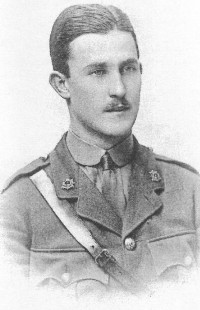
Robert was born in 1887 and educated at Forest School. On leaving school he joined the firm of John Gibbs and Son and Smith and became a member of the Stock Exchange in 1910.

Early in 1915 he joined the Royal Naval Aircraft Corps as a despatch rider. That October he transferred to the 3rd/5th Bedfordshire Regiment in which he was given a commission. He was appointed adjutant the following March and remained with his battalion on East Coast Defence duty until January 1917, when he volunteered for foreign service and joined the 2nd Battalion in France.

Robert arrived with them on the 15th March 1917. Three short days later, he lost his life to a booby trap during the operations against the Hindenburg Line. The Germans had vacated their former trenches and retreated to the Hindenburg Line. As the British advanced to take over the positions on the 18th March, Robert HOSE and Private 21111 Thomas PEARSON of Ilkeston were killed by the same bomb trap.

Robert was buried in the Agny Military cemetery, 5km south-west of the Arras railway station. He was the son of Robert John Hose of Bromley in Kent and left a widow and one son.

A photogtaph of his gravestone can be seen here.

(My thanks to John Hamblin for his pre war bio and photograph)


Second Lieutenant Gerald LENTON

Died of wounds 27th July 1917, aged 33

Gerald joined the battalion in the field on 18 February 1917 and survived the Battle of Arras and subsequent operations that year but was mortally wounded during a localised trench raid on 26 July 1917.
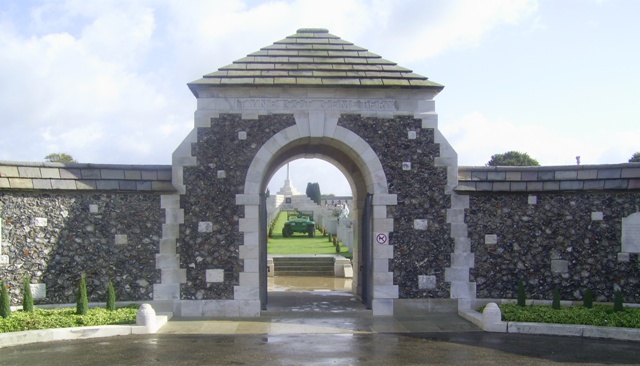
The battalion war diary records the wounded, adding that "These included a party under C.S.Major R.Kirby who were returning to CHATEAU SEGARD (17 Strong) and were knocked out by a shell near BEDFORD HOUSE, of which 6 were Killed. 5 Died of wounds. 6 Wounded."

No.10 Casualty Clearing Station telegrammed Gerald's parents the following morning to report that their son was "dangerously ill" having suffered from shell wounds to his back and chest. He died from those wounds that day and was buried in CCS's ground, now known as the Lijssenthoek military cemetery, 12km north-east of Ypres centre.

Gerald was the son of Henry and Lucy Lenton, of 8, Victoria Avenue, Hunstanton, Norfolk and among his personal possessions to make it back to his family was his damaged wrist watch and strap.


Second Lieutenant Charles Henry SHAW

Died of wounds 1st August 1917

Born Nottingham 15 May 1892, Charles was educated at Wellingborough Grammar School and by the tiem war broke out, was a Lace Curtain Draughtsman who lived at Foxhall Lodge, The Forest in Nottingham

Charles enlisted into the Sherwood Foresters on 23 September 1914, becoming Private 10/17367, and was posted to the 10th Battalion. He sailed to France with them on 14 July 1915 and remained there until discharged from the ranks on 17 January 1916 and sent to the Grafton Academy (Bedford School of Instruction) before joining the 3rd Bedfordshires after his course.

Once released for service on the front again, Second Lieutenant Shaw was attached to the 2nd Battalion in France, arriving with them 21 September 1916. He survived the battalion's final battles on the Somme, as well as March operations against the Hindenburg Line and the Battle of Arras but was caught by shelling during the second day of the Third Battle of Ypres.

On 1 August 1917 he was wounded during shelling and died from his wounds later that day. His grave was lost in the continued fighting as a result he is remembered on the Ypres (Menin Gate) Memorial to the missing

At the time of his death, his next of kin was recorded as his sister - Mrs Barnet - of 1 Coates Gardens in Edinburgh.

Charles' brother Robert Henry Shaw also served as an Officer in the Bedfordshires and although wounded more than once, survived the war. Suffering from the effects of his wounds, Robert appears to have moved to America having lost his wife around the time of the war.


The Tyne Cot Memorial to the Missing
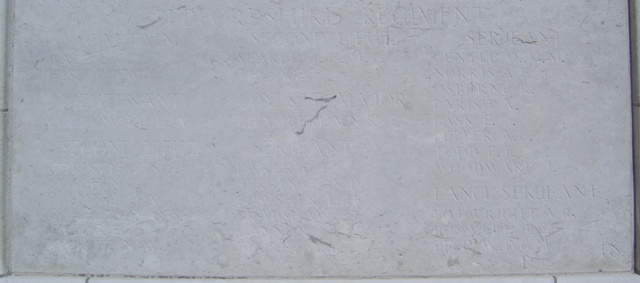
The section from the Tyne Cot Memorial showing the officers from the Regiment who's final resting places are unknown.


Second Lieutenant Thomas George SEARLE, M.C., M.S.M.

Killed in action 20th September 1917, aged 26

Killed in action 20th September 1917, aged 26 Thomas was born in Watford, in November 1892, the son of William John (a former Trooper of the 9th Lancers) and Elizabeth May Searle.

An 18 year old Gardener who served in the 4th Bedfordshires at the time, Thomas enlisted into the Regulars as Private 9515 on 17 January 1910. He was posted to the 1st Battalion, where he remained until 4 September 1913, at which time he moved into the 3rd Battalion as an Acting Sergeant.

When mobilised for war service on 8 August 1914, Thomas was made a Lance Sergeant and was posted to the 2nd Battalion in the field on 27 December 1914. Promotion to Acting Quartermaster Sergeant followed along with an attachment to the 21st Infantry Brigade Headquarters, and he was promoted to full Sergeant on 1 February 1916 before finally rejoining the 2nd Battalion on 21 July 1916.

10 November 1916 saw him awarded the Meritorious Service Medal and on 9 March 1917 Thomas was commissioned in the field, remaining with the 2nd Battalion as a Second Lieutenant.

7 June 1917 saw the opening day of the Battle of Messines Ridge, of which the 2nd Battalion formed the pivot point from which the assault was launched. Following a morning of patrolling and coming under heavy shell fire, the war diary records: "About 10.30 a.m. a party of about 300 Germans came across to Front Line Trenches about 300 yards to our Right. Our Vickers and Lewis Guns took advantage of this target and accounted for a large number, a few however got into our lines, but these were soon driven out by bombing party under 2nd Lieutenant T.G. Searle."

For this action, Thomas was awarded the Military Cross, the citation of 16 August 1917 reading:

"For conspicuous gallantry and devotion to duty during an enemy counter-attack, in leading a successful bombing attack and dislodging the enemy from a position which they had gained. His quick initiative and appreciation of events saved a serious situation, and during the whole operation his courage and good spirits were most encouraging to the men."

On 20 September 1917 Second Lieutenant Searle was among a party of fifty Bedfordshires who went into No Man's Land to raid the German lines but uncut wire and a heavy defensive machine gun and rifle fire stopped the raiders getting into the German lines. During the exchange he was wounded and did not get back to the British lines, so was posted as missing. No further news was heard of his fate and his death was presumed in October 1918.

Thomas is remembered on the Tyne Cot Memorial to the missing from the Third Battle of Ypres.


Second Lieutenant (Acting Captain) Lawrence Alexander Lewis FINK, M.C.

Killed in action 5th October 1917, aged 26
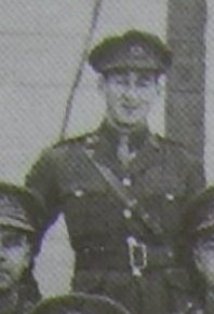
Born 10 August 1891 in Lucknow, India, Lawrence was the son of Major George Herbert Fink (a Surgeon Captain in the Indian Medical Service) and Edith Louisa Fink. After schooling at St Paul's School in West Kensington, he became a Rubber Planter until war was declared and returned to England to apply for a commission.

Appointed to the Special Reserve of Officers on 26 April 1915, Second Lieutenant Fink was posted to the 3rd Bedfordshires for training and attached to the 2nd Battalion on his arrival in France on 23 March 1916.

Surviving several phases of the Battle of the Somme, Second Lieutenant Fink won the Military Cross for bravery on 12 October 1916, his citation reading:

"For conspicuous gallantry in action. He led his company forward with great courage and determination under intense fire, and succeeded in capturing about 200 yards of the enemy's trench"

On 15 November 1916 he was promoted to Lieutenant, when he was already in command of C Company, and January 1917 saw him recommended and approved for a permanent commission in the Regulars.

On 5 October 1917, while the 2nd Battalion were in the line, Lieutenant Fink was killed. No further casualties are mentioned so it is possible that he was killed by a sniper or stray shell.

He was recovered and buried in the Kemmel Chateau cemetery, 8km south of Ypres centre; a photograph of his headstone can be seen here.

By 1918, his father was a 'Criminal Lunatic' and an inmate at the Broadmoor Criminal Lunatic Asylum so Lawrence's medals and estate were issued to his mother, who was in the process of arranging to move to Australia and live with her married daughter. At the time, his mother lived at 46 Mountfield Road, Church End, Finchley and later of 38 Onslow Gardens, Muswell Hill, London.

Lieutenant Fink can be seen here in the 3rd Battalion officers' group photograph from 1915.


Lieutenant Cecil SHEKURY, M.C.

Killed in action 16th April 1918

Cecil Shekury was born in Singapore on 16 February 1897, the son of Gabriel Hai Isaac Shekury, a Stock Broker in the Chinese stock market. He was educated at Bedford Grammar School and enlisted into the British Army on 5 January 1915, reporting his age as exactly 19 years old.

A resident of Cricklewood, Cecil became Private 4326 in the 19th (Public Schools) Battalion of the Royal Fusiliers and was sent to France on 12 November 1915. On 20 March 1916 he applied for a commission and returned to England for officer training on 18 May 1916. The following day Private Shekury joined No.6 Officer Cadet Battalion in Oxford to undergo officer training and was discharged to commission 25 September.

Posted to the Bedfordshire Regiment, Second Lieutenant Shekury joined the 2nd Battalion on the front lines 14 November 1916 and won the Military Cross for gallantry months later. During a patrol on 15 March 1917, Second Lieutenant Shekury carried out a 'difficult reconnaissance under heavy fire, brought back most valuable information, and set a fine example of courage and determination'. During his patrol, he discovered that gaps blown in German wire intended to allow a raiding party to penetrate had been re-wired and, as such, any attempt to raid would be fruitless. Along with his former 19th Royal Fusiliers' comrade, Second Lieutenant Albert Stone, Cecil was awarded the Military Cross for gallantry. He was presented with his medal ribbon during a ceremony on 12 May and during leave in September, received his medal from the King at Buckingham Palace 12 September.

Like Second Lieutenant Baldwin (below), Lieutenant Shekury was 'lucky' to be issued with leave on 15 March, therefore missed the battalion's determined but costly defence against the German Spring Offensives that were launched days later. Rejoining the 2nd Bedfordshires on 3 April, he found himself among a composite battalion formed from the remnants of the entire brigade.

Exhausted, the 2nd Battalion's division were moved to what had historically been a quiet area of the line to recover and rebuild after their ordeal. On 13 April, Cecil and his comrades took up positions on the front lines in Belgium and overnight on 15/16 April, the battalion were ordered to withdraw their outposts and blow the bridges on their front in the face of an anticipated assault from German troops. German troops were seen advancing during the day but, although the Bedfordshire troops of the composite battalion were not directly engaged, Lieutenant Shekury was killed.

Today he lies in the Canada Farm Cemetery, 8km north-west of Ypres centre.

Early in 1920, his former House Master, H. Sanderson, wrote to the War Office regarding Cecil's estate. Some years earlier, Cecil's father had become paralysed and unable to meet his son's board, living and tuition fees whilst he was still a student at Bedford Grammar School. Showing the goodwill of the time, Sanderson met Cecil's costs for the last year or so of his tuition on the understanding hat he would compensate him once able to from his future salary. After no contact since May 1916, Sanderson discovered Cecil's death and applied for the debt to be satisfied. Later letters from the editor of the Jewish Chronicle cited his father's illness as a result of his son's death in 1918; whichever was correct, it would appear that Cecil's father spent the last years of his life in a Shanghai hospital until his death on 12 November 1919, four years to the day since his son's arrival in France and one year and one day after the armistice in Europe.

Lieutenant Cecil Shekury is mentioned in the British Jewry Book of Honour and his service record is held at the National Archives, under reference WO 339/63711.


Second Lieutenant Frederick Charles BALDWIN

Died of wounds 11th May 1918, aged 26

Frederick was born in Fenny Stratford, Buckinghamshire, on 3 March 1892. The son of train driver Robert Henry Baldwin and Emma Elizabeth Baldwin, Frederick was educated at the Bletchley Road Board School in Bletchley. Following in his father's footsteps, Frederick worked as a fitter in the London and North West Railway locomotive shed in Bletchley. He was known to be a 'good performer' on the violin and played in a number of local musical groups until war broke out.

Being among the very first wave of civilians to enlist into Kitchener's First New Army, Frederick became Private 13375 in the Ox & Bucks Light Infantry on 3 September 1914. Once the masses of men joining the New Armies were organised, Private Baldwin was posted to the 7th Battalion and sailed with them to France on 21 September 1915. Having risen to the rank of Corporal on 11 August 1915, Frederick was promoted to Sergeant on 29 October 1915, just before his battalion sailed from Marseilles on 11 November 1915. Fifteen days later they disembarked at Salonika, but after over a year's service there, Sergeant Baldwin was encouraged to apply for a commission in the field on Christmas Eve 1916, which was approved.

On 17 January 1917 he was sent to the 26th Infantry Brigade Depot to await further orders and a week later sailed to England. On 13 March 1917 Frederick joined No.20 Officer Cadet Battalion at Cookham and was discharged from the ranks as a Temporary Second Lieutenant within the Bedfordshire Regiment on 31 July 1917.

Second Lieutenant Baldwin joined the 2nd Bedfordshires on the front lines 22 September 1917, 2 years and 1 day after he initially arrived in France. On 16 March 1918, he was granted leave, returning to his battalion 3 April, after they had suffered heavy losses during their tenacious stand throughout the German Spring Offensives.

Although Frederick was remarkably lucky to have missed the heavy fighting in March, his division was moved into what was considered to be a quiet part of the line to rest, rebuild and recover from their ordeal. Fatefully, this historically quiet sector was to be the focus of a fresh German offensive, and the exhausted troops found themselves in the way of another massed bombardment and ferocious assault.

Second Lieutenant Baldwin was with his men as they resisted a fresh German attempt to break the allied lines in April, during the Battle of the Lys. Divisional losses had been so heavy since 21 March that his brigade had been formed into a composite battalion, who, against the odds, stemmed the new German assaults.

In what would be the exhausted men's final day before being withdrawn from the lines to rebuild once again, another German assault was thrown at them. At 3 a.m. on 8 May 1918, a bombardment and gas barrage soaked the British lines, followed several hours later by a well orchestrated infantry assault. German flamethrowers and bombs forced the front two companies back with heavy losses after their flank had been exposed, but the line was held once the survivors formed a defensive flank that stopped any further progress being made by the German stormtroopers.

Although the line was held, the cost was, once again, heavy. The already undermanned composite battalion lost hundreds of men, with 7 officers and 170 men coming from the 2nd Bedfordshires, among them Frederick Baldwin.

Second Lieutenant Baldwin held on for several days but finally succumbed to his wounds at No.2 Canadian casualty Clearing Station on 11 May 1918. Today he lies in the Esquelbecq Military cemetery, 24km south of Dunkirk.


Second Lieutenant George Augustus L'Estrange KERR

Killed in action 30th June 1918, aged 19

George was born in 36 Gloucester Gardens, Paddington on the 14th November 1898, the son of George William Kerr (a Clerk in Holy Orders who had been born in Ireland) and Frances Isabella Kerr (nee L'Estrange). Following private education until the age of 11, George was educated at Merchant Taylor's School in London and then at St. John's College in Oxford. During his education he spent three years as a Sergeant in the Officer Training Corps and was a Prefect.
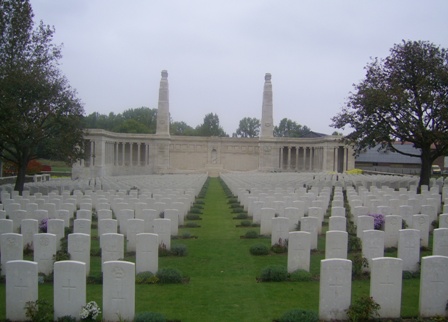
At 17 years old, he applied to become a Gentleman Cadet at Sandhurst on the 11th May 1916 at which time his father was a Chaplain to the Forces at the Royal Victoria Hospital, Netley. His mother lived at St. Mark's Vicarage, Tollington Park, Middlesex. Several other relatives also served in the forces at the time; his Uncle (Thomas Kerr) was a Captain in the 8th Inniskilling Fusiliers and another Uncle (Walsingham Kerr) was a Chaplain to the Forces.

Second Lieutenant Kerr arrived on French soil on the 21st April 1918 as a replacement for the 2nd battalion's losses during the German Spring Offensives. He arrived with the battalion who had been so heavily engaged in the March battles that they had been formed into a Composite Battalion, such was their diminished numbers. Within days he was engaged during the Battle of the Lys and spent the next eight weeks helping to rebuild the battalion whilst enduring a very active phase of trench warfare.

At 9.35pm on the 30th June 1918 the battalion attacked a series of German trenches under cover of a smokescreen along the Bouzincourt Spur, north west of Albert. Seven officers and 146 men became casualties, including Second Lieutenant Kerr. Initial telegrams to his mother referred to him having been wounded but almost six weeks later this was changed to wounded and missing once no further news was received. Despite attempts to learn of his fate no further news arrived until the 4th November 1918, when news was received of his burial which in turn confirmed his ultimate fate.

He now lies in the Bouzincourt Ridge cemetery, near Albert on the Somme and his service record is at the National Archives under reference WO339/70646. The photograph opposite was taken in a group photo in April 1918, showing the officers who had survived the German Spring Offensives.


Second Lieutenant Hereward Warren HAWARD

Died of wounds 1st July 1918

Hereward was born 28 November 1891, the son of Edgar and Sarah Amelia Haward. A Chemist's Assistant of 8a Beech Road in Littlehampton, Sussex by 1915, Hereward enlisted on 10 December 1915, within the Derby Scheme.

He was posted to the Reserves until mobilised on 1 March 1916, at which point he became Private 3833 in the 2nd/5th Battalion of the Royal Sussex Regiment. Unusually, his medical records state that he was operated on for appendicitis in 1914 and was initially considered unfit for the infantry, but his Chemist's background made him ideal for the R.A.M.C.

Nevertheless, after his basic training Private Haward went to France on 7 July 1916 and was posted to 1st/5th Battalion of the Royal Sussex, who were the Pioneer Battalion of the 48th Division. On 1 September 1916 he transferred into the 13th Battalion when he was renumbered to G/18204 and became a Lance Corporal soon afterwards. By the time he returned to England on 30 January 1917 to apply for a commission, he had seen action at Beaumont Hamel, Stuff Trench and St. Pierre Divion, and was a qualified Bomber.

Once accepted into Officer training, he was posted to No.11 Officer Cadet Battalion in Pirbright from 12 March and became a Temporary Second Lieutenant on 26 June 1917. Hereward was posted to France and joined the 7th Battalion of the Bedfordshire Regiment on 28 September 1917, where he served until they were merged into the 2nd Battalion in May 1918.

Curiously, he does not appear in the 7th Battalion diary and is not among the lists of wounded officers and men from their stand during the German Spring Offensives but he led the advanced parties into No Man's Land during the battalion's operations on Bouzincourt Spur, 30 June 1918.

Lieutenant Haward was among the wounded on the night of 30 June, and although evacuated to No.41 Casualty Clearing Station, he died from his wounds and was buried in the Pernois British cemetery, Halloy-les-Pernois, 16km south-west of Doullens.

At the time of his death, his parents and sister lived at 67a South Terrace, Littlehampton in Sussex.


The Vis en Artois Memorial to the Missing
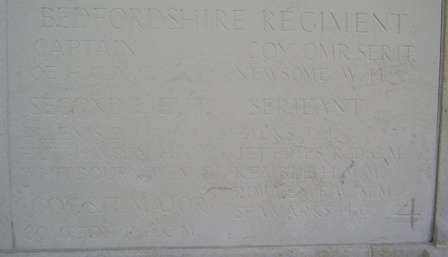
The officers of the Regiment shown on the memorial whose final resting place is unknown.


Lieutenant John Luxton ASH

Killed in action 2nd or 3rd July 1918, aged 29

Originally in the ranks of the Honourable Artillery Company in France from 1914, John was commissioned into the Bedfordshire Regiment on 12 August 1915, intially training in the 10th Battalion before his overseas posting to the 8th Battalion. Reaching the post of Adjutant in the 8th Battalion, he was transferred to the 2nd Battalion in 1918, where he was killed in the fighting on 2 July 1918.

Although unconfirmed, it appears likely that he was mortally wounded and died in the dressing station on the site of the CWGC cemetery in which he lies. He was not relocated from a battlefield burial and the cemetery is a few miles from the battle site, which suggests he was moved from the front for treatment. This would also account for the battalion diary recording his death on 2 July (the day of battle) and the CWGC citing 3 July (the day after the fighting).

John was the son of C. J. and R. E. M. Ash of 48 Cromwell Avenue, Highgate, London and the husband of Frederica Gertrude (Freda) Ash, of 13 Holdenhurst Road in Bournemouth.

His brother, Charles Duncan Ash, also served as an Officer in one of the regiment's regular battalions and was among the many officers and men to have suffered briefly from shell shock before being discharged in 1919.

He lies in the Warloy-Baillon Communal cemetery, 21km north-east of Amiens


Within the "100 Days" offensives that led to he end of the war, the 2nd Battalion were initially engaged in the The Battle of Albert which saw the following four officers killed


Second Lieutenant Walter WHITBOURN, M.C.

Killed in action 22nd August 1918.

Walter was born in Woking on 27 March 1893, the son of Arthur Whitbourn.

A Grocer by the time war was declared, Walter joined the 6th Battalion of the Royal West Surreys as Private 764 on 31 August 1914, aged 19. On 30 January 1915 he was transferred into the 12th Division's Army Cyclists, becoming Private 2062. On 31 May he went to France and was a Sergeant by the end of the year, being transferred into I Corps Cyclist Battalion on 11 May 1916.

Sergeant Whitbourn returned to England on 4 January 1917 to apply for a commission and was posted to No.20 Officer Cadet Battalion at Cookham from 8 February. Passing instruction, he became a Temporary Second Lieutenant on 29 May 1917.

Although a document in his service record states that Second Lieutenant Whitbourn was in the 6th battalion, attached to the 2nd battalion at the time of his death, the first trace of him in the 8th Battalion's war diary on 12 January 1918, when he was sent to Rest Camp.

When the 8th Battalion disbanded, Walter was among the draft sent to the 2nd Battalion on 8 February 1918. He appears to have survived the battalion's heavy casualties during their fighting withdrawal of the German Spring Offensives and briefly left the battalion sick on 21 May.

On 23 July, the London Gazette published the award of his Military Cross, his citation reading: "For conspicuous gallantry and devotion to duty. He made several excellent reconnaissances to front and flanks, bringing in useful information as to the dispositions, and on one occasion frustrating an enveloping movement of the enemy."

Although unconfirmed, as his M.C. first appears with his name on the 21 May war diary entry, so would seem to relate to either the 2nd Battalion's fighting withdrawal during the German Spring Offensives, or their engagement during the Battle of the Lys at the end of April 1918.

Walter was killed as his battalion were in Brigade Reserve during their assault on Tara Hill near Albert, during the Battle of Albert on 22 August 1918. As the Bedfordshires relieved the Royal Fusiliers that evening, it is likely that Walter was killed by the Germans shelling the British support areas and front lines.

Family lore remarks that he married his fiancée Lizzie 'a week before he was killed' but at the time of his death, she was living at Ridge End, Hook Heath, Woking a week before killed.

Second Lieutenant Whitbourn was originally buried near Bellvue Farm but his grave was lost and he is remembered on the Vis-en-Artois memorial to the missing, 10km south-east of Arras.


Lieutenant Guy Baron REED

Died of wounds 23rd August 1918

Guy was born in North Kensington on 29 October 1887, the son of Eugene Ernest Baron Reed. At the time he enlisted on 2 September 1914, Guy was a Solicitor in his father's firm and lived in North Kensington.

He became Private 5511 of the 18th Royal Fusiliers but was discharged to a commission in the 10th Bedfordshires on 4 February 1915. Following training, he was sent to France on 17 April 1916, joining the 8th Battalion of the Bedfordshire Regiment on the 23rd. However, soon afterwards he entered a protracted spell of illness; on 20 June he was admitted to 16 Field Ambulance with NYD Pyrexia ('Trench Fever') for three days, but left the battalion on 1 July suffering from the same condition. Three weeks later he rejoined the 8th Bedfordshires but on 8 September he started a third, and ultimately longer spell of illness.

Admitted to Rouen General Hospital the following day, Guy was returned to England on the 14th and sent to No.2 Stationary Hospital in Bristol. By now his symptoms were reported as headaches, exhaustion after exertion, sleeplessness, malaise, skin pains, debilitated, under weight, and ultimately unfit for all service, so he was leave granted.

In November 1916 he applied for home service employment but the following month was back in hospital suffering from a return of fever and an attack of influenza. The New Year saw him confined to bed with jaundice, and on 20 February 1917 he was finally passed as fit for light duties, joining the 3rd Bedfordshires the next day. By the end of July 1917 he was declared fit for duty and joined the 3rd Battalion to retrain in readiness for active service again.

14 April 1918 saw him sign his formal will which suggests he was about to be shipped to France again but the first mention of him in the 2nd Battalion war diary is on 16 July, when he was in an advanced billeting party.

Lieutenant Reed was wounded in the head on 22 August 1918 and although he was moved to No.53 Casualty Clearing Station, he died from his wounds at 8.45 a.m. the following day. He is buried in the Daours Communal cemetery extension, 10km east of Amiens.

A letter in his service record dated Nov 1916 says that he had three brothers who were commissioned; one was a Second Lieutenant in the Middlesex Regiment who lost a leg on Gallipoli, another was killed on the Somme in August 1916 in the Middlesex Regiment, and the third in Army Ordnance Department.

At the time of his death, his father lived at Pencoyd, 2 The Drive in Wimbledon.


Second Lieutenant Walter Guy McJANNET

Died of wounds 24th August 1918, aged 19

Walter was born in the East London Division of Cape Colony, South Africa, on 4 November 1898, the son of James and Mary McJannet.

From 1908 he was educated at Bedford Grammar School (including the Officer Training Corps) and on 30 October 1916, applied to Sandhurst R.M.C., becoming an Gentleman Cadet. November 1917 saw him pass his final exams and he started training for service at the front.

Early in April 1918, in response to the heavy British loses during the German Spring Offensives, Walter was shipped abroad and was posted to the 2nd Battalion on arrival.

On the night of 5 August, a double relief was planned, with the Bedfordshires intended to move from their front line position into a new front line post, in readiness for the upcoming offensives. The inbound unit had difficulties and the relief became very messy and confused, leaving much of the battalion still in the line overnight.

At 4 a.m. on 6 August a heavy German barrage fell on their lines, with a strong infantry assault following on 30 minutes later. The two companies of the Bedfordshires still in the line were isolated, with no communications other than runners. Their outpost line was overrun and the battalion to their left were heavily penetrated with fire coming at the Bedfords from their rear and flank. However, the Bedfords stopped any further gains, held the Germans, and even counter attacked, regaining the lost outpost lines despite their own casualties mounting by this point. More localised counter attacks fell on the German attackers into the 8th, pushing them from position after position and once the relieving battalion arrived, the situation restored to normal.

Walter's first taste of combat was a confused, fierce and costly affair, which saw him among the 200 casualties the battalion lost that day. He had been shot in the spine, had internal damage and complete paraplegia. Once he could be moved to England, Second Lieutenant McJannet was transferred to 3 General Hospital in Oxford but eventually succumbed to his wounds on 24 August.

He was just 19 years old, and today lies in the Oxford (Botley) cemetery.


Captain Dennis Patrick CROSS, M.C.

Killed in action 24th August 1918, aged 27

Dennis was born in Rio de Janeiro on 19 September 1891, the son of Thomas George Cross and Evelyn Ford Cross (nee Wyatt). His father was a Merchant at the time, later becoming a Partner in coffee merchants Print & Co.

Following education at Bedford Grammar School, Dennis moved abroad to join his father in Brazil and spent from 1911 until the time war broke out working as a Commercial Clerk for Oscar Taves & Co. in Rio de Janeiro.

Standing 6 feet tall, Dennis returned to England following the news of the sinking of the Lusitania, specifically to "join the colours".

Gaining a commission, he was posted to the School of Instruction at Fort Darland in Chatham on 4 August 1915 and was transferred into the 4th Bedfordshires soon afterwards.

On 4 May 1916 Second Lieutenant Cross was recommended for a permanent commission in the Regular Army, leaving for France a week later and joining the 2nd Battalion in the field 27 May 1916. He survived the opening day of the Battle of the Somme, and the fight for Trônes Wood before being attached to the 17th Liverpools as their Acting Adjutant from the end of September 1916. Rejoining the 2nd Bedfordshires a year later, on 22 October 1917, he was attached in a Staff Post as Aide de Camp between 30 January 1918 and 20 March 1918, after which he rejoined the Bedfordshires and survived the fighting withdrawal in the face of the German Spring Offensives.

During the Battle of Albert, on 24 August 1918, the 2nd Battalion advanced around 1,000 yards without meeting any significant opposition but lost seven men and Lieutenant Cross, presumably to shelling.

On 7 November 1918 the London Gazette published the award of a Military Cross to Lieutenant Cross. When his Military Cross came up for sale in 1992, it was inscribed with "Awarded for conspicuous gallantry, 5/6 Aug. 1918, to Lt. Dennis Patrick Cross, M.C., 2nd Batt. Bedfordshire Regt. Killed in Action in France, 24.8.1918," which would place his gallantry in the fighting in which Second Lieutenant McJannet (above) was mortally wounded.

He was buried in the Dernancourt communal military cemetery, 3km south of Albert on the Somme.

Dennis can be seen in the middle of the photo above, with Second Lieutenant Greenwood above him, who was killed just days later.


As the offensives continued, the battalion were next engaged in The Second Battle of Bapaume, that cost the battalion a further officer.
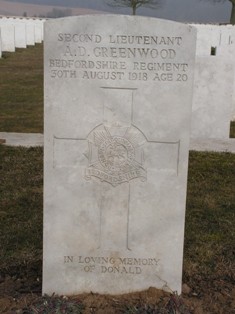
Second Lieutenant Arthur Donald GREENWOOD

Killed in action 30th August 1918, aged 20

Arthur was born on 27 January 1898 in Brondesbury, London, the son of Arthur and Agnes Greenwood. Following education at Cranbrook College in Ilford Arthur worked in his father's Boot manufacturing business (A Greenwood & Co, Standard Boot & Shoe factory) where he was classed as 'learning the business'.

On 11 November 1916, Arthur was called up aged 18 years, 9 months and became Private 9358 (later renumbered to 763362) in the 2nd/28th Artists Rifles.On 30 November 1916 he applied for commission and was posted to No.9 Officer Cadet Bn at Gailes on 7 December 1916.

2 April 1917 saw Arthur commissioned as a Temporary Second Lieutenant and was posted to the 3rd Battalion of the Bedfordshire Regiment. Within a fortnight he was off to France and joined the 2nd Battalion in the field on 10 May 1917.

Surviving the Third Battle of Ypres and the German Spring Offensives (after which series of battles the above photograph was taken), he was sent to Base in a draft to help train inbound American troops alongside officers from the disbanded 7th Battalion, from 10 June 1918.

Rejoining the 2nd Battalion on 4 August. Second Lieutenant Greenwood was killed on 30 August 1918, in a localised action around Combles which saw the battalion heavily shelled all day.

Second Lieutenant Greenwood lies in the Dantzig Alley British cemetery, Mametz, 8km east of Albert on the Somme. At the time of his death, his parents lived at 34 Prideaux Road in Eastbourne.

Arthur can be seen at the top of the photo above, with Lieutenant Cross below him, who was killed days earlier.


Second Lieutenant William HUGHES, M.C.

Died of wounds 14th September 1918, aged 38

William was born on 18 December 1879 in Leatherhead, Surrey, the son of Henry and Frances Hughes. After schooling at Dulwich College, he became a Solicitor and lived in Shortlands, Kent at the time he joined up.

During the Derby Scheme, William enlisted on 7 December 1915, becoming Private 5850 in the 2nd/28th Artist's Rifles. Following training, he was posted to France and joined the 1st/28th Artist's Rifles in the field on 27 April 1916. 17 July 1917 saw him apply for a commission, for which he was accepted on 1 August.

Training completed, he returned to France and joined the 8th Bedfordshires as a Second Lieutenant on 20 November 1917

When the 8th Battalion were disbanded, Second Lieutenant Hughes was transferred to the 7th Battalion, joining them on 8 February 1918.

From the start of the German Spring Offensives in March, the 7th Battalion were heavily engaged, with just 200 of them remaining by the end of 23 March 1918. During the sequence of battles that week, William won the Military Cross for bravery. On 25 April 1918, the London Gazette published the citation which explained more about the events surrounding the award:

"For conspicuous gallantry and devotion to duty during an intense hostile bombardment. Whole stretches of trench had been levelled, and although all his platoon except four men were at one time either wounded or buried, he kept the Lewis gun manned. Hearing that there was .a gap on his left, he personally got into touch with the next post and covered the gap."

Second Lieutenant Hughes was wounded in the right arm during the operations on Bouzincourt Ridge on 2 July 1918. He was moved to No.41 Casualty Clearing Station the onto No.2 Red Cross Hospital in Rouen, where his right arm was amputated due to the severity of his injuries. Retuning to England once he was stable enough, William was moved to Lady Ridley's Hospital on Carlton House Terrace, but contracted acute nephritis. The combination of the extent of his wounds and subsequent illness lead to his death at 10 a.m., 14 September 1918

He was interred in the Shirley (St. John) churchyard, where he lies today.


Lieutenant Sydney George HAGUE, M.C.

Died of wounds 21st September 1918, aged 31

Sydney was born in Masborough, Rotherham on 15 March 1887, the son of George and Mary Jane Ball Hague. After education at Carron School and Falkirk High School, he became a foundry agent for the Carron Company in Newcastle. Sydney appears to have served as a Territorial Army Private in the 10th (Scottish) Battalion of the (Kings) Liverpool Regiment between April 1909 and April 1910 but relocation to Newcastle forced his resignation.

He applied for a commission on 26 May 1915, giving his address as Roebuck Park, Carron, Falkirk, being his father's address.

After officer training and UK service, on 12 April 1917 Second Lieutenant Hague landed in France and joined the 2nd Bedfordshires. Promotion to Lieutenant followed on 1 July 1917 and he survived the battalion's involvement in the Third Battle of Ypres. Remarkably, he was also among the few officers to survive the battalion's determined defence during the German Spring Offensives and became the Adjutant that spring.

In May 1918, he was awarded with the Military Cross for bravery during the battalion's stand against an overwhelming German attack. The citation read:

'For excellent work in the battle zone near Savy on March 21st and 22nd. This officer was in charge of one of the forward companies, and although his position was being continuously attacked by the enemy, he set a fine example to all by his coolness and energy. He also kept battalion HQ well informed of the situation and sent in excellent reports. He organised several small counter-attacks, and ejected the enemy from small portions of his position. He greatly helped the company on his right by directing the fire of a heavy trench mortar on to a quarry, into which the enemy had penetrated. He held on to his position until late in the afternoon of the 22nd, and ultimately withdrew when he was practically surrounded by large numbers of the enemy and he had lost nearly all his men.'

As the battalion were in support to the 16th Manchesters, the quarry referred to in the citation was likely to be the one Elstob's Manchesters were overwhelmed in during their famous last stand, in which Lieutenant-Colonel Elstob won the posthumous Victoria Cross.

Lieutenant Hague was among those who lost their his entire kit during the March 1918 retreat and during a trip home in July 1918, he was forced to buy a full replacement uniform, totalling over £20 at the time. His father, a Works Manager at the time, was still corresponding with the War Office to claim the money back as late as 1920.

After also surviving their part in repelling the next phase of German attacks during the Battle of the Lys in Apri, while the battalion was rebuilt, Sydney was promoted to Acting Captain while commanding a company between 5 April and 15 July 1918. During a localised British attack on 7 August 1918 that saw the 2nd Bedfordshires support the two other battalions in their brigade, Lieutenant Hague was lightly wounded during German shelling but remained at his station. He also came through the Battle of Albert and the Second Battle of Bapaume in August, as well as the Battle of Epehy in September.

Lieutenant Hague's luck finally ran out during operations around Ronssoy between 18 and 22 September that saw almost 250 more men from the already small battalion become casualties. Lieutenant Hague was wounded on 21 September, dying from his wounds the same day at No.55 Casualty Clearing Station in Doingt. Today he lies in the Doingt cemetery, Peronne and is remembered on the Larbert war memorial. Among the effects returned to his parents was a wrist watch, noted as having broken glass, possibly from the time of his mortal wound.

A larger copy of the original full photo this was taken from (which includes those 2nd Battalion officers who came through the March 1918 fighting) is available from BLARS (formerly the Bedford County Records Office).

[My thanks to Russell MacGillivray for the pre war biographical details and copy of the portrait photo from Falkirk Herald, 29 September 1918]


Captain Wilfrid Gilbert SAMUEL

Killed in action 21st September 1918, aged 28.

He was the son of Gilbert and Dame Louise Gilbert Samuel, of London and had been educated at Ipswich Grammar School and Balliol College, Oxford.

He enlisted on 2 September 1914, becoming Private 2029 in the 18th Royal Fusiliers. At the time he joined up, Wilfrid was an Articled Clerk and lived in Bayswater in London, and gave his religion as Jewish.

On 18 May 1915, he was discharged to commission, becoming a Second Lieutenant in the 1st/6th (Cyclists) Battalion of the Suffolk Regiment based out of Ipswich. He was promoted to Adjutant from 1 October 1916, while based at Saxmundham, but remained in England during his time in that unit.

Lieutenant (Acting Captain) Samuel was posted abroad in August 1918 and attached to the 2nd Battalion of the Bedfordshire Regiment on 19 August 1918.

Just a month later he was among the battalion's 250 casualties during the Battle of Épehy (part of the Battles of the Hindenburg Line). After the battle, he was buried 200 yards east of Z Copse, 1000 yards ENE of Ronssoy.

On 22 September 1919, his remains were found and moved into a concentration cemetery. Today Captain Samuel lies in the Unicorn Cemetery, Vendhuile, 19km north of St Quentin.

He is also recorded in the 2015 edition of the Wisden Cricketer's Almanac, having played for the Ipswich Grammar and Balliol XI.


Lieutenant Clarence Herbert HART

Killed in action 23rd October 1918, aged 28.

Clarence initially served as Sergeant 1464 in the Inns of Court O.T.C. but was discharged to commission on 13 March 1915. Posted to a home unit of the 5th Battalion, Bedfordshire Regiment, he was an Acting Lieutenant in the 2nd/5th Battalion from 29 October 1915, and gained promotion to full Lieutenant on 1 June 1916.

Clarence's service abroad started when he landed in France on 16 April 1918, when he was initially attached to the 7th Battalion until they disbanded a month later, and he joined the 2nd Battalion.

During the Battle of the Selle (part of The Final Advance in Picardy) on 23 October 1918 - which would be the battalion's penultimate engagement of the war - the battalion attacked fresh German positions. Lieutenant Hart was in command of A Company and was killed clearing the gullies 1,500 yards NE of Montay.

After the battle he was buried around 700 yards NE of the spot on which he fell and in October 1919, his remains were moved to the Highland Cemetery, Le Cateau, where he lies today.

He was the son of J. Herbert and Ethel Rose Hart of 10 Marlborough Place in London.


Second Lieutenant William Frederick Shirley WILFORD, M.M.

Died of wounds 25th October 1918, aged 28.

William was born around January 1890; before war broke out, he lived at 75 Chatsworth Street in Leicester and was working as a Shoehand. On 22 May 1915 he married Mary Cory in Northampton.

William enlisted within the Derby Scheme, on 11 December 1915 but was not called up for training until 4 April 1916, when he became Private 27075 and was posted to the 12th Leicesters. Following training, he sailed for France on 11 July 1916 and was posted to the 6th Leicesters. January 1917 saw him awarded the Military Medal and that June he was wounded in the right eyelid, which restricted his vision and resulted in him wearing glasses.

Once recovered and able to resume service once again, he applied for a commission and was posted to the 21st Officer Cadet Battalion from 7 December 1917.

Training completed, Temporary Second Lieutenant Wilford was posted to the 5th Battalion of the Bedfordshire Regiment on 29 May 1918. In September he was shipped back to France and attached to the 2nd Battalion, joining them in the field on 1 October 1918.

During the Battle of the Selle (part of The Final Advance in Picardy) on 23 October 1918 - which would be the battalion's penultimate engagement of the war - the battalion attacked fresh German positions. Just weeks after his arrival with the battalion and in the first action he saw as an officer, William was among the battalion's 200 casualties.

He died from his wounds two days later, at No.55 Casualty Clearing Station. Today he lies in the Premont British Cemetery, 20km south-east of Cambrai.

After his death, William's widow moved to 31 Spenser Bridge Road, St James End, Northampton, presumably returning home having lived with William's parents at Chatsworth Street during the course of his military service.


Second Lieutenant Sidney Herbert ABBOTT

Killed in action 4th November 1918, aged 29.

Sidney Herbert Abbott was born in Woolwich on 8 May 1888, the son of Joseph and Sarah Abbott. After education at Godmanchester Grammar School in Huntingdonshire, Sidney became a printer and later a publisher.
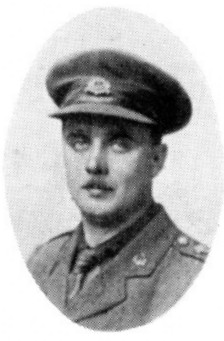
He enlisted on 9 September 1914, joining the local squadron of Bedfordshire Yeomanry at Godmanchester as Trooper 1395. After a year training in the 2/1st Bedfordshire Yeomanry he was transferred to France and joined the 1/1st regiment in the field on 12 September 1915. Being a cavalry trooper, his service was relatively uneventful and the worst physical ailment to afflict Sidney was a bout of scabies that sent him to the local cavalry Field Ambulance from 15 to 24 March 1917.

On 30 August 1917 he applied for a commission which saw him return to England on 2 October 1917. Serving in the 5th (Reserve) Battalion of the Bedfordshire Regiment at St. Albans, Sidney was renumbered to Private 30462 and was sent to No.23 Officer Cadet Battalion in Catterick for officer training from 8 February 1918. On 8 August 1918 Sidney graduated as a Second Lieutenant and was posted to the 51st Graduated Battalion before orders arrived for overseas service.

With the German army on the back foot after an intense two months of remarkably coordinated Allied offensives, Sidney joined the 2nd Bedfordshires in the field on 8 October 1918. Having served from Kitchener's initial call to arms in 1914, Sidney was killed in what would be the battalion's last major offensive of the war, on 4 November 1918.

He was among the battalion's last officer drafts and would be the last officer killed in action in the battalion.

On 8 November a telegram was sent to his wife telling of his death in action, which would have arrived just a few days before the news of the armistice reached her.

Sidney's body lies in the Cross Roads cemetery, Fontaine-au-Bois, alongside the others killed beside him a week before the end of the war.


Captain John Charles (or James) Moore FERGUSON

Died 19th November 1918, aged 30. 7th Battalion, attached to the 2nd

John was born on the 1st of September 1888, the son of John and Emily Norton Ferguson of Belmore House School, Bath Road, Cheltenham. He attended Cheltenham College between 1901 and 1907 from where he went to Emmanuel College Cambridge gaining a 2nd class Mathematics degree in 1909. John Ferguson was a School Master at Stewart of Rannoch School in Sacred Music and was a former member of the East Gloucester hockey and cricket teams.
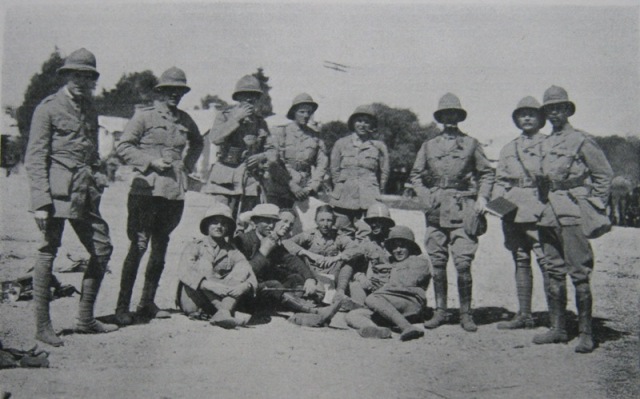
He was granted a temporary commission in the 9th Battalion on the 28th of April 1915 and remained with them throughout the war, being attached to the 2nd Battalion in France at the end of the war. Sadly and ironically, John died of influenza a week after the war had finally ended, on the 19th of November 1918 aged 30, at No.8 General Hospital Rouen and is buried in St Sever Cemetery Extension Plot V Row K Grave 4.

(With thanks to John Hamblin for the Lloyds Roll of Honour bio and photograph)


Captain Frederick Vivian PARKER

Died 14th January 1921

Although his death is recorded as being in the 1st Battalion, Captain Parker had served in the 1st and 2nd Battalions during the war, with his final period on the front lines being in the 2nd battalion.

Born on 26 October 1891, Frederick was educated at Oxford and was a Schoolmaster when war broke out.

He applied for a commission on 7 August 1914 - very early in the war and a month before Kitchener's famous 'call to arms' happened. Following training in the 3rd Battalion of the Bedfordshire Regiment, he was attached to the 2nd Battalion, joining them in the field 28 March 1915.

At the Battle of Festubert, on 17 May 1915, he was wounded in the back, right thigh, left spine and received a bayonet to the right buttock. Three days later, he had a delicate operation (a varicocele) but in spite of the multiple wounds, was posted to the 3rd Battalion from July and attached to the School of Instruction at Wrotham by the end of October that year.

In May 1916 he was back in France, and joined the 1st Battalion in the field on 30 June 1916. A month later, during their assault on Longueval on 27 July 1916, he was wounded by shrapnel in the neck and lightly gassed on the way to the dressing station. X-Rays showed the shrapnel lodged in his neck but as the wound was almost healed by then, it was left in place. To further add to his condition, all bar two of the 1st Battalion officers at Longueval suffered from varying degrees of shell shock after the battle, such was the intensity of the shelling they were subjected to.

In September, Frederick's medical reports showed he was still "shaky" but in November he rejoined the 3rd Battalion to resume training. Ongoing medical reports found Frederick had a mild systolic murmur after complaining of shortness of breath and palpitations during training but he persevered and in December 1917, was found fit for active service again.

Early in January 1918 Captain Parker was off to France for his third term of service on the front, sporting two wound stripes and a multitude of scars. Posted to the 2nd Battalion, he arrived among them on 20 January and temporarily commanded the battalion between 14 and 28 February.

On the third day of the Battalion's stubborn stand against the German Spring Offensives, Captain Parker was reported wounded and missing. He was later found to have been among the masses taken prisoner that day, finally returning to England on 1 December 1918.

His service record includes documents detailing the poor conditions he was kept in during his stay at Grandenez Camp, which greatly aggravated his already poor condition having suffered so many wounds during his service. Over and above those already mentioned, after March 1918 he suffered from bad shell shock, had "violent neuralgic pains in back", constant palpitations, insomnia, had little appetite and felt constantly sick, had a poor memory and could not concentrate and stayed in bed for 10 weeks solid upon his return having lost far too much weight for his doctors to be comfortable with.

He also has shrapnel lodged in his chest, a variety of heart conditions, his left testicle and epididymus were enlarged and his lungs were performing badly, presumably as a result of the gassings in 1916. On 12 January 1919, Captain Parker was medically discharged and he continued to suffer as a result of his many wounds, finally succumbing to them on 14 January 1921

Captain Frderick Parker died from the effects of his wounds over two years after the war had come to a close.


Site built by Steven Fuller, 2003 to 2023