MORT HOMME
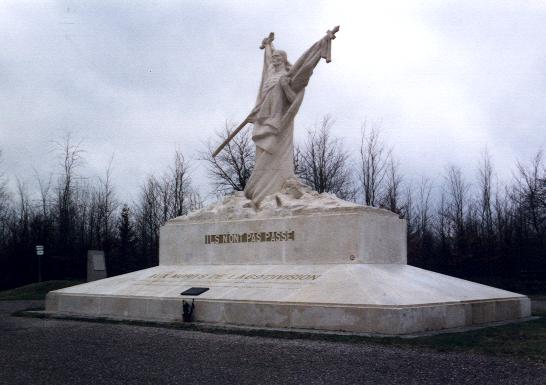
Memorial on Mort Homme
Mort Homme, or the ‘Dead Man’, was an old name given to a piece of high ground on the west bank of the River Meuse. It became one of the most fiercely disputed positions on the Verdun battlefield. Consisting of twin hills – Hill 265 and Hill 295 (Mort Homme proper) – the Germans first assaulted the slopes in March 1916. The main infantry attack began on the 14th, preceded by a five-hour bombardment. The Germans captured Hill 265, and at one time reached Hill 295, but were pushed back by infantry and Zouave units. From March until December 1916, the Germans launched fifteen main attacks on Mort Homme, the terrific shelling turning it into a moonscape. Finally Hill 295 fell to the Germans in May, and was then retaken on June 15th. It held for the remainder of the battle.
Like several other locations around Verdun, Mort Homme saw further fighting in 1917, when the Germans attacked on several occasions from January to March, again taking both hills. They heavily fortified the position, and added many tunnels. Mort Homme stayed in German hands until 20th August, when a large French offensive led by the 31st Division and soldiers from the French Foreign Legion cleared Hill 295 and took numerous tunnels, among them the famous ‘Crown Prince Tunnel’.
Mort Homme had been aptly named – it became the grave of tens of thousands of men from both sides during the bitter fighting in 1916-17. On its summit today stands one of the most powerful memorials anywhere at Verdun – a huge skeleton figure, draped in a flag claiming:
They Did Not Pass
©PAUL REED 200
1