| 
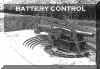
Btty Way (1974) |
Set in a picturesque grove and
surrounded by trees on three sides, Battery Way comprises four 12-inch [305mm]
Mortars. The vertical plunging trajectory of these mortars was originally intended
to be used for deck piercing purposes, but it was soon realised that the nature of the
vertical trajectory made them ideal against enemy entrenchments on the higher ground in
Bataan. Maximum rate of fire was one round each 45 seconds, though this was for
crews at the peak of physical perfection, and a one round per minute rate was generally
seen as normal. The normal tactic was to load and lay two mortars at a time, and then to
fire them as a salvo, giving them a 'shotgun' effect. Each mortar required a
fourteen man crew. |
 Btty.
Way in 1945

Btty. Way in 1999 |
When fired pre-war, the
Mortars shattered medical glassware in the hospital nearby, so the Battery was not
practised-fired during peacetime. The battery was occupied on 17 April 1942 when
Btty E of the the 60th Coastal Artillery under the command of Major William Massello took over.
Battery E originally operated an anti-aircraft searchlight and radar unit. The
mortars became so effective, the Japanese gunners gave them almost instantaneous attention
each time they came back into action. The crews, made up from volunteers given minimal
training, suffered up to 75% casualties. Massello himself was badly wounded, almost losing
an arm. He continued to command the battery from his stretcher, until the mortar
became too hot to use. After a break to cool it down, it was found to have become frozen.
Massello survived the war and was a welcome sight to many
of the defenders at their re-unions.


Of the four mortars, No. 1 (bottom left) was unserviceable,
but 2, 3 and 4 (counting is done from the far right of a Battery, then to each row
behind the front line) were all proof fired by 20 April 1942. On May 2,
Numbers 3 and 4 were put out of action by direct hits on their barrels, leaving only No. 2
serviceable. After midnight on May 6, No. 4 went into action against the Japanese landing
craft in the North Channel, and between 0400 and 0600 hrs, Way, together with the three
155mm guns still in action on Corregidor, and the four 14-inch guns on Fort Drum, they
dispersed the attempted Japanese landing at North Dock. Way continued to fire all through
the morning despite a number of shells falling into the pit, which severely wounded
Massello and gave his crews an unenviable 70% casualty rate. At 1100 hrs, Number 4's
breach block, warped by the tremendous heat of continuous firing, finally froze. Number 4
was the last concrete emplacement gun to fire, and within an hour of it's demise,
surrender occurred at 1200hrs. |
 Btty. Way in 1998 |
By 1998, the magnificent
pieces, with their patina of age and rust, had been painted, another casualty of the
clean-up for President Clinton's visit. Sometimes it's difficult to assess whether
things are any better for having been restored. |
| Site O is a group of people from
around the world that share an interest in fortifications and artillery. Some are authors
on the subject, some are connected with Universities and teach it and others are simply
fascinated with it. |
Dan Rowbottom of Coastal Defence Study Group and
Site O, using
drawings from CDSG materials and photos from a number of sources, including this page, has
built a museum model of Battery Way. He has fabricated the guns from resin kits which he
has built himself. Nice work Dan. But it looks too new and clean. Visit Dan's Contribution
Pages by pressing the thumbnail button.
     
|