|
Radio Advertising & Controversy
"Arrid doesn�t formulate Jimmie Fidler�s opinions, he just reports the news as he sees it."
--- Ken Niles
Lincoln, Me. (DG)--- This was one thing a radio sponsor wasn�t comfortable with in their relation with the program it sponsored--- controversy of any kind. Sponsors would react to controversy in one of three possible ways:
While #2 and #3 actually occurred at one time or another, the most common sponsor reaction was #1. No one was immune to cancellation no matter how popular the star or program was with the radio listeners. Let�s take a look at some incidents that occurred over the airwaves--- and the sponsors� reaction to those incidents. On WOR/Mutual�s HERE�S MORGAN, Henry Morgan was famous for getting into trouble with his radio sponsors and network management. When he had to present a commercial live, the sponsors would keep their fingers crossed he wouldn�t say anything that would be considered outrageous. Unlike Arthur Godfrey, who gently ribbed his sponsors, Morgan would vary his technique from gentle ribbing to outright fraud. A prime example of the fraud accusations was Life Savers, "The Candy With The Hole." On a live commercial, Morgan said the Life Savers people were ripping off the public by drilling holes in the candy. To solve this "problem," Morgan offered the listeners the chance to buy the drilled out holes under the name of "Morgan�s Mint Middles." The listeners thought Morgan�s "commercial" was funny. Unfortunately, the Life Savers people did NOT! The next day, Life Savers cancelled sponsorship of Morgan�s program, and Morgan had yet another chewing out session with network management. In a bit of irony, Life Savers Holes was sold during the early 1990�s. It was a plastic package full of the same drilled out holes Morgan talked about 50 years earlier! The wrong choice of words caused the demise of the popular EASY ACES serial program in 1945. For a decade, the program maintained a good relationship with its sponsor, Anacin. It would quickly end when one of the personnel from the sponsor made a complaint about some music used on the program. Goodman Ace, who starred and created the program, had a "hands off" approach on what was to be presented on the air. No one from the sponsor ever challenged him until that day in 1945. Unfortunately, Ace didn�t take too kindly what that member of the sponsor�s staff said. He would return the favor and criticize the makers of Anacin for the way the product was packaged. Like Ace, the people who made Anacin didn�t appreciate anyone criticizing what they did. In an ugly stalemate, Anacin immediately terminated its sponsorship of EASY ACES, and "Radio�s Laugh Novelty" went off the air.
In 1948, Winchell was getting a little too extreme and controversial. While the Andrew Jergens Company withstood many of Winchell�s comments over the years, his latest vicious attacks proved to be the straw that broke the camel�s back. Despite the high ratings, the company cancelled sponsorship of THE JERGENS JOURNAL. The sponsor was concerned that Winchell�s venomous tirade was losing the women in the listening audience. Of course, it was the women who bought and used Jergens Lotion. After the cancellation, Winchell continued to get respectful ratings under his new sponsors, but the "Lotions Of Love" between him and Jergens would come to an end. When it comes to controversy, Jimmie Fidler was one of the best to stir things up. He would earn a reputation as one of the most hated reporters of Hollywood gossip (that is, hated by the Hollywood stars and movie companies). Like Walter Winchell, Fidler didn�t mince words on what he reported on the air. Although the listeners enjoyed the dirt Fidler dug up, he had an erratic radio career because he was too controversial. Before 1942, Fidler bounced from network to network and sponsor to sponsor. His longest stint on the air at that time was from 1937-1939 on NBC�s Red Network for Special Drene Shampoo.
There were two reasons why Arrid sponsored Fidler�s program. First, it was the deodorant many famous Hollywood stars used, and second, it distanced itself from what Fidler reported on the air. At the end of each broadcast, announcer Ken Niles presented the disclaimer "Arrid doesn�t formulate Jimmie Fidler�s opinions, he just reports the news as he sees it." From 1933-1938, Philco Radios maintained a consistent sponsorship of Columbia Network journalist Boake Carter. During this time, he was one of the most popular newscasters--- and the most controversial. He combined the latest news with his own personal commentary of that news. Carter�s blistering comments got him into frequent trouble with government officials, labor unions, and the Columbia Network. Through it all, Philco maintained its sponsorship of Carter�s newscasts. According to the people in charge of Philco advertising, it was easily summed up this way--- Carter knew how to present the news on radio, and the Philco Company knew how to make and sell radios. If Carter didn�t tell the company how to make radios, Philco won�t tell Carter what to say on the air. It was a deal that worked out well with newscaster, sponsor, and the radio listeners. Controversial moments in the radio industry brought out the best--- and worst in the radio sponsors. The sponsoring of a radio program was inclined to stay on the air longer than sustaining programs (programs without a sponsor). For those programs with sponsors, it paid to keep them happy. One wrong move, and the sponsor was quickly looking for another program.
|

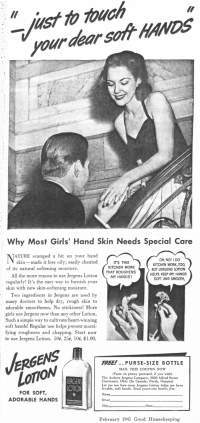 For 15 years, Jergens Lotion was the sponsor of the popular JERGENS JOURNAL with Walter Winchell. During that time, Winchell did not and would not mince words on what he said on the air, which usually stirred up controversy. Since he was popular with the listeners, the Andrew Jergens Company stayed with Winchell no matter how controversial he got--- but there would be a breaking point.
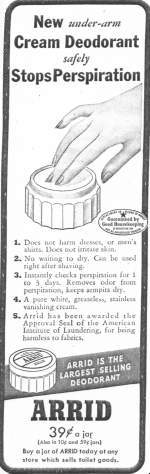 Fidler would begin a consistent run on the air in 1942, when he hosted a 15-minute program on the Blue Network (later known as ABC) under the sponsorship of Arrid Deodorant. He still reported the latest Hollywood gossip, and he also stirred up hard feelings with the movie industry. The only difference, he had a sponsor and network that stayed with him on a consistent basis (1942-1950).

