BRITISH COLUMBIA
Albert Head Battery |
Fort Alexandria |
Alliford Bay Defences |
Barrett Point Battery |
The Bastion |
Bella Bella Defences
Chatham Barracks |
Christopher Point Battery |
Coal Harbour Battery |
Fort Defiance |
Fairview Point Battery
Ferguson Point Battery |
Fort George |
South Fort George |
Fort Graham |
Fort Hope |
Hudson's Hope Post |
Fort Kamloops
Kitwanga Fort |
Klondike Posts |
Fort Langley |
Mary Hill Battery |
Macaulay Point Battery |
McDougal's Post |
Fort McLeod
Fort Nelson |
Patricia Bay Defences |
Point Grey Battery |
Port Hardy Battery |
Prince Rupert Defences |
Rocky Mt. Fort
Fort Rodd Hill |
Fort St. James |
Fort St. John |
Fort Steele |
Signal Hill Battery |
Telegraph Creek Post |
Tofino Defences
Ucluelet Defences |
Vancouver Defences |
Fort Victoria |
West Bank Post |
Work Point Barracks |
Fort Yale
Yorke Island Battery
FUR TRADE FORTS IN BRITISH COLUMBIA
� COAST ARTILLERY DEFENCES,
VICTORIA - ESQUIMALT HARBOURS
View Juan de Fuca Strait map |
View Victoria - Esquimalt map
� Christopher Point Battery 

(1941 - 1944), Christopher Point, south of William Head
Two US 8-inch M1888 railway guns dismounted on M1918 barbette carriages were located here, as well as an
AA battery. American crew provided technical support only. Still exists, but no public access. Located at the Rocky Point Naval Establishment. To the west at Church Hill was the Naval signal
station. Two independent fire-control towers for this battery were once located at Church Hill and at Beechy Head.
� Mary Hill Battery
(1939 - 1945), Mary Hill, near William Head
Three 6-inch MK5 guns, an observation post, and a searchlight were located here, as
well as an AA battery. Two searchlights were located on William Head itself. In 1942,
new mounts were installed which allowed for greater firing range. Still exists, but no public access.
� Albert Head Battery
(1939 - 1956), Albert Head, near Metchosin
Three 9.2-inch MK10 guns on MK6A mounts, and two searchlights were located here. Two of the guns were transferred from Signal Hill Battery, and the third gun was added in 1944. An AA
battery was also here. This site was also used as a lookout post since 1878 for Macaulay Point and other batteries. Still exists. North of here at Triangle Mountain was the WWII
fire command post.
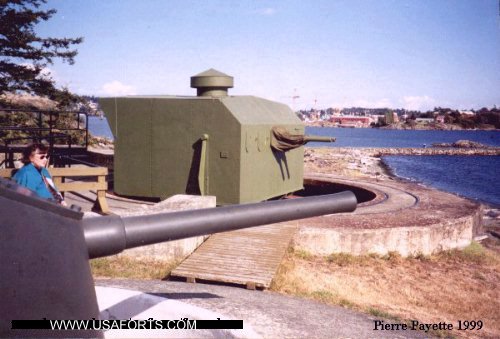
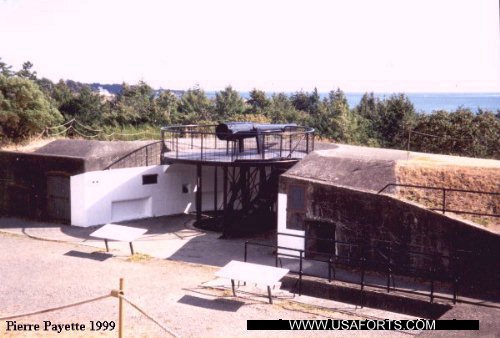
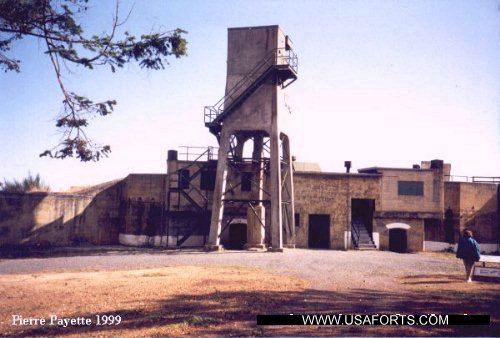
� Fort Rodd Hill
(National Historic Site) 
(1893 - 1956), Fisgard Point, near Esquimalt 
This fortress features underground magazines, a command post, barracks, artillery
stores, and three gun batteries: Upper Battery, Lower Battery, and Belmont
Battery. The Lower Battery (1895 - 1942) had two 6-inch MK6 guns on MK4 disappearing
carriages. Also here is a 6-inch quick-firing naval gun (1923 - 1940). A 40mm AA gun was on the #1 gun position in WWII. The Upper Battery (1895 - 1941) had one 6-inch MK6 gun (it is still here) on a MK4
disappearing carriage (this no longer exists). The gun has been jerry-rigged to appear at the fully elevated position above the parapet. Belmont Battery (1900 - 1954) is an Anti-Motor Torpedo Boat
battery that had two 12-pounder MK1 quick-firing guns. In 1944, one was replaced with one
twin-barrelled 6-pounder MK1 gun that had a higher rate of fire. Both guns are still here.
The rangefinder tower is also located at Belmont Battery. Another 40mm AA gun was also located in the fort in WWII. The WWII fortress plotting room
and two searchlight positions are here. The observation posts associated with the
plotting room were located at Church Hill, Mary Hill, Albert Head, Triangle Mountain,
Signal Hill, Gonzales Hill, and Mount Tolmie. A unique feature of Fort Rodd Hill is
evident with the rear-facing concrete walls with rifle-slits at both the Upper and Lower
Batteries. A harbor boom defence and an anti-submarine net were located here
between Fisgard Point and Duntze Head in WWII. Admission fee. The Fisgard Lighthouse
has been here since 1859 making it the first permanent lighthouse on the Canadian
Pacific coast. PHOTO 1 | PHOTO 2 | PHOTO 3
� Duntze Head Battery
(1893 - 1945), Duntze Head, Esquimalt
Two 12-pounder quick-firing guns and two searchlights were located here from 1893 - 1938.
In 1939 they were replaced with one 6-pounder twin quick-firing gun and one searchlight.
A 75mm gun was temporarily here before the 6-pounder was emplaced. The harbor mine command was here 1900 - 1905.
� Black Rock Battery
(1893 - 1956), Esquimalt
Two 12-pounder quick-firing MK1 AMTB guns were located here. One searchlight was located here in
WWII. The guns were transferred to Golf Hill Battery in 1940, but were replaced. In 1956, the battery became a Naval training battery with two 3-inch gun turrets. Still exists, but no public access.
� Brother's Island Battery
(1878 - 1893), Esquimalt
Located here were three rifled muzzle-loading guns, providing part of the first defence for
Esquimalt Harbour. No public access.
� Signal Hill Battery
(1899 - 1938), Esquimalt
Two 9.2-inch MK10 guns on MK5 mounts and a fire-command post were located here. The guns were transferred to Albert Head Battery. In 1939 - 1945 this was the headquarters of the 5th B.C. Coast Brigade. The battery still exists, but no public access.
� Macaulay Point Battery
(1878 - 1956), Esquimalt
Three rifled muzzle-loading guns were located here in 1878 - 1893. They were replaced with
three 6-inch MK6 guns on MK4 disappearing carriages, two of which was removed in 1924 and replaced with two 6-inch quick-firing MK2 naval guns en barbette. In 1938, the third DC gun and the two naval guns were replaced with two 6-inch MK7 guns on MK2 mounts until 1948. Two AA guns were here in 1942. Two WWII searchlight positions
were nearby at Saxe Point and Harrison Point. The battery has been filled in, and is located in a city park.
� Golf Hill Battery
(1940 - 1944), Esquimalt
Two 12-pounder quick-firing AMTB guns were located here, transferred from Black Rock Battery. A searchlight position was nearby at
McLaughlin Point. The battery still exists, but no public access.
� Work Point Barracks
(1878 - 1956), Esquimalt
The Garrison and Fortress Command Headquarters for the entire harbor defence was located here at
Work Point.
� Ogden Point Battery
(1939 - 1943), Victoria
Also known as Ogden Pier Battery. One 6-pounder twin quick-firing AMTB gun was
located here, which had replaced an earlier 12-pounder AMTB gun in 1944. This battery was previously emplaced as the Breakwater Battery in 1939.
� Victoria Point Battery
(1878 - 1893), Beacon Hill Park, Victoria
Two naval rifled muzzle-loading guns were located here, providing part of the first defence of
Victoria Harbour. Two searchlights were located nearby at Holland Point during WWII.
� Finlayson Point Battery
(1878 - 1893), Beacon Hill Park, Victoria
Two naval rifled muzzle-loading guns were located here. During WWII, two searchlight positions were
located at nearby Clover Point.
� NOTES: The Esquimalt Naval Base and its defenses were under British control from 1848 - 1905. A submarine mine field was planted in Esquimalt Harbour from 1900 - 1905. Additional WWII field artillery positions were located at Jordan River (two 25-pounders) and at Otter Point (two 25-pounders), both west of Sooke. Trial Island was to have a three-gun 7.5-inch battery in WWII, but it was never built. Several batteries of the C.A. Defences of Victoria - Esquimalt were considered part of the joint US - Canadian Harbor Defenses of Juan de Fuca Strait. They were as follows: Christopher Point Battery, Mary Hill Battery, Albert Head Battery, and Macaulay Point Battery.
Fort Victoria
(1843 - unknown), Victoria
A Hudson's Bay Co. post, the site of which is at Bastion Square. Victoria became a crown
colony in 1851. PHOTO LINK
Patricia Bay Defences
(1940's), North Saanich
Anti-aircraft batteries were located here to protect the military and civilian airfield.
Ucluelet Defences
(1940's), Ucluelet
Anti-aircraft batteries and a two-gun 75mm AMTB battery were located here to protect
the military seaplane base.
Fort Defiance
(1791 - 1792), Tofino
An American fur trade post. Some ruins remain.
Tofino Defences
(1940's), Tofino
Anti-aircraft batteries were located here to protect the military seaplane base.
The Bastion
(1853 - unknown), Nanaimo
A Hudson's Bay Co. post for English and Scottish coal miners. This small fort has
original muskets and cannons. The town was originally called Colvilletown.
Yorke Island Battery
(1939 - 1945), Yorke Island, near Port Neville
The examination battery for Johnstone Strait, armed with two 6-inch guns originally from Ferguson Point, Vancouver, that replaced two earlier 4.7-inch quick-firing guns in 1942. This
battery protected the "backdoor" northern approach to Vancouver and Victoria.
�� COAST ARTILLERY DEFENCES, PORT HARDY
�� Port Hardy Battery
(1940's), Port Hardy
An anti-aircraft battery was located here to protect the military seaplane base.
�� Coal Harbour Battery
(1940's), Coal Harbour
A 75mm AMTB battery and an AA battery were located here to protect the military seaplane base and the "backdoor" to Port Hardy.
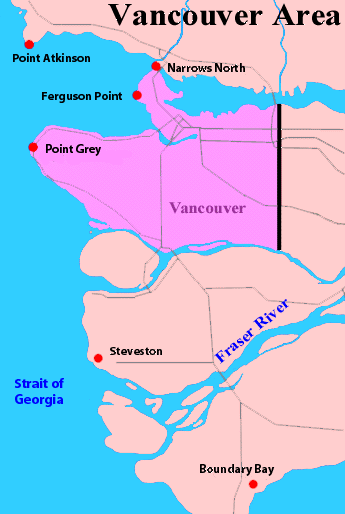
��� COAST ARTILLERY DEFENCES,
VANCOUVER HARBOUR
View Vancouver map
��� Point Atkinson Battery
(1939 - 1944), West Vancouver
A field artillery position for one 18-pounder gun, used as the examination battery for
the harbour. Located adjacent to the lighthouse at Lighthouse Park.
��� Narrows North Battery
(1939 - 1944), North Vancouver, Vancouver
An AMTB battery located at the Capilano River Spit, near the present-day heliport, it was armed with two 12-pounder quick-firing guns.
��� Ferguson Point Battery
(1939 - 1943), Ferguson Point, Vancouver
Originally armed with two 6-inch MK7 guns on MK2 mounts, later replaced with two 4.7-inch
guns. The guns were switched in 1942 with those on Yorke Island.
��� Point Grey Battery
(1939 - 1944), Vancouver
Located adjacent to the University of British Columbia, behind the Museum of
Anthropology. Armed with three 6-inch MK7 guns on MK2 mounts. Searchlights were also positioned
here.
��� Steveston Battery
(1940's), Steveston
A field artillery position for two 25-pounder guns and a two-gun 18-pounder gun battery.
An AA battery was also located here. Located at the northern bank of the mouth of the
Fraser River.
��� Boundary Bay Battery
(1940's), Boundary Bay
An anti-aircraft battery was located here to protect the military airfield.
Fort
Langley (National Historic Site)
(1827 - 1886), Fort Langley
A Hudson's Bay Co. post. A new fort was built in 1838. It was rebuilt in 1839 after a
fire. Rebuilt again in 1840. It features an 1840 warehouse, reconstructed Big House,
bastions and servants quarters. Later, this fort became a provisioning post for the
1858 gold rush. The palisade wall was dismantled in 1864. British Columbia was
proclaimed a crown colony here in 1858. The Children of
Fort Langley (website courtesy of Lisa Peppan)
Located nearby is the
Langley Centennial Museum.
Admission fee.
Fort Hope
(1848 - unknown), Hope
A Hudson's Bay Co. post. It was also used during the 1858 gold rush.
Fort Yale
(unknown dates), Yale
A Hudson's Bay Co. post.
McDougal's Post
(1861 - unknown), Princeton
A fur trade post.
West Bank Post
(1820's - 1860's), West Bank
A fur trade post.
Fort Kamloops
(1812 - 1860's), Kamloops
A North West Co. post, and later a Hudson's Bay Co. post. A replica of the Hudson's Bay
post is at the Kamloops Museum and Archives.
Fort
Steele Heritage Town
(1888 - unknown), Fort Steele
The town was originally called Galbraith's Ferry. It was changed in honor of a NWMP
officer in 1888. This was the first North West Mounted Police post west of the Rocky
Mountains. There are over 60 homes and other restored buildings in this living history
town. Admission fee.
Fort Alexandria
(unknown dates), Alexandria
Bella Bella Defences
(1940's), Bella Bella
A 75mm AMTB battery and an AA battery to protect the military seaplane base.
Fort George (Park)
(1807 - unknown), Prince George
A North West Co. post. The Fraser Fort George Regional Museum is here. Admission fee.
Also located near here was South Fort George.
Fort
St. James (National Historic Site)
(1806 - unknown), Fort St. James
First a North West Co. post, then a Hudson's Bay Co. post beginning in 1821. The current
structure is a reconstruction of the fourth post on this site, from 1896. It also
features five restored buildings that date between 1884 and 1889. This was the
headquarters of the New Caledonia District in 1821.
Kitwanga Fort (National Historic Site) 
(unknown dates), Kitwanga
A Tsimshian Indian palisade from the late 1600's. It was destroyed in the early 1800's
by other aboriginal tribes.
� COAST ARTILLERY DEFENCES,
PRINCE RUPERT HARBOUR
View Prince Rupert map
� Barrett Point Battery
(1939 - 1945),
Three 6-inch MK12 guns on MK7 mounts were temporarily emplaced here until 1944, when
three 6-inch MK24 guns, two on MK6 mounts and one on a MK5 mount, were emplaced. A 6-pounder
Hotchkiss gun was also here, as well as two 40mm AA guns and two searchlight positions.
The observation post, plotting room, and magazines still exist, but overgrown with
vegetation. The ruins of the Fortress Command Post still exist.
� Casey Point Battery
(1944 - 1945),
A 6-pounder MK1 twin AMTB battery. Two 25-pounder field artillery guns were also
located here, as well as one searchlight. Emplacement still exists.
� Frederick Point Battery
(1939 - 1945), Digby Island
Two 12-pounder MK1 quick-firing guns on MK1 mounts. Two searchlight positions.
Emplacements and magazines still exist.
� Fairview Point Battery
(1942 - 1945),
Two US 8-inch M1888 M1 guns on M1918 barbette carriages, which were mounted on M1918
M1 rail cars. Gun position no longer exists. Independent fire-control towers were once located on the west side of Digby Island and on Mount Hayes (ruins).
� Tobey Point Battery
(1942 - 1945), Digby Island
Four 3.7-inch AA guns were located here. No longer exists.
� Dundas Point Battery
(1939 - 1945), Digby Island
A 75mm AMTB battery, with two searchlight positions, to protect the boom defence across
Venn Passage. No longer
exists.
� Varney Island Battery
(1942 - 1944), Varney Island
A 75mm AMTB battery to protect the boom defence across
Venn Passage. No longer
exists.
� Pillsbury Cove Battery
(1942 - 1945),
Four 3.7-inch AA guns were located here. No longer exists.
� Seal Cove Battery
(1942 - 1945), Prince Rupert
Four 3.7-inch AA guns were located here to protect the RCAF Seaplane Base. The battery
position no longer exists, however the ramp and hangar for the seaplanes still exist,
as well as several ammunition magazines.
� NOTES: The AA battery on Annette Island, Alaska, was manned by Canadian troops, and was commanded by the Prince Rupert Defence Command. The Naval signal station was located on East Kinahan Island. The Boom Defence Depot was located near Chatham Barracks, the Royal Canadian Navy barracks, near where the present-day cruise ship terminal is located. Twelve 40mm AA guns were located around the docks. The only remaining structure here is the former HQ Administration building, now an apartment complex. Port Edward was used by the US Army as an ammunition storage and supply staging area. A pulp mill is now on the site there. The Canadian Army used a railway gun (1942 - 43), known as Armored Train #1, along a line from Prince Rupert to 80 miles west of Terrace. It consisted of seven cars with the engine in the center, two 75mm and four 40mm guns, and two searchlights.
Alliford Bay Defences
(1940's), Alliford Bay, Moresby Island
A 75mm AMTB battery and an AA battery to protect the military seaplane base.
Fort St. John
(1793 - unknown), Fort St. John
Also known as Rocky Mountain Fort, it was a fur trade post. It is the oldest
white settlement on the BC mainland. This fort could have also been called Fort
McLeod.
Hudson's Hope Post
(1805 - 1900), Hudson's Hope
A Hudson's Bay Co. post. A replica is at the Hudson's Hope Museum. It has a log church,
trapper's cabin and other buildings. This post could have also been called Fort
McLeod.
Fort Graham
(unknown dates), Fort Graham
Located near the north end of Williston Lake.
Fort Nelson
(1805 - unknown), Fort Nelson
A fur trade post.
Telegraph Creek Post
(unknown dates), Telegraph Creek
A Hudson's Bay Co. post. The historic building is now a restaurant.
Klondike NWMP Posts
(Chilkoot Trail National Historic
Site)
(1898 - 1899), near Bennett
North West Mounted Police campsites are located at Lindeman, Bennett, Tagish Lake,
White Pass, and Chilkoot Pass. These posts were established during the Klondike gold
rush when the international boundary was undetermined. The NWMP arrived in 1894, before
the U.S. Army and claimed this area. The park is administered by the Yukon National
Historic Sites Division of the CPS.
NOTES: New Westminster was the provincial capital (1855-68) and Royal Engineers
were sent here to provide law and order. Sooke was a Spanish claim (1790-93) that was
traded to the British by treaty.
NEED MORE INFO:
Towns: Hyland Post, Lower Post, Fort Ware, Fort Fraser, Fort Babine, Little Fort.
Special thanks to David Morgan of the Coast Defense Study Group for providing info on the Coast Artillery Defences of British Columbia, and also to Robert D. Zink of the CDSG for additional coast defence info.
 Books about Forts in British Columbia