 |
|
|
| Search the web with Hotbot | Host your site on Tripod |


Second Manassas
August 30,1862
After Lee defeated McClellan in the Seven Days Campaign, Pope's Army of Virginia remained a threat in Northern Virginia. Jackson was sent north to protect the vital rail center at Gordonsville. After Jackson narrowly defeated one of Pope's three corps at Cedar Mountain, Lee decided to take the rest of his army north. McClellan's army was withdrawing from the Peninsula and Lee had to defeat Pope before the two joined. Pope's 55,000 and McClellan's 90,000 men could together muster 140,000 men to Lee's 55,000. After a failed attempt to move into Pope's rear, Lee faced his enemy across the Rappahannock.
On August 25, 1862 Jackson's corps began the march around Pope's army, and Longstreet's corps followed the next day. On August 27th, Jackson's men plundered the Union warehouses at Manassas Junction while Pope moved to "bag" him. Pope failed to surround Jackson, who escaped north to a defensive position along an unfinished railroad. Pope also failed to block Longstreet's corps at Thoroughfare Gap, which would have allowed him to defeat Jackson and Longstreet in detail. Jackson attacked a Union division at Brawner's Farm on August 28th. He intended to prevent Pope from withdrawing to join McClellan. Pope obliged and attacked Jackson frontally on the 29th while Longstreet arrived and deployed directly on Pope's exposed flank.
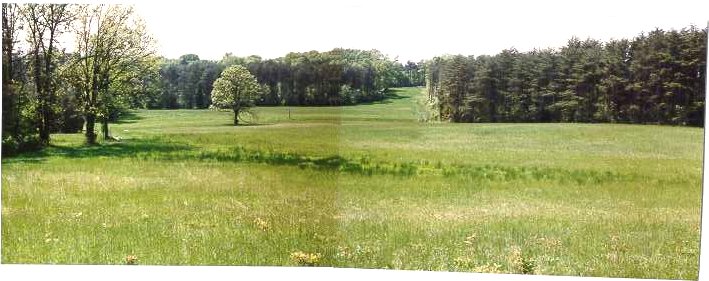
Unfinished Railroad From the Groveton-Sudley Road
Pope renewed his attacks on the 30th, but failed to break Jackson's line. Porter's V Corps had been sitting on Longstreet's flank, spooking the Confederate commander from attacking on the 29th. Now Pope ordered Porter to join the main army and assault Jackson.
This is the view from the woods at the Groveton-Sudley Road where Porter's corps deployed to attack. Confederates were defending the cut of an unfinished railroad on the ridge in the distance. At the time of the battle, the forests here did not exist and the Rebels had a clear field of fire. Porter's men advanced into the valley and briefly halted at Schoolhouse Branch were they were met with enfilading artillery fire from artillery batteries on their left. Bradley Johnson's brigade at the present-day cleared section of the Unfinished Railroad opened fire on their front while Stafford's brigade enfiladed them from their right. The Union brigade which attacked Johnson was Robert's of Butterfield's division.
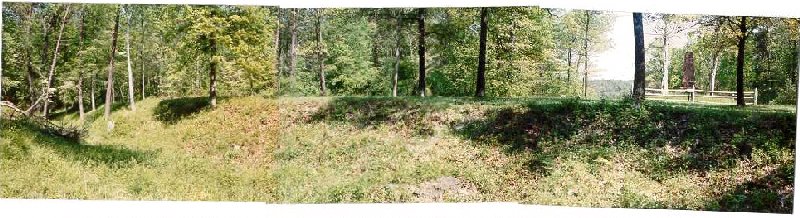
View From Unfinished Railroad
This portion of the unfinished railroad was held by Bradley Johnson's brigade, with Stafford's brigade to his left. This is the view from the cut approximately where the 42nd Virginia stood. The Federals attacking this cut were enfiladed by Stafford's brigade down the Unfinished Railroad to the left. This fire along with enfilade fire from the 48th Virginia in a thicket off the picture to the right pinned down many of the Federals just 50 yards from the cut. Men from the 13th New York advanced to a few yards of the cut near the monument on the right, but they could not take the position.
A gap, however, existed from the 48th Virginia to A.G. Taliaferro's brigade to their right. Week's Union brigade nearly penetrated this gap and were only stopped when the 500 remaining members of the Stonewall brigade charged forward into the gap. Bradley Johnson also ordered his two remaining regiments from the rear to join the defensive line in the cut, but only 300 men from the two regiments made it through heavy Union fire. A desperate firefight ensued. When the Confederate ran out of ammunition, they threw rocks. Finally, the Federals withdrew. Bradley Johnson counted 100 enemy dead within 20 yards of Deep Cut.
Back to Civil War Virtual Battlefield Tours
Continue to Second Manassas Part 2