 |
|
|
| Search the web with Hotbot | Host your site on Tripod |


Hunter's Raid Part 2

Peaks of Otter
This is the spectacular view from the top of Sharp Top at the Peaks of Otter. To the right is Flat Top and to the left is Harkening Hill. Buchanan is obscured behind the mountain to the left of Harkening Hill. McCausland and his men retreated 1500 feet up this mountain along a narrow road (now Rt. 43) which skirts the mountainside. The Confederates felled trees and skirmished with the Federals to delay them as long as possible. Not all pack animals and wagons made it up this treacherous climb.
The advancing Federals moved along what is now the Blue Ridge Parkway and past the famous lodge visible near the modern day lake. Some of the men hiked up Sharp Top to take in the view and destroyed the roof of a stone house at the top. Meanwhile, other Federals stole the lodge's food. One officer jokingly signed the guestbook, and next to his name was written, "He didn't pay his bill." Hunter's men then descended the mountain and passed through Liberty, now Bedford, on the way to Lynchburg.

Fort Early
McCausland and his men delayed Hunter over the Peaks of Otter and along the route to Lynchburg. Meanwhile, D.H. Hill and Harry hays in Lynchburg were preparing a fortified line to protect the city. The earthwork shown above already existed and was renamed Fort Early. It became the basis of the new line.
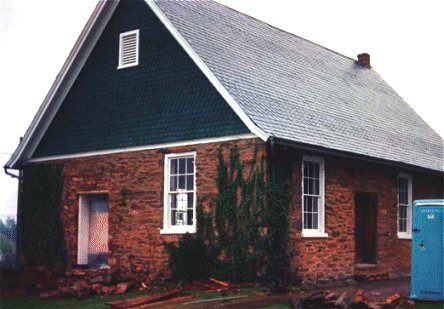
Quaker Church
Breckinridge and his men had moved from Rockfish Gap and were now entering Lynchburg on June 17th. Early's men would soon join the defense.
Hunter's men, however, were rapidly approaching the city. To buy time for his men to reach the city, Early sent Imboden out of the defensive lines with 1,000 men and 5 guns. Imboden's men made crude entrenchments near the Quaker Church. Hunter ordered Averell, then Crook to attack this position, and after flanking the line, the Yankees pushed Imboden back. Union troops pursued them to the main defensive line which was too strong for them to take. It was too late in the day to assault the city, and Confederate troops filled into the defensive line that night. The Confederates now mustered 15,000 to 16,000 men behind entrenchments to oppose Hunter's 19,000 to 25,000 men. After testing Confederate defenses on the 18th, Hunter decided he could not take the city, so he began the long retreat to West Virginia.
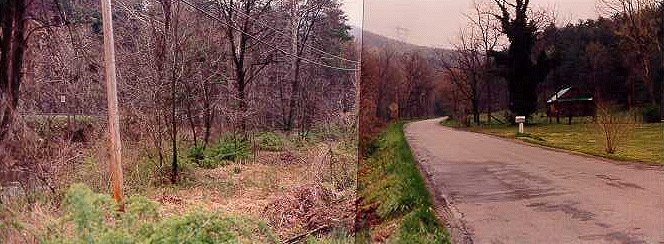
Hanging Rock
Early's men skirmished with Hunter at Salem, and McCausland just missed cutting Hunter off here at Hanging Rock, just north of Salem. McCausland's men sniped at the Federals and his artillery bombarded the Union wagon trains as they retreated down this road. The Confederate fire did more harm to the pack animals than to the troops, and Hunter continued his retreat without further harassment. About six hundred horses died ascending Potts Mountain, and the troops were starving by the time they reached safety in West Virginia.
The threat to Lynchburg, and therefore to Richmond, was passed. With Hunter in West Virginia, the Valley was clear of Federals. Early advanced swiftly down the Valley and threatened Washington D.C. Early was now Lee's last hope of success as the major armies settled into siege around Petersburg.
Back to Civil War Virtual Battlefield Tours