If you have any
questions you can e-mail me directly at: [email protected]

Below are some important links
dealing with key points I stressed in the lecture/s fSince they contain more information
and detail I put these up. The lecture is also located below the
links. It is in outline form for me to reference while lecturing.
So, not everything I talked about will be there and vice-versa.
Follow the "Nameles
 Ones" to do further research on the Great War.
Here are some links for further research on the
Culture and the Arts of the pre-and post-war periods.
Futurism
Modernism
and the Avant-Garde
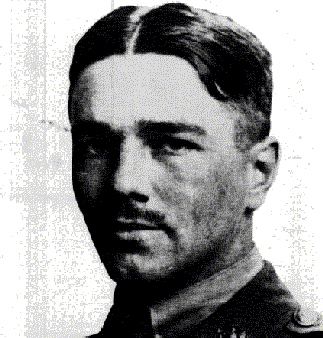 The Poetry of Wilfred Owen

Click the picture to go to the
Napier University War Poets Collection at Craiglockhart, Scotland
Links to Poetry, Photos and
Art of the
Great War
 The
Poetry of Siegfreid Sassoon
The
Bartleby Collection - Sassoon,
Siegfried. 1918-20. Poems.

Western Civilization II
Things fall apart;
the centre can not hold;
Mere anarchy is
loosed upon the world,
The blood-dimmed
tide is loosed, and everywhere
The ceremony of
innocence is drowned;
The best lack all
conviction, while the worst
are full of
passionate intensity.
Yeats
|
- Begin with quotes and comments:
- "Never such Innocence Again."
- "The lamps are going out all around
the world. We shall not seem them lit again in
our lifetime."
- Richard Bellamy's quote from
Upstairs-Downstairs.
- The pre-War world as some idyllic world
shattered and destroyed by the Great War.
- The JugenFronde - could march into battle
arm-in-arm singing directly into the fire of the
British Army
- The French could march into Battle in Red
and Blue singing the Marseilles.
- The English follow their officers over
the top kicking a soccer ball or throwing a rugby
ball.
- Many historians now consider "The Great
War" to be the major break point between the
"Modern World" and the "ordered"
world of the past.
-
- It is also considered the "Thirty
Years War" of the 20th
Century. Explain
- It is the event that sets the entire tone
for the 20th Century, the bloodiest and most
horrific century in the history of the Human
Race.
- It was "The War To End All
Wars,"- a senseless slaughter that set the
stage for the bloodiest century in human history.
It was more than just a war between nations. It
was a war between what was and what was to be.
The "old world" was dying, and the new
world had yet to be born. People of all classes
and nations saw it as some great cleansing fire
that would accelerate this battle and lead to a
better world. But, when it was over, more than
men had died in the mud of the battlefields. The
naive dreams of progress, along with the
innocence of the pre-war world, faith in God, and
hope in the future all died in the trenches of
Europe.
- It changed the way we viewed the world
and our place in it.
- People broke the world into what
came before and what came after. The
years 1914-1918 are seen as a great chasm
between the old and the new world.
Nothing was ever the same again.
- For the soldiers the past
is only what they left behind -
that they are no longer a part
of, and in front of them is the
Future - a No-Man's Land - in
which only death and destruction
awaits them. They are trapped in
an ever present.
- The idea of
mental illness from that.
Cite Psychosis and
inability to deal with
time or order things.
- Women's role in society
- The personal over the public
- God died in the trenches of
Europe
- Hope in the future died
- The confidence and belief in the
future and progress was destroyed.
- It changed language and how we used it.
- Cite e.e. cummings, F. Scott
Fitzgerald, et. al. - The Lost
Generation.
- The meaning of words changed.
Duty, Honor, and Glory meant nothing
after this war. Chivalry as a concept
died in the mud of the Western Front.
- The use of the passive voice as
men were no longer actors but acted upon.
- Terms like "Lousy,"
"Over the Top," "No-Man's
Land," "Big Bertha,"
"Doughboy,"
"Shell-Shock,"
"Dogfight," "Buy the
Farm."
- The world is totally destabilized.
- WW II is a direct result of the
war and its aftermath.
- The Mid-East problems are
directly attributable.
- The Balkan problems
- Northern Ireland problem
- The beginning of the
anti-colonial movements. - How could you
fight a war over the right of small
nations to be free and then not allow
them to go free or expect that they would
demand that?
- Since this war had such a great impact on the 20th
Century, we need to understand what caused this terrible
War and why it represented this great rupture in the
history of the world.
-
- But before we can go further, we must
understand what the Great War was not. What I
will tell you is to throw out all the simplistic
arguments you learned in high school. This war
was not:
-
- The result of the interlocking
Alliance System,
- Inevitable because of this
alliance system.
- The result of imperialism.
- The result of any one nation's
desire for dominance, although this could
be argued.
- The result of an accident waiting
to happen.
- It is my argument that The Great War
resulted from:
- The demoralization of Western,
and all European Countries, prior to the
war, as the certainties and ethos of each
nation were undercut by the Avant Garde,
science and technology.
- The technological change that
took place in Europe prior to the war. It
was the internal social, political and
economic problems of the individual
European Societies, societies that were
radically altered, while the ruling
classes of each nation attempted to
preserve their outmoded political and
social systems to hold onto their
positions in the face of the new emerging
world.
- That is, this War occurred because each
country in Europe found itself in an internal
crisis and could find no other way out of the
crisis.
- But most important, it was the
"Ancien Regime" that survived in each
country and fought desperately to hold onto its
position in the world. IT IS THIS ATTEMPT TO HOLD
ONTO POWER THAT DRAGGED EUROPE AND THE WORLD INTO
THE ABYSS, AN ABYSS THAT IT DID NOT DRAG ITSELF
OUT OF UNTIL 1945.
As Charles Nordman wrote:
"There exist in the life of societies as well as
individuals hours of mortal discomfort when despair and fatigue
spread their leaden wings over human beings. Men then begin to
dream of nothingness. The end of everything ceases to be
"undesirable" and its contemplation is in fact
soothing."
- Keep all these factors in mind. They are all very
important and all play in the role in the coming of the
Great War.
- Also, in this lecture keep in mind, as I said
before, that this war was more than just a
"simple" war between nations.
- It was a war between what was an what was
to be. You need to understand this
- It resolved nothing and it was not until
WWII that anything was settled. Even now we can
look at Ireland, the Middle East, Africa, the Far
East, and Central Europe and argue that we are
still living with this war.
- It set the tone for the 20th Century by
justifying slaughter on a scale that the human
race had never contemplated.
- Many have argued that the death
camps of Auschwitz and Dachau were
prepared in the charnel houses of Verdun
and the Somme.
- That Rwanda, Srebenica, Cambodia,
and anywhere else you can think of where
mass slaughter has occurred has its roots
in "The Great War."
Why The Great War occurred.
- Each nation in Europe, (STRESS THAT IT IS THE
INTERNAL WHICH CONDITIONS THE EXTERNAL.) by 1914, had
reached a point of total stasis. Each of the political
systems in Europe had, in their own way, reached an
impasse. In the European societies as a whole,
- All the old values and beliefs and
certainties were either gone or under attack from
all corners.
- The political systems had stalemated as
the political leaders realized their societies
were in a stasis, and that their position was
under attack from the new urban/industrial
classes and also the avant-garde.
- A symptom of this was the
increase of terrorist attacks all over
Europe prior to The Great War. Between
1890 and 1914 every nation in Europe had
to deal with revolutionary terror.
- The leaders of all nations, and everyone,
even if they did not really understand what was
happening, realized something great and terrible
was at hand.
- Among all classes a terrible sense of
"ennui" took hold.
- This Crisis was sensed by the Avant-Garde.
- The Avant-Garde's paintings and art and
literature between 1911-1914 anticipated The
Great War and all it would bring. Some gloried in
it, while others feared it.
The key is that everyone knew a great and
momentous change was at hand.- Everyone knew that
societies could not continue to live in the old way, but
no one had any idea what the new way was. This led to the
terrible malaise that affected every country in Europe.
The war would would act as a great pressure release
valve, that ended the "Malaise," destroyed the
Old World, and brought on the world we now live in.
- It is this that explains why is the war
is welcomed by the Europeans with such rejoicing
and celebration.
- Therefore, I also argue that The Great War was
not inevitable; it was, in historical terms a necessity.
It had to get Europe out of the impasse that came about
because of the convergence of the factors on the board.
As I said earlier, none could have done it alone.
- Interlocking Alliance system.
- Industrialization
- Brought on Imperialism
- Destabilized the internal
politics of the society.
- Created the urban and
mainly industrial classes that
undercut the power of the old
landed aristocrats who still
dominated the political landscape
in Europe.
- Technological and scientific
advances changed the way people lived and
their view of the world.
- European Societies suffered shocks,
philosophical challenges, and structural changes
which dramatically changed the nature of European
Society while the old Landed Aristocratic Classes
tried to hold onto their power at all costs.
- Avant-Garde
- Futurists
- Symbolists
- Nijinsky-Djiaghelev-Stravinsky
- Nietzcshe
- Science
- Technology
- Heavy Industry
- Electricity
- The Telephone and
Telegraph
- Simultaneous
Poetry
- Freud
- Einstein
- The Avant-Garde - One thing to keep in mind about
the Avant-Garde- they almost to a person tied themselves
to the Totalitarian movements of the 20th
Century.
- The Avant-Garde and science destroyed or
attacked all the conventions and long-held
beliefs of all Europe. When the War came the
welcomed it as a "Great Cleansing Fire"
that would sweep away the old world-destroying
the past and all tradition.
- The DaDa's hated the war yet
reveled in it writing that: "The War
is our brothel."
- They believed in
liberation through madness.
Rejecting the rationalism of
western societies that led to the
war they retreated into
irrationalism and unreason.
- Prior to the War the Avant-Garde took the lead in
destroying or undercutting the basis of Western Culture.
- Einstein destroyed Absolutes with his
Theory of Relativity.
- Explain how this affects
civilization.
- Freud destroyed the belief in humans as
rational beings.
- Explain this,
- Nietzsche called on people to destroy
convention and become "Gods" unto
themselves, rejecting all laws and restrictions
on human action.
- "Pure Will without the
confusions of Intellect...how happy! How
Free!"
- "Only he who lives
dangerously, lives fully."
- Hitler was to say
"He wrote that for me."
- The Impressionists, Cubists and other art
movements destroyed perspective, attacking
absolutes and undercutting all the certainties of
Europe.
- In fact, the Cubists ended up
creating camouflage in the War.
- The Futurists attacked everything that
was of the "Old World."
- They celebrated war and violence as
liberating.
- They wrote such things as:
"I appeal to the young, to those who are thirsty
for the new, the actual, the lively. They follow me, faithful and
fearless, along the roads of the future, gloriously preceded by
my, by our, intrepid brothers, the Futurist poets and painters,
beautiful with violence, daring with rebellion, and luminous with
the animation of genius."
"Let us jeer at the exhausted prototypes of the
Beautiful, the Grand,
The Solemn, the Religious, the Ferocious, the
Seductive, and the
Terrifying.
The Variety Theatre destroys the Solemn, the Sacred,
the Serious,
And the sublime in the Art with a Capital A."
"Destroy the Museums. Crack syntax. Sabotage the
adjective. Leave nothing but the verb."
Fillipo Tommaso Marinetti
- Djiaghelev, Nijinskii and Stravinskii,
among others attacked all traditional forms in
theater, music and dance.
- In other words: The subjective, the
irrational, emotion all were elevated over the
rational ordered world of the Ancien Regimes and
the bourgeois societies.
- This set in motion a sometimes violent conflict
over what would be the ethos of Europe took place and
threw every country into turmoil and destroyed the
philosophical basis of the Ruling Classes and the
societies.
Within the individual nations this attack was
buttressed by the internal crisis they each faced. All were in a
period where there was nowhere else to go. But, I will stress, it
was Germany's internal crisis which led it more than any other
nation to risk war to solve its internal crisis. (Now tie all the
nations together.)
- Russia, by 1914, was in a pre-revolutionary
situation.
- Lena gold fields massacre 1912
- Rising tide of strikes and revolutionary
activity between 1911-1914.
- In June of 1914 75% of all industrial
workers are on strike.
- Peasants are burning and looting the
grand estates.
- France, although not in a revolutionary
situation, faced conflict over whether or not to remain
it would remain a Republic or become a Monarchy. I.E. a
conflict between becoming modern or remaining
traditional.
- The Catholic Church in alliance with the
old aristocrats attempted to roll back the gains
of the middle-class, destroy the Republic and
return France to a monarchy.
- The Dreyfus Affair was part of
this. Everyone realized this and that is
why this "Affair" was so
intense.
- This continuing struggle was to
play itself out during the period of the
Vichy government.
- The old order in France
used this period to roll back
many of the gains of the Republic
and make France into an
"ordered" society
again.
- Revanchism - Alsace-Lorraine
- Struggle between the bourgeoisie
and the working class as well.
- Rising tide of Strikes
and the appearance of a strong
syndicalist movement.
- The Country was near bankruptcy
- The Political system was
incredibly unstable. There had been 50
prime ministers between the years 1875
and 1914.
- Even England did not escape these problems:
- The Woman's movement
- Very violent and politically
disruptive
- Bombs
- Window smashing
- Riots
- Disruptions in the House
of Commons
- Chaining to Fences
- Hunger Strikes-Forced
Feedings
- Cat-and-Mouse
Acts
- The Conflict between the Old Aristocrat
Orders and the Urban Bourgeoisie
- The 1911 Budget and the end of
the veto power of the House of Lords
- Still the Irish struggle
would show how the Aristocrats could still hold on and struggle
for power.
- Labor and Capital
- Rise in militancy - By 1898
Workers demand their "rights."
They do not simply "ask" for
them.
- Series of Major Strikes between
1911-1914.
- England began to view
itself as two nations; One Rich
and One Poor
- The "Home Rule" Struggle in
Ireland (March 1914-August 1914)
- "Curragh Mutiny" The
Army refuses to move against the
Protestants in the north who opposed
"Home Rule" by the point of a
gun.
- Explain how the officer
corps refuses to move against
Ulster.
- The Loyalists are armed. The
Nationalists are armed. By July 1914, the
Army cannot be counted on and the
Nationalists and the Loyalists are
totally prepared for Civil War.
- If the war had not intervened
there could have been:
- Civil War in Ireland
- Mutiny in the British
Army if the orders to suppress
the loyalists had come through.
- The War simply postponed and
exacerbated these problems, that still
plague Ireland today.
- The Austro-Hungarian Empire was on the verge of
collapse.
- Internally the system was rotten to the
core. It was faced:
- With rising nationalism in its
heartland and in its S.E. areas.
- The political system could not
meet the demands placed on it by an
urban-industrial society. It was mired
hopelessly in the past.
- The leaders consequently saw the crisis
in Serbia and the Balkans as their chance:
- To control the rising nationalism
within their borders.
- To reestablish their power within
their own borders.
- To regain their standing in the
World.
- These desires and pressures force
Austria-Hungary into actions that would lead to
war.
- Faced with a loss of influence to
Serbia and the discontent of its own Slav
population the state
- Seizes
Bosnia-Herzogovinia in 1908.
- This only serves
to heighten anxiety in
the area and upset the
Russians as well.
- Rabid Pan-Slavism
emerges in reaction to
this action. Instead of
solving the problem of
its Slav population and
its place in the world,
now its Slav population
joins itself to this
Pan-Slavic front.
- When the Archduke is killed, an act that
was not unusual in this period, it will act in
such a manner so as to regain its Standing in the
World and to keep its subject nationalities under
control. Its reaction to the killings and dealing
with Serbia is more based on internal as external
considerations.
- Germany: This country, excepting Russia, faced
the gravest internal crisis though. The Conflict in
Germany was one between a political system rooted in
Feudalism and Absolutism against the rising modern,
urban, industrial world, as the old order fought to hold
onto its traditional position.
-
- This conflict was to lead Germany into
taking actions in the World that frightened or
threatened England, France and Russia.
- Why did it act this way?
-
- Constitutional System - Designed
to preserve the position of the old
aristocratic orders who have aligned
themselves with the industrialists to
prevent change and a threat to their
position.
- Use Bethman-Hollweg's
predicament.
- If he identified
with the Agrarians he
would alienate the people
and destablize the
system, yet any attempt
to modernize the
political system led him
into conflict with the
Landed Elites who
controlled the state.
- It was a system that was
resistant to change.
- Three class suffrage -
Designed to keep the Social
Democrats and liberal parties at
bay. To Protect the position of
the aristocrats.
- Reflected in the
parliament. - This meant
that the smallest most
backward and obsolete
segment of the population
controlled the state.
- Bundesrat - Upper house
controlled by Prussia, in the interests
of the Conservative Iron and Rye
Coalition.
- Prussia held veto
power in it, even thought
it had only 17 seats out
of 61.
Reichstag - Lower house
of all the people.
- The most it could
do was to refuse to pass
the budget. But it could
not stop it.
- Had no say over
foreign policy or the
military.
- As one person
said: "The Reichstag
was "a parliament
without a
government,"
condemned to deliver monologues."
- Key: It's
chief significance lay in
its claim of reflecting
public sentiments. Will
be very important by
1914.
- The internal problems and what actions
that causes them to take in the international
arena and what that causes. In fact, one
historian argues that the German Imperial State
acted as much to destroy the Social Democrats as
it did to protect or extend its place in the
world.
- The Junkers desire to protect and
extend their position leads them to:
- get rid of Bismarck and
crack down on SD's and working
class.
- Stop importation of
Russian Wheat because it hurt
their economic position.
- This came at a
time when Russia was
embarked on a very
ambitious
industrialization plan.
Needless to say the
Russians were not happy.
- In 1890 they ended the
Reinsurance Treaty with Russia.
- Germany would
only fight if Russia
attacked Austria-Hungary.
- Russia would
fight only if Germany
attacked France.
- Naturally this led to
suspicion on all sides about
Germany's intentions, especially
in Russia.
- Constant fear of the Social
Democrats and parliamentarianism.
- The Kaiser, even in the
1890's saw the Reichstag as a
hindrance. Wanted to find a way
to rule without it and crush the
SD's.
- There were two ways and
they were interlinked
- 1898
- Imperialism
- The Naval
Buildup.
- Both policies
were geared not simply to
secure Germany's position
in the world. They were
geared as much to destroy
the SD and subvert
Parliamentarianism to
protect the old elites.
- Imperialism- For Germany
imperialism was to give it its
Great Power stature, but it was
in the words of one writer the
policy that Germany "was
forced to adopt." because
"the rising number of hungry
stomachs and empty hands...forced
us to adopt a global economic
policy and to move out into the
world market."
- The Naval buildup - As
much to facilitate imperialism,
it was to divert the attention of
the working class until Germany's
empire was secure and prosperous.
- 1906 Morocco and
1911 Agadir Crises were
precipitated by the
German government as much
to show to rally all the
classes around it as it
was to show the world
that it was a great
power.
- In other words these
policies were to quell the
radical politics of the people in
German and attempt to integrate
them into the nation.
- At the same time: In the army, an
army in this time existed primarily for
internal crisis:
- From 1898 the government
restricts entry into the officer
corps to keep it pure for the
aristocrats.
- It attempts to restrict
working class membership in the
army because it feared putting
guns in the hands of socialists.
It also tried to indoctrinate the
SD's that were in the army to
make them more
"German."
- But then in 1912 it began
to resuscitate the army.
- Naturally, these actions all led
to more international tensions
- England responded to the
Naval buildup and their
international actions with a
massive building program of its
own.
- This led to a
naval race that Germany
could not win.
- Germany still
collected taxes
indirectly. The landed
Elites had been able to
keep the middle and
working classes and
peasants paying for the
state through indirect
taxes.
- This would
seriously damage the
economy by 1914 and help
lead to the stasis of
1914 because the German
Arms builup would be paid
or by short term,
high-interest loans.
- France and England
entered into and Entente and then
later joined with Russia in the
Triple Entente.
- France, in 1913, embarked
on a massive military buildup
- Russia, in 1911 began a
massive buildup and
reorganization of its entire
military in preparation for war.
- By 1912 the crisis matured.
- The SD's became the majority
party in parliament. Still with little
power.
- An alliance developed between
liberals and SD's and the parliament
began to act against the interests of the
Prussian/Junker elites.
- The Tax issue - forced through
the first direct taxes and thus
threatened the position of elites.
- The Chancellor no longer can
build any coalitions and the Old Elites
try to hold back the future creating a
terrible deadlock in the political
system.
- Stasis as the old order
tries to hold back the future
- The War Comes:
- By 1914:
- Germany is surrounded on
the borders and in a stalemate at
home. The result of its own
actions.
- It's General Staff as
early as 1912 forsees the
stalemate at home and in Europe
and has called for a
"preemptive war" while
their enemies are weak and as a
way of uniting the nation.
- It has become clear that
the Monarchy and the Reich are at
stake. War now, to many, becomes
preferable to "slow
political death." War,
regardless of its cost becomes
the way out of the stasis.
- Quote
Bethmann-Hollweg.- War in
1914 that could be won.
- The press:
"a fresh and
uninhibited war would
decimate the 110 Social
Democrats in the
Reichstag and was the
only remedy to cure
Germany's ills."
- So when the crisis in Serbia came
Germany was ready for war. It hoped for a
short and local war but the interlocking
alliance system ended that hope.
- For Germany and the rest of Europe the
war is welcome. It is the means of escape from
the dead-end that Europe found itself in. The War
and annihilation had become preferable to living
as they had always lived
| Now, God be thanked Who has
matched us with His hour, And caught
our youth, and wakened us from sleeping,
With hand made sure, clear eye, and sharpened
power,
To turn, as swimmers into cleanness leaping,
Glad from a world grown old and cold and
weary,...
Rupert Brooke
|
Rejoice, friends! that we are alive And
that we're young and vigorous.
Never has there been a year like this,
And never has youth been so blessed
For we can stand and we can march
Where the morning dawns and the evening sinks.
The greatest of all epochs
Puts its mark upon our young hearts.
And no matter what may befall any one of us
He shall have seen this proud year.
Bruno Frank
|
- But the reality was to be reflected in the poetry
of Owen, Sassoon and many others who saw the reality of
this war.
- Recite last line of Dulce et Decorum Est.
- Explain
"If you could hear, at every
jolt, the blood
Come gargling from the froth-corrupted
lungs,
Obscene as cancer, bitter as the cud
Of vile, incurable sores on innocent
tongues,
My friend, you would not tell with such
high zest
To children ardent for some desperate
glory,
The old Lie: Dulce et decorum est
Pro patria mori.*
*"It is sweet and seemly to die for one's
country."
- What happened were horrific battles such as where
Human life meant nothing
- The Battle of the Frontiers - 300,000
French dead in less than 4 months
- Verdun - Nivelle's Quote -
"Obviously, not enough
- Somme - Haig - Had never gotten within 60
miles of the front
- Ypres/Passchandaele - Officer breaking
down as he saw what the men fought in.
- Men drowning in the mud.
- Wipers Times
- The Humor of why the
British would win the war and how
they viewed their officer corps.
- Chemin de Dames
- Soldiers bleating like sheep
- The world was a much worse place and all I
mentioned at the outset happened.
- So, this war occurred because of many reasons,
but the most evident one was that the class in every
country which had struggled so hard against change
brought about a stasis within their own nations which
then led to war, which then led to its own destruction.
As one historian argues these Empires actually destroyed
themselves. So in their quest to protect their own
position, the ruling classes in each nation went to war
and actually destroyed themselves and the world they
sought to preserve. But, worse yet, by doing this they
Brought on a war that led to the:
- DESTRUCTION OF EVERY EMPIRE- THE
WORLD of 1914 was blasted into History
- BRUTALIZATION OF LIFE: THE
CHEAPENING OF LIFE IN ALL COUNTRIES.
- DISILLUSIONED OR DESTROYED AN
ENTIRE GENERATION: EXPLAIN THE WRITERS
AND ARTS. READ OWEN'S POEM FROM MY
BRITISH HISTORY COURSE AND THE HANDOUTS.
- POLARIZED SOCIETIES, ATOMIZED
SOCIETIES. ALL THE OLD CERTAINTIES WERE
GONE.
- THE SEEDS OF WW II AND THE
HOLOCAUST WERE PLANTED.
- THE WAR ITSELF RESULTED IN
- 12 MILLION DEAD OUTSIDE
OF RUSSIA
- 16 MILLION KILLED IN
RUSSIA BETWEEN 1914-1921
- 10% OF THE ENGLISH
WORKFORCE WAS KILLED
- 20% OF THE FRENCH
WORKFORCE WAS KILLED
- 15% OF THE GERMAN
WORKFORCE WAS KILLED
- ECONOMIES WERE
CENTRALIZED AND IN MANY CASES
WRECKED.
- AUTHORITARIAN AND
TOTALITARIAN REGIMES TAKE HOLD 1.
- REVOLUTION IN RUSSIA, GERMANY AND
ROMAINIA. CLASS STRUGGLE IN FRANCE,
ENGLAND THE US.
- IN ESSENCE NOTHING WAS REALLY GAINED AND
NOTHING WAS SOLVED IN FACT, THE WORLD AS YEATS
SEES IT IN THE SECOND COMING IS ONE WHERE: