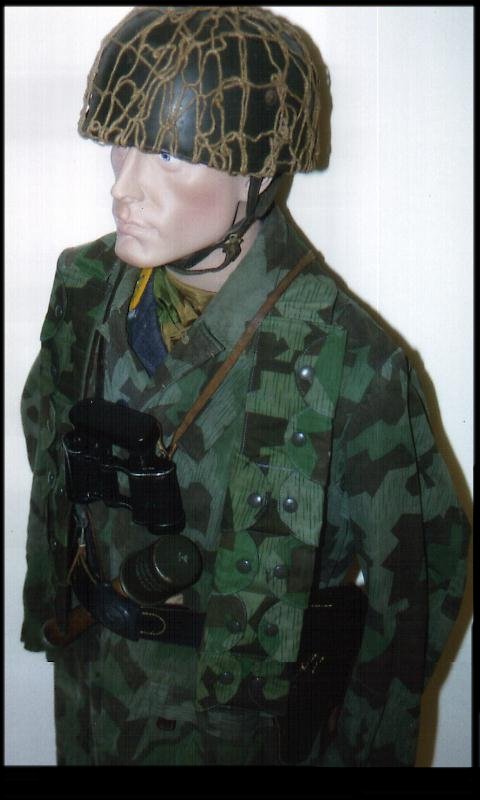
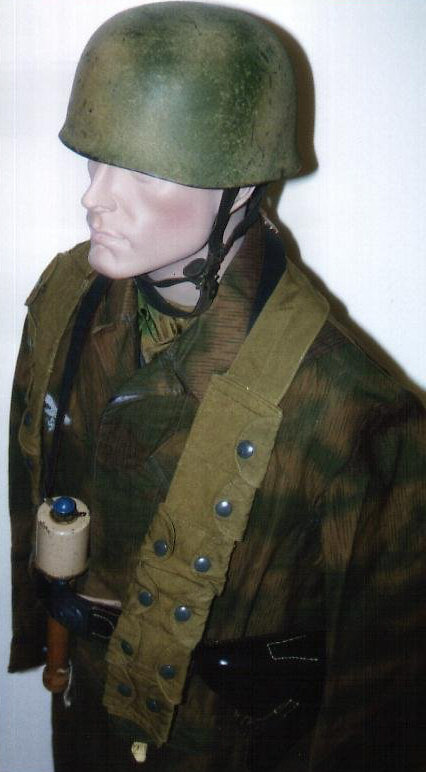
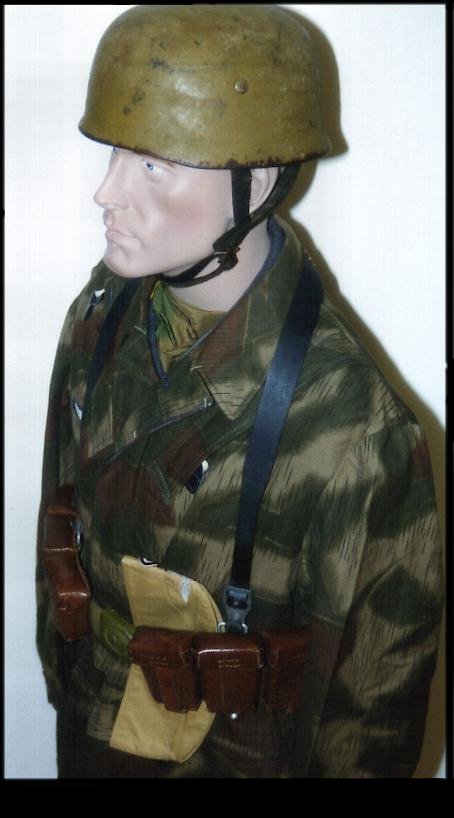
Above left: Italy 1944 - This Fallschirmjäger wears a helmet that has been painted tan and has fine gravel and sand rubbed into the paint while it was wet, otherwise known as a "tropical camo". The smock is an unusual water pattern variation and is a third model type. The smock is dated 1944 and has a tan base colour to it. A tropical Luftwaffe overseas cap is tucked into his belt and he carries two brown leather Kar 98k pouches.
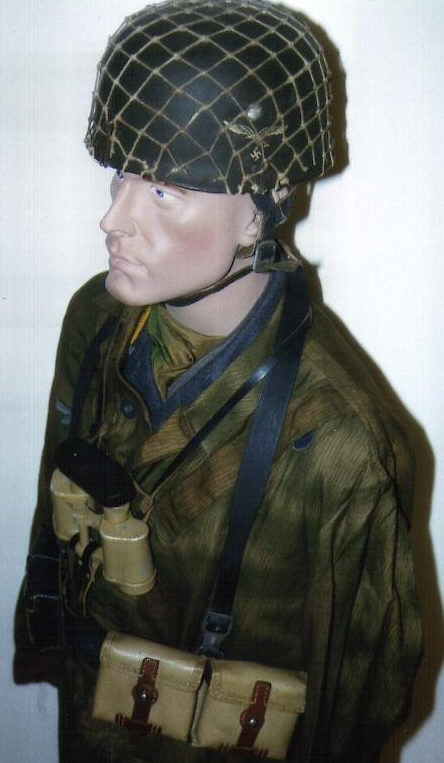
Above right: Germany 1945 - This Fallschirmjäger wears the last issue of a third model tan and water smock which is dated December 1944. The colours are even more subdued than usual and constructed of a lighter weight fabric. The helmet is late war and has a net attached to it. The net has been secured under the liner band and is held in place by four metal hooks. The field gear worn includes a pair of late-war binoculars in ordnance tan, a Kar 98k ammo pouch and an ersatz tan leather K43 semi-auto magazine pouch.