Operation Mercury - 20th May 1941
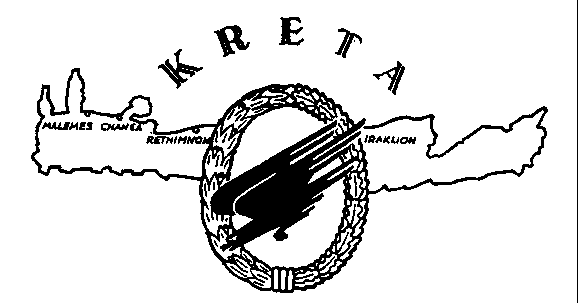
Crete was the scene of the largest German Airborne operation of the war, and the first time in history that an island had been taken by airborne assault.Postcard reproduction of a painting depicting the jump over Crete on 20.May 1941.
(photograph by H.H.Herold)
Below is the order of battle and
their objectives in the assault:
General Alexander Lohr – Commander Luftflotte IV and overall
commander of Operation "Mercury".
General Wolfram Freiherr von Richthofen – Commander VIII Fliegerkorps, responsible for providing close air support.
General Kurt Student –
Commander XI Fliegerkorps and Planner of the airborne operations for Operation
"Mercury"
Luftlande Sturmregiment
Stab
Kommandeur - Generalmajor Eugen Meindl
(commander Group West)
WIA, evacuated in the morning of May 21st and replaced by Oberst Bernhard
Hermann Ramcke when he dropped with 850 re-inforcements at 1800 on May
21st.
Adjutant - Oberleutnant von Seelen (WIA)
Stab Major - Major Franz Braun (KIA)
O.-Offizier - Oberleutnant Schächter (WIA)
N.-Offizier - Oberleutnant Göttsche
(briefed Ramcke
on his arrival)
Rgt.Arzt - Oberstabsarzt Dr.Heinrich Neumann
Stab Hauptmann - Hauptmann Pettelkau
Kampfzugführer - Oberfeldwebel Gutheil
N.-Zugführer - Feldwebel Erich
Offizier for special use - Oberleutnant Zierach
Stabskompanie Hfw - Hauptfeldwebel Koskialowski
1st Battalion
Kommandeur - Major Walter Koch (Group West) - (WIA) : (replaced
by Oberstabsarzt Heinrich Neumann)
Adjutant - Oberleutnant Gerbershagen (KIA)
Stab Hauptmann - Oberleutnant Ofmann (KIA)
Battalion Arzt - Stabsarzt Dr.Jäger
N.-Zugführer - Feldwebel Urban
Communications Kompanie - Oberleutnant Osius (KIA)
1.Kompanie - Oberleutnant Alfred Genz
2.Kompanie - Hauptmann Gustav Altmann (POW)
3.Kompanie - Oberleutnant Wulf von Plessen (KIA) (replaced
by Oberarzt Dr.Weizel)
4.Kompanie - Oberleutnant Kurt Sarrazin (KIA)
6 x Heavy Machine Gun & 6
x Heavy Mortars
1 Platoon of Jäger (reserve)
2nd Battalion
Kommandeur - Major Edgar Stentzler (Group West)
Adjutant - Oberleutnant Wolf
Stab Hauptmann - Oberleutnant Stoltz
O.-Offizier - Oberleutnant Schelske
Kradfahrzug Offizier - Oberleutnant Goßmann
N.-Zugführer - Leutnant Braun
Battalion Arzt - Stabsarzt Dr.Rodpewig
Kampfzugführer - Hauptfeldwebel Barabas
5.Kompanie - Oberleutnant Herterich
6.Kompanie - Oberleutnant Pissin
7.Kompanie - Oberleutnant Barmetler
8.Kompanie - Oberleutnant Reinhardt
6 x Heavy Machine Gun & 6
x 8cm Mortars
3 x 37mm Anti-Tank guns
3rd Battalion
Kommandeur - Major Otto Scherber (Group West) - (KIA) (replaced
by Oberleutnant Horst Trebes)
Adjutant - Oberleutnant Heinz (KIA)
Stab Hauptmann - Oberleutnant Horst Trebes
O.-Offizier - Oberleutnant Leiß (KIA)
Battalion Arzt - Stabsarzt Dr.Ellenbeck (KIA)
N.-Zugführer - Oberfeldwebel Ziehm
9.Kompanie - Hauptmann Rudolf Witzig (WIA)
10.Kompanie - Oberleutnant Schulte-Sasse (KIA)
11.Kompanie - Oberleutnant Jung (KIA)
12.Kompanie - Oberleutnant Gansewig (KIA)
6 x Heavy Machine Gun & 6
x 8cm Mortars
4 x 37mm Anti-Tank guns
3 x 20mm Cannons
4th Battalion
Kommandeur - Hauptmann Walther Gericke (Group West)
Adjutant - Oberleutnant Engelhardt
Battalion Arzt - Stabsarzt Dr.Diehm
N.-Zugführer - Oberfeldwebel Daniels
13.Kompanie - Oberleutnant Sauer (WIA)
14.Kompanie - Hauptmann Kiesel (KIA)
15.Kompanie - Oberleutnant Dobke (KIA)
16.Kompanie - Oberleutnant Hoefeld
12 x 10.5cm Heavy Mortars
4 x 37mm Anti-Tank guns
2 x 20mm Cannon
6 x Heavy Machine Guns & 6 x 8cm Mortars
1 Sanitäts Zug
Kampftrupp Mürbe:
72 Jäger
3 x 37mm Anti-Tank guns
Kompanie Osius:
130 Jäger
Kompanie Hoefeld:
1 Kompanie of Fallschirm-Pioneers (16. Kompanie, IV Battalion, LL.Sturmregiment)
Kampftrupp Braun:
90 Jäger in 9 gliders (Major Braun of LL.St.Rgt.Stab was killed
whilst assaulting the iron bridge over the River Tavronitis)
(LL-Sturmregiment casualties on Kreta ran to 38 Offiziere, 667 Unteroffiziere und Mannschaften killed and missing, with 31 Offiziere, 501 Unteroffiziere und Mannschaften wounded, out of a Regiment strength of 1860 men)
Gruppe West had 3 Glider Detachments, the men taken from the 1st Battalion, Sturmregiment. They were to spearhead the attacks on Maleme. The men for the paradrops came from the remainder of the St.Rgt.
1st Glider Detachment commanded by Oberleutnant Wulf von Plessen - (KIA) with 108 men in 14 Gliders. The objective, land at the mouth of the river Tavronitis and neutralise an AA position. (This Kompanie suffered 17 killed and 27 wounded on 20th May).
2nd Glider Detachment commanded by Major Walter Koch - (WIA) with 120 men in 15 Gliders. The objective, land near the southwest & southeast slopes of hill 107 and capture the RAF camp there. (Kompanie Sarrazin with Battalion Stab. Koch suffered a head wound within a few minutes of landing. Oberleutnant Sarrazin was killed)
3rd Glider Detachment commanded by Major Franz Braun - (KIA) with 90 men in 9 Gliders. The objective, take and hold the bridge over the river Tavronitis.
The Gruppe West Glider assaults were to be backed up shortly after by airdrops from the following units:
IV./LL.St.Rgt. and Regiment Stab The objective, land on the open ground on the West Bank of the river Tavronitis, cross the bridge and support Braun and Koch’s glider detachments. (Generalmajor Meindl was seriously wounded when he tried to cross the Tavronitis bridge, command was temporarily passed to Major Stentzler)
II./LL.St.Rgt.The objective, form the regimental reserve to the east of Spilia and provide protection from enemy forces that may come from the south.
III./LL.St.Rgt. The objective, land around the town of Maleme and attck the airfield from the East. (9.Kompanie became badly dispersed due to the wind and many men landed to their death in the sea)
Kompanie Osius. The objective, land west of the valley near Ropaniana and join up with 1st Battalion
Kompanie Hoefeld. The objective, land approximately 1000m south of the Tavronitis bridge and secure the river valley and the road to Kandanos. (took heavy casualties from armed civilians)
Reinforced Platoon of 72 men from the 2nd Battalion under the command of Leutnant Peter Mürbe. The objective, capture the unfinished airfield at Kastelli Kissamos. (This platoon landed upon 2 battalions of Greek troops and large groups of armed civilians. Leutnant Mürbe and 58 other Fallschirmjäger were killed. The 13 surviving paras under the command of Feldwebel Kroll were forced to surrender late in the morning. Were it not for the intervention of the New Zealand commander in the Kastelli area, Major Bedding, the paras would have been executed. Some of the killed and missing Fallschirmjäger of Kampftruppe Mürbe were later found to have been badly mutilated)
4/FJR1, 12/FJR1 and a handful of men from FJR2 (Oberleutnant Klein), the last of the reserves from Greece, were dropped east of Maleme on the afternoon of May 21st.
Hans Sack was a Gefreiter
with 15.Kompanie/LL.St.Rgt who jumped near the airfield at Maleme on May
20th 1941. Once he landed he took cover and soon heard the sound of a sub-machine
gun close by. He thought that his comrades were attacking British troops
near Hill 107. He broke cover and was hit by this sub-machine gun fire.
He learned minutes later that a quick thinking British soldier had found
a weapons container and removed one of the Schmeisser's, opening fire upon
the paratroops with it. Hans Sack was seriously wounded and in a bad condition.
An enemy soldier found Hans Sack and dressed his wounds properly, saving
his life. The soldier found some wine in the farmhouse where Hans was laid
up. They drank together and then the soldier departed. Two days later Hans
Sack was found by some Gebirgsjäger and evacuated by air to a hospital
in Athens.
Hans Sack will be 80 years old this year.
FJR1
Oberst Bruno Oswald Bräuer (commander Group East)
Hauptmann Rau
Hauptmann Wolf Werner Graf von der Schulenburg
1st Battalion - Major Erich Walther (Group East)
2nd Battalion - Hauptmann Burckhardt (Group East)
3rd Battalion - Major Karl-Lothar Schulz (Group East)
FJR2
Oberst Alfred Sturm (Group Centre)
Major Schulz
Hauptmann Hugo Paul
1st Battalion - Major Hans Kroh (Group Centre)
2nd Battalion - Hauptmann Gerhart Schirmer (Group East)
3rd Battalion - Hauptmann Wiedemann (Group Centre)
FJR3
Oberst Richard Heidrich (Landed later on in support of Group Centre)
Leutnant Heckel
1st Battalion - Hauptmann Friedrich August Freiherr von der Heydte
(Group Centre)
2nd Battalion - Major Helmut Derpa (Group Centre) KIA
3rd Battalion - Major Ludwig Heilmann (Group Centre)
Gruppe Mitte (centre) had 2 Glider detachments, the men taken from I/LL.St.Rgt. Men of the 2nd and 3rd Parachute Regiments and the Fallschirm-Pioneer Battalion made the airdrops.
1st Glider Detachment commanded by Leutnant Alfred Genz with 90 men in 9 Gliders. The objective, attack and sieze British AA positions near Mournies, southeast of Chania
2nd Glider Detachment commanded by Hauptmann Gustav Altmann with 150 men in 15 Gliders. The objective, attack AA positions on the Akrotiri Peninsula, north east of Chania and make way for Oberst Heidrich’s 3rd Parachute Regiment. (This glider group suffered 108 casualties. Hauptmann Altmann along with 2 platoon commanders, Oberleutnant Möhr & Leutnant Rümmler were captured by British soldiers and remained in captivity until the end of the war. A third platoon commander, Oberleutnant Ebner was killed.)
The airdrops were made as such:
FJR2minus II/FJR2. The objective, drop onto open ground near Rethymno.
1st Battalion, 2nd Parachute Regiment. The objective, capture the airfield at Rethymno from the east.
3rd Battalion, 2nd Parachute Regiment. The objective, seize Rethymno town.
1st Battalion, 3rd Parachute Regiment. The objective, land south of Alikianou-Chania road and advance on Suda to link up with Genz.
2nd Battalion, 3rd Parachute Regiment. The objective, land north of Alikianou-Chania road, southwest of Galatas and form regimental reserve.
3rd Battalion, 3rd Parachute Regiment. The objective, land north-west of Galatas seizing two villages and attack Chania. (III/FJR3 landed amongst stiff resistance. 13/FJR3 were dropped over the Agia reservoir and suffered heavy casualties as well as losing most of their mortars and ammunition. The commander of 13/FJR3, Oberleutnant Schimkat drowned in the reservoir before he could be rescued.)
Fallschirm-Pioneer Battalion.
The objective, land north of Alikianou and provide rear cover for main
landings.
*NB:General Süssmann's
glider crashed on to the Greek island of Aegina at 6am on May 20th. The
glider caught in the slip stream of a Heinkel He-111 and the tow rope broke.
All onboard were killed.
Gruppe Ost (east) had no Glider detachments.
FJR1 and an AA machine-gun Battalion.
1st Battalion, 1st Parachute Regiment. The objective, drop east of Heraklion and seize a radio station. Regimental reserve.
2nd Battalion, 1st Parachute Regiment.
The objective, land east and west of the airfield at Heraklion and seize
it.
(6/FJR1 & 7/FJR1, under the command of Hauptmann Dunz suffered
almost 100% casualties when they were dropped west of the airfield at Heraklion.
Only 5 men survived by swimming to safety around the coastland cliffs.)
3rd Battalion, 1st Parachute Regiment. The objective, land south west of Heraklion and take the town supported by the 2nd Battalion, 2nd Parachute Regiment.
The airlanding troops, used to support air assaults would land in their JU-52 transport aircraft after the Fallschirmjäger had secured the airfields. These men were supplied from the 5th Gebirgs (Mountain) Division as the 22nd Airlanding Division that usually supported Fallschirm operations had been diverted to guard the vital Ploesti oilfields in Rumania.
Generalmajor Julius Ringel commanded the 5th Gebirgs Division (approx 14 000 men) and consisted of the following units, some of which were airlanded, some of which were landed by sea:
85th Gebirgs Regiment – Oberst
Krakau
1st Battalion / 85th Regiment – Major Dr.Treck
2nd Battalion / 85th Regiment – Major Esch
3rd Battalion / 85th Regiment – Major Fett
100th Gebirgs Regiment – Oberst Utz
1st Battalion / 100th Regiment – Major Schrank
2nd Battalion / 100th Regiment – Major Friedmann
3rd Battalion / 100th Regiment – Major Ehall
95th Gebirgs Artillery Regiment – Oberstleutnant Wittmann
1st Battalion / 95th Regiment – Major von Sternbach
2nd Battalion / 95th Regiment – Major Raithel
95th Gebirgs Motor-Cycle Battalion – Major Nolte
95th Gebirgs Pioneer Battalion – Major Schatte
(as this unit fought
its way westward to Kastelli, it took fire from groups of armed civilians,
which included women and children. They also found many mutilated Fallschirmjäger
who had been the victims of these partisans. During the night of May 20th/21st,
these armed bandits roamed the countryside looking for dead and dying paras.
Nearly 140 men from III/LL.St.Rgt were allegedly murdered or mutilated
during that night at the hands of Cretan civilians.)
141st Gebirgs Regiment - Oberst Jais
95th Gebirgs Anti-tank Battalion – Major Bindermann
95th Gebirgs Reconnaissance Battalion – Major Graf Castell zu Castell
Some of the 5th Gebirgs Division were transported by sea in makeshift
convoys, accompanied and protected by Italian warships. The British Mediterranean
fleet and RAF intercepted many of these ships which resulted in heavy casualties
amongst these amphibious groups.
Memorials to the Fallschirmjäger
on Kreta
It was not until 1975 that the bodies of the German war dead on Crete
were gathered together and re-interred all together on the slopes of Hill
107, which was the scene of bitter fighting and where so many Paratroopers
had died to gain the nearby airfield at Maleme.
The dead are laid in rows beneath flat marble tablets, the names and
dates of two soldiers inlaid on them. The memorial plaque reads:
"In this graveyard rests 4465 German dead from the war years
1941-1945. 3352 of them died during the battle of Crete between the 20th
May and 1st June 1941........They gave their lives for their fatherland".
Another memorial exists outside Chania, to those men of II/LL.St.Rgt.
It features the Diving Eagle grasping a swastika in its talons, the badge
of the Fallschirmjäger. Of course, since the end of the war the swastika
has been concreted over and although battered, the eagle still stands atop
the
monument. (see article on St.Rgt monument within this site)
The local people debated for years whether the memorial should stay
or be pulled down. It stayed as a symbol for future generations, all conquerors
and invaders in history had left something of beauty and value on the island,
this was what the Fallschirmtruppe left behind.
In Memoriam: The Von Blücher
brothers
The successful movie "Saving Private Ryan" was the story of
a mission to bring home an American Paratrooper whose 3 elder brothers
had been KIA. Many brothers died in action with some families losing 3
or 4 young sons. The German forces were not exempt from this. There were
three brothers serving in the 7th Airborne Division during the invasion
of Crete, all were killed in action during the fighting to take the airfield
at Heraklion, although not all serving in the same kompanie. They were
the Von Blücher brothers,
Wolfgang Graf von Blücher (Born, 31.1.1917), an
Oberleutnant aged 24 and Zugführer in 2./FJR1 (awarded the Knights
Cross on May 24th 1940 during operations in Dordrecht, Holland).
Leberecht Graf von Blücher
(Born, 1922), a Sergeant,
aged 19
Hans-Joachim Graf von Blücher
(Born, 28.10.1923),
a Private, aged 17.
The von Blücher family were not informed of the death of their
3 sons for 4 weeks until the regiment returned to Germany, where the regimental
commander informed them of their loss.
Wolfgang and Hans-Joachim were buried on at Maleme with so many other
Fallschirmjäger. Leberecht's body was never found.
(Another example of this, is the story of the Schneider twins. Both
were members of 3.Kompanie, 5th Fj Regiment, whilst it was in Tunisia in
early 1943. During the battle for Ridge 331 near Bou-Arada both were killed.
One was killed coming to the assistance of the other mortally wounded brother.
Both were aged 17.)
"Tote Fallschirmjäger sind nie allein, denn loyale Kameraden
bleiben immer mit ihnen"
"Dead paratroopers are never alone, for loyal comrades will always
remain with them"