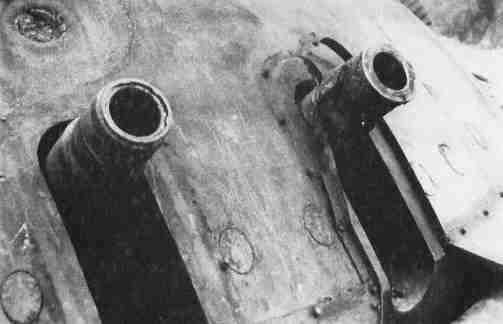
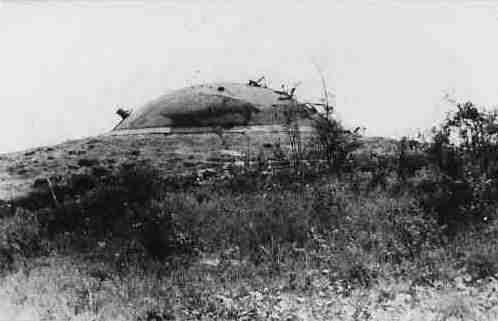
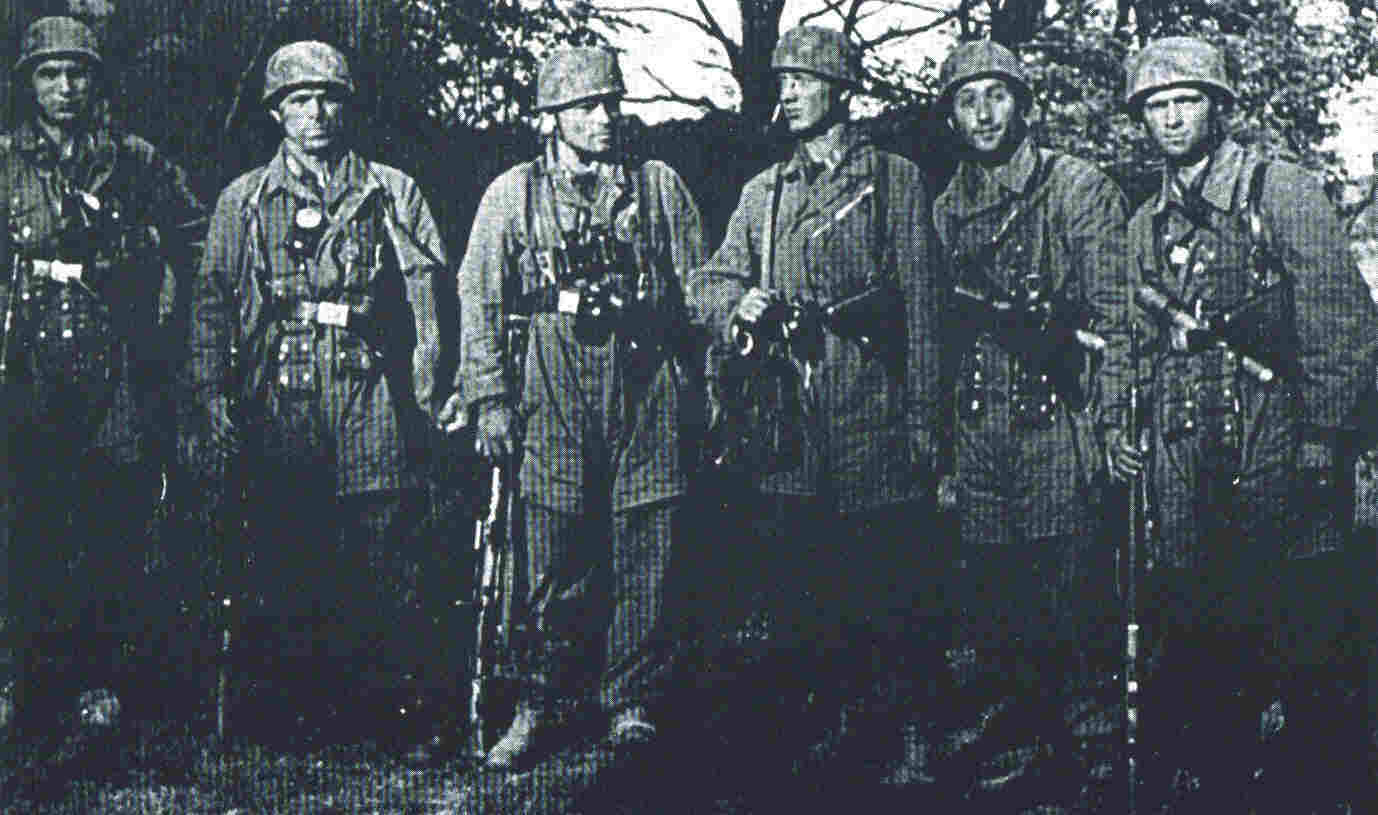
Above left and right:
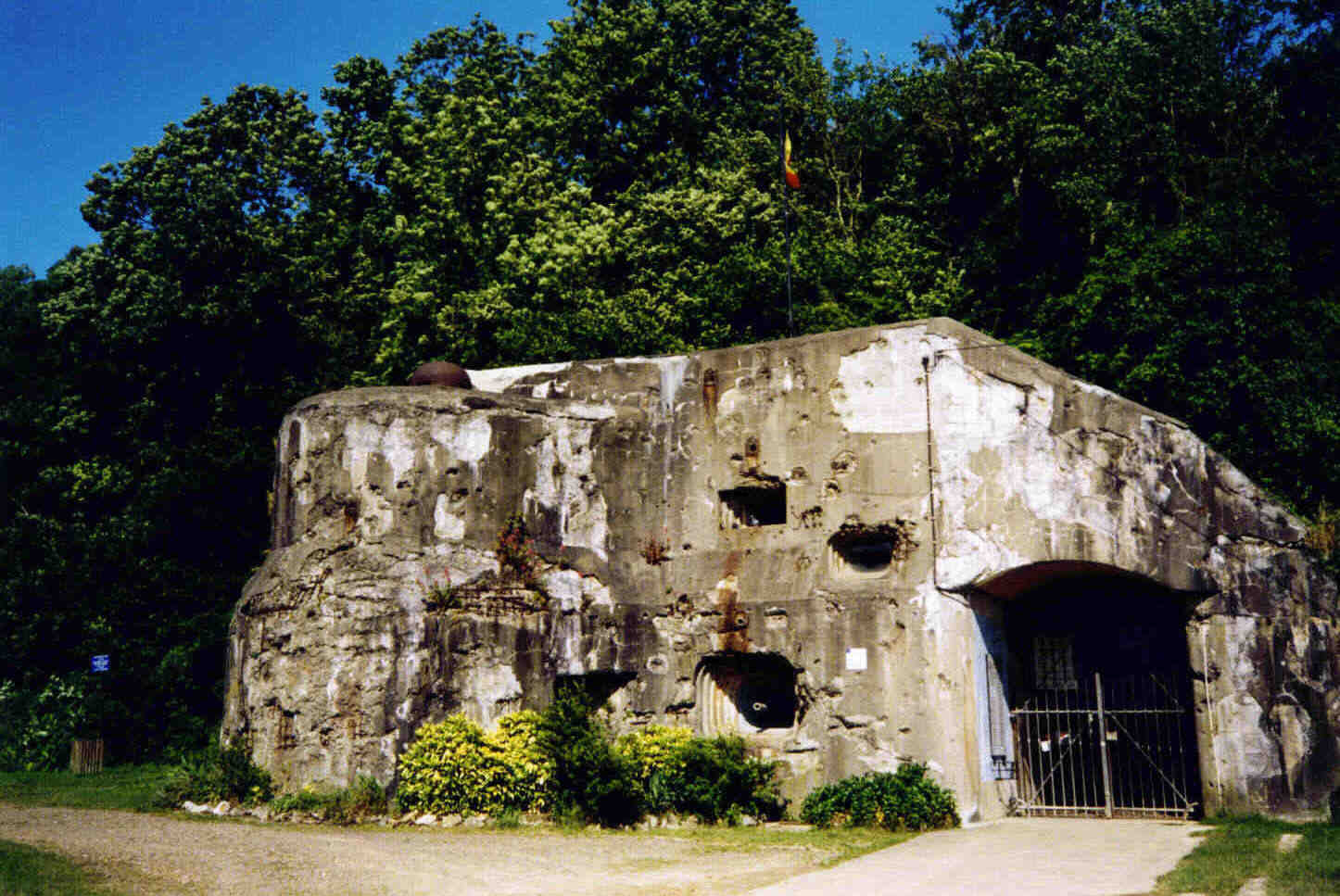
It was decided that a parachute assault
was out of the question due to the limited space at Eben Emael and the
chance of some men missing the drop zone. It would have to be carried out
in light assault gliders.
The assignment went to Hauptmann
Walter Koch who was to form a Para Assault Detachment (Sturmabteilung
Koch) from men of his 1st Battalion, 1st Regiment and Leutnant Rudolf
Witzig’s pioneer company from the 2nd Battalion, 1st Regiment. This detachment
totalled 11 Officers and 427 men, 42 of which were glider pilots who were
also Infantry and Engineer trained.
They immediately started intensive
training at Hidelsheim, carrying out attacks on wooden mock-ups of the
fortress. The Glider pilots practised their landings in confined LZ’s and
even used barbed wire wrapped around the landing skids to slow the landing
of the DFS230 gliders on touch down. Then Gliders and men trained together
on mock-ups of the fort to perfect the assault.
They were organised into 4 assault
groups, each of which had a specific objective. They were each given a
codename.
Granite were to take Eben Emael
itself, Steel to take and hold the Veldvezelt bridge (Maasricht-Antwerp
road), Concrete to take and hold the Vroenhoven bridge (Maastricht-Brussels
road), Iron to take and hold the Kannes bridge (Maasricht-Liege
road).
Witzig’s Group Granite who were
to take the Fortress until relieved by men of the army's 51st Engineer
Battalion, consisted of 2 Officers (Lt Rudolf Witzig & Lt Egon Delica)
and
83 men, 11of which were Glider pilots.
Group Granit's 11 gliders and their
JU-52 tows took off from two airfields outside Cologne at 0430 on the morning
of 10th May 1940, following a flare path made up of single searchlights
spaced 20km apart, with a group of 3 searchlights at Aachen on the German
border to indicate the tow release point. There they were released at 7000ft
still inside German territory and were left to glide to their target. Only
9 gliders landed atop Eben Emael, the first carrying the men of Troop 8
landed at 0524, closely followed by Troop 5 who landed directly on top
of a machine gun nest, taking the first Belgian prisoners of the operation.
Two gliders including Witzigs, which contained the reserve troop, had to
abort shortly after takeoff and landed back near Cologne, the second glider
to abort landed near Düren. Witzig managed to arrive at 0830 to re-take
command after commandeering another glider and tow. The men from the second
glider managed to link up later in the day after getting there on foot
under heavy fire.
Above left and right:
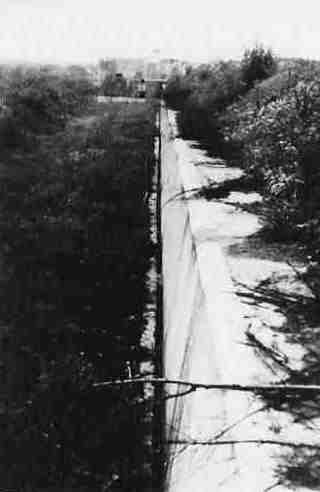
Gruppe Granit Objectives,
Truppführer's und LS Piloten
Objective 16, Dummy Cupola.
Oberjäger
Heinemann - Trupp 7 - Uffz Scheidhauer
Objective 15, Dummy Cupola.
Oberjäger
Harlos - Trupp 6 - Uffz Ziller
Objective 17, Canal Nord
60mm AT gun. Oberjäger Harlos - Trupp 6 - Uffz Ziller
Objective 19, Mitte Nord
MG turret. Feldwebel Wenzel - Trupp 4 - Uffz Bräutigam
Objective 13, Mitte Sud
MG turret. Oberjäger Neuhaus - Trupp 9 - Uffz Schulz
Objective 12, 3x75mm guns.
Oberjäger
Arendt - Trupp 3 - Uffz Sapper
Objective 18, 3x75mm guns.
Feldwebel
Niedermeier (along with Delica) - Trupp 1 - Fw Raschke
Objective 24, 2x120mm
guns. Oberjäger Maier - Trupp 2 - Uffz Brendenbeck
Objective 29, 4xAA MG's.
Feldwebel
Haug - Trupp 5 - Uffz Lange
Objective 31, Cupola Nord
2x75mm guns. Oberjäger Unger - Trupp 8 - Uffz Distelmeier
Objective 26, 3x75mm guns.
Oberjäger
Hübel - Trupp 10 - Uffz Kraft
(Trupp 11 - Oberjäger
Schwarz with Leutnant Witzig - LS Piloten Uffz Pilz) (reserve trupp)
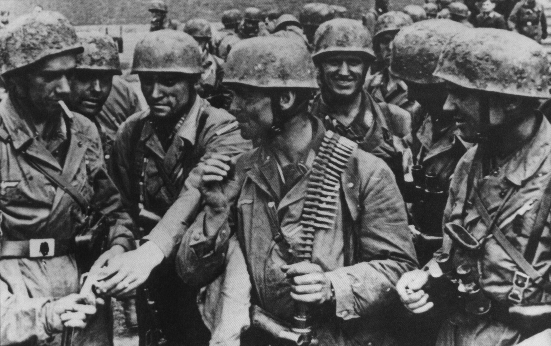
This famous photograph shows
men of Assault Group Granite sharing a cigarette after the fighting.
Five minutes before the gliders landed
on Eben Emael, Group Concrete, comprising of 98 men in 11 gliders, commanded
by Leutnant Schacht, landed near to their objective after recieving heavy
AA fire from Maasricht. Belgian defenders were well dug in on the approaches
to the Vroenhoven bridge, but were quickly attacked and overcome. The destruction
of the bridge was prevented by a quick thinking corporal who charged the
bridge bunker and separated the ignition connectors. Within minutes the
bridge was in German hands and at 0530 a radio message was sent out,"objective
taken, bunker blown up, bridge stands".
The gliders of Group Iron, under
the command of Leutnant Martin Schächter with 90 men in 10 gliders,
landed near the Kannes Bridge under a hail of fire. This was an important
objective as it gave access to Eben Eamel from the landward side and was
the route to be taken by the 51st Engineer Battalion and 151st Infantry
Regiment. They dropped straight into a ensuing firefight between the Belgian
defenders and an advance column of German Infantry which were way ahead
of their schedule, Schächter was seriously wounded in the battle and
replaced by Leutnant Joachim Meissner. The bridge was blown up by Belgian
troops, which delayed Group Granite's relief. At 0540 a radio message was
sent out,"objective reached, resistance great, bridge blown up, still
passable with preps from engineers". The combined German units resisted
Belgian counter attacks all day until they were relieved later on
in the evening of the 10th.
Group Steel landed the same time
as Witzigs group at 0524 near the Veldvezeldt Bridge under the command
of Oberleutnant Gustav Altmann with 92 men in 9 gliders. They met slight
AA fire on approach and resistance on the bridge. The defenders in the
surrounding trenches were quickly overcome and the concrete bunker on the
opposite side put out of action. A machine gun bunker was built into the
western pillar of the bridge, this was destroyed with grenades along with
its 15 man crew. At 0535 Altmann signalled that "objective reached".
The struggle for the bridges on
the Albert canal left many casualties. The Belgian defenders lost 400 killed
in action. Parachute Assault Detachment Koch suffered 37 dead and 100 wounded,
Group Steel lost 8 men, Group Concrete lost 7 men and Group Iron lost 22
men.
By the afternoon of the 11th May
all the objectives had been successfully secured and the doorway to the
west was open for the advancing Wehrmacht Army Groups with only the loss
of a handful of men. The first tactical use of gliders had been a complete
success. Eben Emael had become the only successful engineer assault carried
out from the air, with 54 out of 85 men taking the fortress, out of this
number, 2 troops of paras attacked dummy installations and were not involved
in the actions against the dangerous objectives.
Mission Order: Sturmgruppe Granite
Gruppführer: Oberleutnant Witzig, Deputy: Leutnant Delica
Combat Order:
To ensure complete surprise over exterior installations, which could
endanger river crossings to the north.
In addition, attack the Panzer cupolas, casemates and AA positions.
Break up hostile attacks and defend until relieved.
1.Trupp commands:
Trupp.1.
1.Strength (1-2-5) with Leutnant Delica.
2.Truppführer: Fw.Niedermeier
3.Glider Pilot: Fw Raschke
4.Equipment: 6 rifles, 2 Mpi, 1 Flamethrower, 2 charges of 50kg,
3 bangalores, 5 charges of 3kg, 1 charge of 6kg, 1 folding ladder of 4m,
1 flare pistol, 1 explosive box of 25kg, 2 charges of 12.5kg, 2 large flag
markers.
5.Order:
a) Attack Werk 18 (Artillery casemate, front to the north, 2x3m
cupolas or 1x3m cupola).
b) Destroy Werk 18 if necessary.
c) Prepare Werk 18 for defence.
6.In case of failure of Trupp.1, Trupp.2 receives the order.
7. Messages to the Gruppführer (at Werks 19-21)
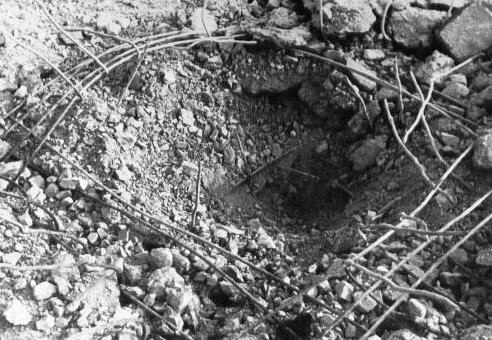
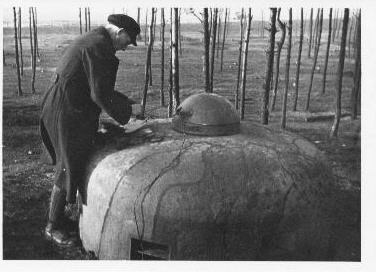
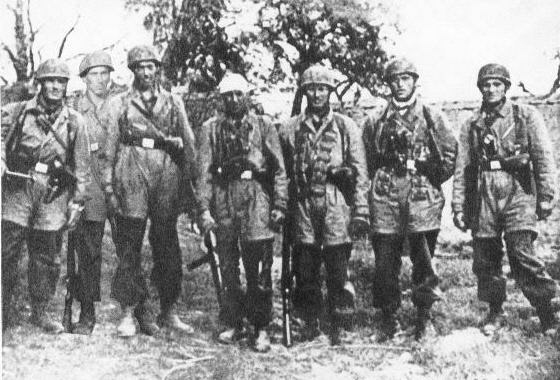
Above left to right:
On our release we could see the Rhine and the sillhouette of the cathederal
in Köln. At regular intervals we could see the flashing beacons on
the ground that showed us the way to the border. Upon releasing at an height
of 2600m, it was dawn and very cold in our glider, its thin fabric skin
offered us no protection from the cold. After release the flight became
smoother and on our right we could see the lights of Maastricht. The first
tracer bullets appeared in the distance but none of the gliders of our
assault group were hit.
After a gliding time of 20 minutes in which we covered 25km, we could
see the outline of the fort and the Albert Canal from an height of 800
meters. Our glider pilot pointed the nose of the glider towards the ground
as the AA fire started to come up from the fort.
Brautigam kept the stick forward and we took up a steep dive. The ground
came rushing up toward us and after a short and very hard landing our glider
came to a stop directly in front of our target. On our left we could see
our objective, Casemate19, its machine-guns firing from casemate openings
in the bunker wall.
After the hull of our glider dropped, our Truppführer, Helmut
Wenzel, jumped out with 2 men who each carried one half of a 50kg hollow
charge and rushed to the casemate. Wenzel threw a 1kg charge into the opening
of the periscope and then ignited the 50kg charge on the steel observervation
cuppola. In the meantime the rest of our Truppe had taken up position in
the bushes in front of the rampart and our machinegunner, Polzin, took
the casemate openings under fire. I and another man each took half of another
50kg pack and rushed toward the bunker. The second 50kg charge was suspended
and ignited in front of a machine-gun embrasure. We threw ourselves behind
a rampart four meters away, but we still felt the enormous shock wave when
it detonated.
The charge blew a very big hole into the concrete wall of the casemate,
so that an entry into the bunker was now possible. An awful view awaited
us when we entered the casemate.
Casemate 19 had been destroyed and was no longer able to offer any
resistance, our Truppe had accomplished its mission within 15 minutes of
landing on the fort. We proceeded to drape a flag onto the bunker as a
marker for the Luftwaffe to indicate that the casemate was in our hands.
Now we had time to take a closer look at our surroundings. The detonations
from the other positions had almost ceased by this time.
Our objective was equipped with 3 heavy machine-guns, 2 armoured searchlights,
1 artillery observation cupola and 1 light machine-gun to cover the entrance.
Our Truppeführer, Feldwebel Wenzel, then set up his command post
against the rampart next to Casemate 19 and put the 7 of us into a defensive
position. This location was chosen for a command post because of its excellent
observation of the entire fort with the exception of the southern and western
positions, which were located on slopes and could not be seen due to thickets.
Wenzel himself went to the next positions to find out which of them
had not yet been destroyed, and at the same time, find our Assault Group
Leader Oberleutnant Witzig, and report the capture of Casemate 19. On the
way he met our radio operator, Gilg, who was also looking for Witzig to
receive orders to set up the radio post. None of the other runners who
had been sent out to find Witzig or members of Truppe.11 had been successful.
Wenzel concluded that Truppe.11 had not landed on the fort.
Witzig’s second in command, Leutnant Delica, had flown in the glider
of Niedermeier’s Truppe.1, which had landed approximately 400m south of
Casemate 18, where heavy fire could still be heard.
Wenzel decided that Leutnant Delica was unable to assume command of
the assault group due to his current position. Wenzel decided to act and
he took command himself. He had the radio team set up their position at
the northern rampart and established the dressing post there, as the initial
fighting had already cost 2 dead and 12 wounded.
Wenzel arranged for radio contact to be established with Assault Group
Concrete at Vroenhoeven, where Hauptmann Koch had his command post. He
managed to give his situation report and also called up Stuka support to
supress the positions at the entrance and to prevent supplies being brought
up from the village of Eben Emael. Within 20 minutes, JU87 and HS126 aircraft
appeared and put on a show of precision bombing. One He111 flew over the
fort and dropped containers filled with fresh ammunition.
It was around 9am when a lone glider flew over the fort and landed
not very far from the northern rampart. In it was Oberleutnant Witzig and
Truppe.11, who had been forced to land on a meadow beside the Rhine when
the tow rope broke shortly after take-off. In a relatively short time,
Witzig was able to organise a replacement JU52 tow aircraft, which was
able to land on the meadow and take-off again.
Witzig was quickly briefed by Fw Wenzel and he assumed command of the
assault group. In the meantime, it had been established that Meier’s Truppe.2
had not landed on the fort. His pilot, Brendenbeck, had been forced to
land at Düren near the Dutch border. During the course of the day,
Truppe.2 had fought its way to the edge of the fort, but were unable to
penetrate the fort’s defences, with the result that Casemate 24 had not
yet been destroyed.
Heinemann’s Truppe.7, whose target was an armoured cupola on the northern
tip outside the blockade belt and which turned out to be a dummy installation,
was unable to join the fighting within the fort. Due to these set backs
and the losses, our fighting strength had been reduced to 60 men, who were
facing a force of approximately 600 Belgian soldiers in the fort and casemates.
By Midday things had quietened down. The sun was beating down and the
men were becoming very thirsty, particularly as everyone had expected
to be relieved by this time.
A bunker in the southeast outside the fort suddenly began shelling
our positions on the northern tip with shrapnel rounds, which was repeated
at intervals throughout the afternoon.
Heavy gunfire broke out in the southwest of the fort shortly after
1pm. Witzig ordered Feldwebel Wenzel to move up with some men, but they
were unable to locate the enemy in the difficult terrain.
For a short time we had to take cover in Truppe 3’s Casemate 12 as
the fire became heavier and heavier. Feldwebel Wenzel was at this time
wounded by a bullet, which grazed his head.
Several times we had to move against the Belgians in the vicinity of
Oberjäger Arendt’s Casemate 12, as fresh troops had been moved up
from Wonck. Although we suffered some losses, the Belgians were unable
to make a successful co-ordinated attack.The shooting had stopped in this
area after 6pm and Feldwebel Wenzel returned to the northern tip with his
men. Oberleutnant Witzig deployed his further depleted Truppe to the defensive
position at the northern rampart, particularly as it was becoming dark
and it was unceratin whether the Belgians would launch a counter-attack
on the fort. All of us were extremely nervous in the dark, everyone stared
into the darkness with their weapons at the ready, expecting an attack
at any minute.
Some artillery began firing at about 10pm, but we were lucky and did
not suffer any further losses.
Casemate 17, a bunker in the canal wall, illuminated the canal with
its searchlights and had successfully prevented the Army Pioneers from
crossing until then. During the afternoon, Oberleutnant Witzig had already
seen how dangerous this position was and sent Oberjäger Harlos and
Truppe 6 to tackle it. On three occasions, charges were lowered on a rope
and detonated beside the bunker, but its 60mm gun continued to fire.
In the northeast we frequently saw flares, which encouraged us to believe
that the Army was not very far away. In spite of this, the night seemed
endless, particularly as the artillery fire also kept flaring up against
us.
Finally dawn approached and it seemed to us like a miracle that the
Belgians had not launched a counter-attack and that we had survived the
night.
At around 6am on May 11th , 1.Zug of Pioneer Battalion 51 under the
command of Oberfeldwebel Portsteffen, had fought its way to the fort. We
were glad to see that German relief forces were finally close.
It began to get light and our mood picked up again, we became aware
of our hunger and above all, our thirst.
We suddenly came under fire again from Casemate 23 and from the northern
tip we were able to watch 2 German anti-tank guns duelling with Casemate
17 on the canal wall. The shells fired from the canal bunker hit the village
and church at Canne, but after a short time it was finally knocked out.
Time passed very slowly and we kept on hearing shots from the unclear
area in the southeast, but there was no enemy to be seen.
At 1315, the fort was finally handed over to Oberstleutant Mikosch
by the fort commander, Major Jottrand. The garrison of almost 1000 men
began the trek into captivity.
Our assault group had suffered 6 dead and 18 wounded. Belgian casualties
were 23 dead and 65 wounded. After burying the dead at the fort, we marched
away, with some of our wounded having to be carried on improvised stretchers.
This turned into a problem between the bushes and trees on the steep ground
leading to the entrance position, particularly as some shooting broke out,
which was apparently caused by some of the Army Pioneers.
We finally reached the entrance position and were able to take a short
break. Some men rushed into the destroyed village, searched a bar and found
the water that we had been longing for. We quickly quenched our thirst
and took as much as we could for our wounded and other comrades.
We continued along the canal with the wounded transported some of the
way on inflated bags. We became soaked when we had to wade part of the
way through the floods.
We were then attacked by French bombers and since there was no cover
we had to throw ourselves flat on the ground. Fortunately for us the bombs
fell into the water about 40m away from us. We then continued towards the
village of Cannes, where we handed our wounded over to the medics at the
dressing station.
Our march then continued to Maastricht, which took us 2 hours. We spent
the night on the floor between the classroom benches in a local school,
where we were unable to forget the sounds of screaming shells and gunfire.
On May 12th, we received our first cup of coffee, what a pleasure!
It was only then did we realise that it was Whitsun. Our trucks turned
up at around midday and we set foo towards the Maas bridge.
There we had to withstand an attack by some 20 British bombers before
our journey could continue. At around 6pm we reached Köln-Dellenbrück
and after a short break we continued on to Köln-Ostheim, where a large
reception and medal award ceremony awaited us.
On May 13th, we continued on our journey to Münster, where another
reception was held in our honour. This time we were awarded the Iron Cross
1st Class by General Kesselring.
This was followed by a well earned 14 day leave, which helped us to
forget the harships we had endured at Eben Emael.
Epilogue.
In further correspondence with Kurt Engelmann I asked about the
wounded Windemuth and how the men felt when they heard that 6 of their
comrades had fallen in the fighting.
"Windemuth was not seriously
wounded and he came back to the Truppe after a short stay in hospital.
I knew all of the men in Sturmgruppe Granite and we were shocked when we
heard that 6 men had died."
I then asked about the fate of the men of Trupp.4.
"Helmut Wenzel saw action on
Crete where he was wounded, he was later captured by US troops in Tunisia.
Otto Brautigam was killed in
1941 whilst flying a „Gigant“ glider.
Karl Polzin was mistakenly shot
by an Officer in 1941.
Eddi Schmidt died in 1991, his
service is unknown.
Fritz Koehler lives in Baierbross
but he never attends any of the Sturmgruppe reunions.
Fritz Florian died in 1989. He
was captured by the Americans in Tunisia. We shared the same POW camp from
1943-1945. I only saw him again in 1986, when as a citizen of the DDR,
I participated in my first Sturmgruppe reunion. My invitation was camouflaged
as a silver wedding anniversary as old comrades meetings were forbidden
in the DDR. These events brought the unwelcome attention of the Stasi.
Windemuth. I had not seen him
since 1940. He is supposed to have deceased in the meantime.
Rudolf „Ralf“ Witzig died on
3rd October 2001."
I asked about the surviving veterans of St.Gr.Granit.
"In previous years the 16 surviving
veterans of Sturmgruppe Granite have met on the day of employment at Eben
Emael – 10th May. We meet at Xanten and from there travel by car to the
Soldiers Cemetery at Ysselsteyn in the Netherlands in order to lay wreaths
on the graves of our 6 fallen comrades. In the meantime however, only a
few veterans are able to make this journey."
Treue am Treue
Below is the truppe command for Truppe.3, listing men and their objectives:
Trupp.3
1. Strength (2/5) Truppführer: Oberjäger
Arent, Deputy: Gefreiter Merz, Glider Pilot: Unteroffizier
Supper.
2. Equipment - similar to Trupp.1
3. Order:
a) Attack Werk 12 (Artillery casemate, front to north).
b) Attack Werk 10 (Observation turret of the 6.5m cannon cupola)
c) Penetrate and defend Werk 12.
d) Success of task to be indicated with 4 by 2 swastika flags at Werk
12.
4. In case of failure, Trupp.9 receives the task order.
Interesting facts about the operation at Eben Emael and the bridges over the Albert Canal:
| Trupp.1
Hans Niedermeier + 14.9.2002 Gerhard Raschke + 1982 Egon Delica + 1999 Heinrich List + 1942 Russia Richard Drucks + 1944 Italy Willi Krämer + 2002 Peter Gräf + 1986 Wilhelm Stucke + 1941 Kreta |
Trupp.5
Erwin Haug + 1987 *Heiner Lange + 1995 Ernst Grechza + 1941 Kreta *Franz Jannowski *Egon Hartmann + 2003 Rudolf Stützinger + 1941 Kreta Helmuth Bögle + 10.5.1940 Gerhard Becker + 1986 |
Trupp.9
Ewald Neuhaus + 1995 Günter Schulz + 1941 Kreta *Ernst Schlosser + 1998 Wingers + 1960 *Rolf Jakob + 1990 Johann Körner – Fate unknown Anton Seltmann + 1941 Kreta Hans Braun + 1941 Kreta |
| Trupp.2
Max Maier + 10.5.1940 Bredenbeck + 25.5.1944 Jugoslavia *Walter Meier Gerhard Iskra + 27.2.1943 Tunisia Wilhelm Ölmann + 1941 Kreta Fritz Gehlich + 1944 Russia *Paul Bader + 1942 Tunisia Hans Comdür + 1941 Kreta |
Trupp.6
Harlos + 1941 Kreta Ziller + 1945 Werner Grams – Fate unknown Peter Zirwes + 14.3.1942 Russia Hans Grigowski + 1976 Franz Lukascheck + 1978 Richard Bläser + 1991 Walter Kippnick + 1991 |
Trupp.10
Willi Hübel + 10.5.1940 Erwin Kraft + Russia Werner Guthan + 2002 Bansimir – Fate unknown Kurt Jürgensen + 10.5.1940 Hubert Hansing + 1941 Kreta Leopold Gilg Paul Kautz |
| Trupp.3
Peter Arendt + 3.12.1942 Alfred Supper + 1968 *Gustav Merz + 1941 Kreta Josef Müller + 1941 Kreta Paul Kupsch + 1976 Helmut Stopp – Fate unknown Erwin Franz + 2003 |
Trupp.7
Fritz Heinemann + 23.12.1999 *Heinz Scheithauer *Aloys Passman + 1941 Kreta *Michalke – Fate unknown Harm Mülder Wolfgang Schultz *Wilhelm Höpfner Wilhelm Alefs + 2002 |
Trupp.11
Fritz Schwarz + 1991 Karl Pilz + 1986 Uwe Johnsen + 1993 Rudolf Witzig + 3.10.2001 Fritz Kruck + 10.5.1940 Hans-Peter Krenz + 1981 *Otto Braun + 1991 |
| Trupp.4
*Helmut Wenzel + 24.1.2003 Otto Bräutigam + 1941 Karl Polzin + 1941 Eddi Schmidt + 1991 Fritz Köhler Fritz Florian + 1989 Kurt Engelmann *Windemuth – Fate unknown |
Trupp.8
Otto Unger + 10.5.1940 Hans Distelmeier *Johannes Else – Fate unknown Ernst Hierländer + 1944 Italy *Kajetan Mayr *Bruno Hooge – Fate unknown Herbert Plietz + 1941 Kreta Heinz Weinert + Russia |
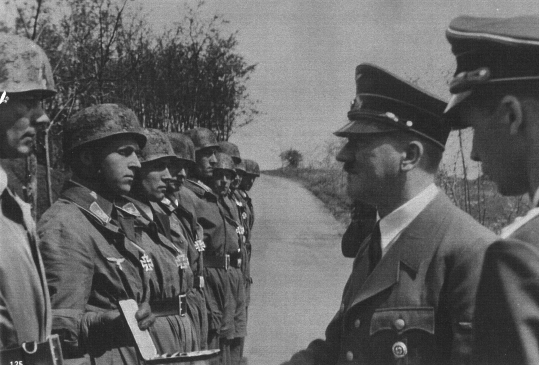
This wartime postcard shows
the Officers of Sturmabteilung Koch being presented the Ritterkreuz for
their part in the assaults on Eben Emael and the bridges over the Albert
Canal on May 10th 1940. The photo was taken on May 16th at Führerhauptquartier
"Felsennest", 50km south west of Bonn.
From left to right: Hauptmann
Walter Koch, Oberleutnant Rudolf Witzig, Oberleutnant Gustav Altmann, other
officers present are: Oberleutnant Otto Zierach, Oberarzt Dr. Rolf Jäger,
Leutnant Egon Delica Leutnant Helmut Ringler, Leutnant Joachim Meissner,
Leutnant Gerhard Schacht. Not present was Leutnant Martin Schächter,
WIA.