 |
OF A HERO |
|---|
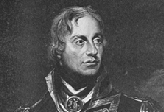
When HMS VICTORY dropped anchored in Portsmouth in Dec of 1805 it to was to bring home, for the last time, one of England's greatest heroes. The vessel found the land gripped in preparations for what was to be the first State funeral for a commoner. So great was the grief that covered the land that from the meanest person to the highest royal, tears did not seem enough for this man. As with today when someone important dies it seems to almost always be a morning notification. So it was with the announcement of a great victory and the death of the person who made this victory possible.© 1997 Jane BuchmannIt was one am on Wednesday, the 6th of November in 1805 when the First Sea Lord, Lord Barham, was awakened with news from Admiral Cuthberth Collingwood. On hearing the news he send messages to the Prime Minister at 10 Downing Street and the King at Windsor Castle. William Pitt, The Younger was torn between grief and the happiness of knowing that, at last, England was freed from any invasion threat to come for many years. With King George the Third, it was a silence that overtook him for a long space of time. The news began to spread throughout the land like waves from a stone thrown into water. But the joy the victory gave the people was followed by a grief so deep that words could not describe it.
For the past 12 years, with a brief moment of false peace England and France were once again doing battle. This time it was France who had set out to conquer all of Europe. She was succeeding except where her plans for the island nation of Great Britain were concerned. There, time after time, France's attempts at invasion met with disappointing defeat. Even to land forces on the rebellious island of Ireland met with failure. Now, in the summer of 1805 the Emperor Napoleon saw what could be his last change to bring England under his control.
Over the past two years plans had been made, only to be discarded, concerned the fleet kept at bay in Toulon. During this time the English Mediterranean fleet under command of Lord Admiral Horatio Nelson kept a loose blockade on the French fleet there in the hopes of drawing it out to sea and into battle. A few times the French would attempt to sneak out only hurry back into port because of weather or poor sailing by the ships involved. Then, on March 30th, 1805 began what would be one of history's longest chases.
The French Admiral Latouche-Treville who commanded the Toulon fleet had died. It was said that his death was caused by climbing the signal tower to watch the British vessels once to often. His replacement was none other than Vice Admiral Pierre de Villeneuve. This French admiral had witnessed the defeat and destruction of his fleet at Aboukir Bay by Lord Nelson and his "band of brothers". Villeneuve was determined not to let a repeat of this happen again. Napoleon was planning on sending his fleet out to the West Indies in order to lore Nelson away from European waters. Once this was done another joint French-Spanish fleet would sweep the English Channel clear of the Royal Naval vessels stationed there, thereby opening up a chance for land forces to cross the channel and finally invade England. But Napoleon, a genius on land was at a lost to understand even the simple tactics of seamanship. He sent orders to his naval forces that caused their commanders to either take to drink or resign.
Meanwhile Nelson had set up a base of operations at Madelena on the island of Sardinia. Here he sent ships in rotation to take on supplies, and give the men some time on land. Nelson himself was here when news reached him on April 4th that Villeneuve was out and running. The question was where? Nelson had it in his mind that the French would try for another landing at Egypt. Therefore he worked his fleet in a Eastward direction. While Nelson moved east, Villeneuve moved out of the Mediterranean Sea across the Atlantic to the French held island of Martinique. Here he was to join up with other French fleets sail back across the Atlantic and sweep the English Channel clear of British forces. But as things turned out only Villeneuve arrived.
It wasn't until the 18th that Nelson finally learned the Villeneuve had passed through the Straits of Gibraltar. Now knowing where the French fleet was proved no help as mother nature joined the French side by sending a wind that kept Nelson in the Mediterranean. Here he experienced the frustration of depending on the forces of nature to move his ships. But by the 20th Nelson's fleet was within sight of Gibraltar. And it was here on May 5th that Nelson stopped to take on supplies. With the news he received here he now knew that the French were heading for the West Indies.
As for Villeneuve, he stayed in the West Indies creating havoc for just over a month until he got word that Nelson was coming for him. Without waiting for the other fleets to join him Villeneuve headed back to Europe with the English bloodhound hot on his trail. Those in England wondered where Nelson was. Wondered where the French were. There was great concern all around. Then, from out of nowhere, the French appeared and headed for Vigo. Nelson showed up a short time later, learned where Villeneuve was, turned his fleet over to Collingwood and returned home for some much deserved leave at his home in Merton. Leave was short as the French sailed for Cadiz to join the Spanish forces there. Nelson rejoined the English fleet off Cadiz on September 28th. Just one day before his 47th birthday. He wisely ordered no guns to be fired on his arrival as this would tell the enemy he had arrived. He wanted the commanders of the Combined Fleet to believe he was still in England.
A stalemate existed until Napoleon forced Villeneuve to sail and on Oct 21 just off the Cape of Trafalgar in Spain the combined fleets of Spain and France were finally forced to fight Nelson and his fleet. While the destruction of the enemy fleet ended once and for all France's plans for invading England, it came at a great cost. Nelson, himself died.
Now, England did much to honor to her fallen hero. As with the death of Diana, Princess of Wales, so to did grief overtake the English people. Strangers met on the street and consoled one anther. Papers issued and reissued accounts of the battle and the hero's death. New songs were created. Old ones were rewritten to add verses of England's lost. Nelson had been popular while he lived. He was a commoner who rose to the peerage. As with Diana, John Bull could relate to Nelson and his background. True he had been naughty in that he took a mistress and left his wife. His critics seem to hang about waiting for a mistake so they could take Nelson to task. But he had brought England one victory after another. He stood off the Downs after Copenhagen to ease the fears of his fellow countrymen. He was an honest man. Ready to help any in need. He showed compassion to his men. Inspired them to serve the fleets that basically held them captives. He loved to walk about the crowds receiving their cheers and cheering them up. While he was vain, he knew his honors came from the men who served him. He loved his country, loved the monarchy and often said he would die in a great battle saving England. This he did. As with today when England and world are overcome with grief over the death of Princess Diana, England turned to religion and to laying to rest their fallen hero.
When the VICTORY arrived at Portsmouth she was ordered to the Nore. There Nelson's body was placed in an iron coffin and taken to Greenwich. Here in the Green Room he lay in State as thousands of his fellow countrymen filed past to paid their respects to the savior of their country. Then on January Th he was carried to the Admiralty where he laid in the Captain's room. By this time crowds were already lining the street to view the procession. Stands were build and tickets sold for some of the best seat. 31 admirals, along with Admiral of the Fleet Sir Peter Parker, one of Nelson's superior officers in his younger days gather to follow the body. Lord St, Vincent in poor health to begin with,, was so overcome by his friend`s death that he could not attend. 100 captains followed the admirals. The Royal family was represented by the Prince of Wales and his brother, another life time friend of Nelson's, the Duke of Clarence. He was often overcome with grief throughout the course of the day. Along with his friends of the service Lord Hood, Sir Samuel Hood, Captain William Bligh, and Captain William Domett. Domett had been Nelson's Captain of the Fleet at Copenhagen where Bligh also served with his Lordship. Two of Nelson`s personal enemies even paid attendance on him; Sir John Odre, who had always been jealous of Nelson to the point where he challenged Lord St. Vincent to a duel over St. Vincent's selection of Nelson to lead the fleet that fought at the Nile, and Sir Robert Calder, whom Nelson befriended and defended a few times. The last ocassion was on the eve of the battle of Trafalgar when Calder insisted that Nelson allowed him to go home to face a court martial over his actions a few months before when he failed to stop Villenvue from returning to Europe. Nelson, against his own better judgement allowed Calder to leave taking with him his flagship. A vessel the English forces could well use. But Nelson understood the need for Calder to return home in his own ship.
For the first time in history St. Paul's bell rang out the minutes as the military bands played Handel's Dead March. Statemen, Admirals, peers of the realm and heralds, all joined Nelson's family in their coaches to wind their way to St. Paul's. Some 48 sailors from Victory carried her Ensign. For the public to see the shot holes in it. So long was the procession that the end was leaving the Admiralty while the head was arriving at the cathedral. The service started at 2pm and was not over until nearly 6pm. It was was quite emotional and when at last the coffin was placed in the crypt, the VICTORY sailors tore the White Ensign in pieces so that they could each have something to remember the day by. One observor of the funeral was Villenuve, himself. He was on parole from Winchester. What were his thoughts as he watch the man who twice defeated him soundly laid to rest?
As was the custom of the day Lady Nelson did not attend. Neither did Lady Hamilton. Since receiving the news of Nelson's death and victory early in November his family experienced such a emotional strain that most took a long holiday after the funeral to recover. His older brother William became the second Lord Nelson. Just about all family members received honors and pensions. Lady Nelson retired from life and spent her remaining years honoring her husband's memory. Lady Hamilton entered a life of alcoholism and debt and died still brokenhearted over her lover's death ten years later in Calais, France. Nelson's daughter, Horatia, by Emma Hamilton went to live with his sister's family after her mother's death. For years she refused to believe that Lady Hamilton was her mother until the letters of Nelson and her ladyship were made public. Many of Nelson naval friends went on and followed his order to do their duty to their country.