The Attack on New Providence
 In July 1775 His Majesty`s ship FALCON and two transports arrived at
New Providence to remove the cannon, shot and powder from the forts
Nassau and Montague which protected the port. The President and the Council,
in the absence of the Governor, and with the backing of the inhabitants,
refused permission. This decision was made in spite of the fact that the
only regular troops, a company of the 14th regiment, had been withdrawn and
the only force in the island consisted of a militia armed with little more
than fowling pieces.
On Sunday morning the 3 March 1776 the American squadron appeared off the
Island and Governor Browne summoned the militia to Fort Nassau to defend the
passage over the bar. However the frigates and brigs anchored at Hanover Sound,
some three leagues to the east and started landing about 250 - 300 men. The
force of 40 militia from Fort Montague sent to repel them soon returned and the
Governor decided to evacuate the fort, after spiking the guns, and concentrate
in Fort Nassau. In a council of war he discovered that only 10 out of 24 thought
that the place was defensible and by this time desertions amongst the militia
soon meant that he with the Council and the Officers were the only defenders
remaining.
About 160 barrels of gunpowder were got out of the fort and sent to safety
in St. Augustine on board a sloop belonging to Capt. William Chambers, and
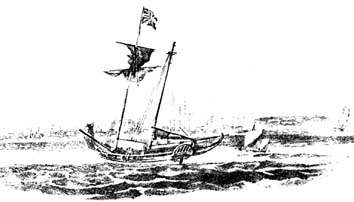
the only Royal Naval vessel, the armed sloop St John, Lieut. William Grant,
being too small to influence the situation, was sent to sea to search for
other British vessels and carry news of the attack.
The Americans proceeded to dismantle the forts and removed all the servicable
parts - cannon, shot, powder and stores.
 More details The Governor was imprisoned in his
house under an armed guard which dragged him on board the ALFRED on the 12th.
Four days later the squadron sailed with a half pay lieutenant, James Babbidge,
and the Receiver General of South Carolina, Thomas Irving, as additional
prisoners.