Patrick Brunty was born the eldest of 10 children in Emdale, County Down, Ireland, on 17 March 1777. Born into a peasant family in impoverished circumstances from an early age he was driven by an intense desire to succeed, to rise above his humble birth and make something of himself. Taken under thewing of a curate at Drumballyroney Church he largely educated himself and taught others in the parish school, earning respect as a Sunday school teacher and stunning everyone by winning a scholarship to Cambridge University at the age of 25.
Theology would be Patrick Brunty's escape hatch from the abject, subsistence existence of his community, holy orders the easiest way of transgressing a class system on which he occupied the lowest rung, a position all the more hobbling being Irish in an Anglo-centric society. Accepted into St. John's College, Cambridge, in 1802 he started his transformation by signing the student register as Patrick Brontė not Brunty, completing the metamorphose from rural peasantry to member of the ruling class, poor boy made good, by graduating with a bachelors degree in 1806 and title of Reverend after ordination into the Church of England.
Although the general consensus amongst Brontė biographers, literary historians and enthusiasts is that Patrick Brunty, inspired by Lord Horatio Nelson, changed his surname to Brontė in honour of his being ennobled with the Italian title Duke of Bronte in Sicily in 1799 by King Ferdinand of Naples for ridding the Mediterranean of the French fleet, doubt remains. What evidence is there to support this theory?, were there other motives or possible inspirations for Patrick Brunty modifying his surname? Although Nelson was regarded as the greatest sailor of his generation, a national hero of great stature, does this automatically justify the belief the amendment of his name was in Nelson's honour?. The simple answer is no, he never made a big deal of the fact he had changed his name nor did he tell anyone Nelson was the motivation behind him doing so. Although like everyone else of his generation he had great respect for the hero of Trafalgar one is forced to ask why, if he hero worshipped Lord Nelson to that extent, he named his son Patrick Branwell and not Horatio, Nelson or at the very least incorporated one of those names into his only begotten sons?. Brontė enthusiasts have in their rush for romantic intrigue overlooked the role his love of classic literature may have played in the transition of Brunty to Brontė. For Patrick Brunty's generation ancient Greece was looked upon as the cradle of western civilization, the essence of the world, this belief was the bedrock of an Oxbridge education and the educated classes were as conversant in Grecian mythology and the works of Plato, Homer and Aristotle as people today are the plots of soap operas and movies. After graduation one of Patrick's early positions was as Examiner in the Classics at Woodhouse Grove School, near Bradford, and prior to winning his scholarship he was an avid reader. Throughout his long life he used literature as a means of escape from the humdrum of his frustrated existence, retreating into his books at times of turmoil for solace.
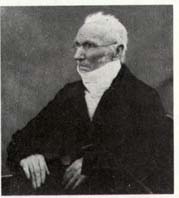
Patrick Brontė
He would have been aware that in ancient Greek mythology there was a demi god known as "Brontes" regarded as "the personification of Thunder", born to Gaea & Uranus. The village of Bronte in Sicily, where Nelson was bestowed an estate as part of his dukedom, sits in the shadow of the western slope of Mt. Etna and was named Bronte in deference to this Greek god, interpreted locally to mean "thunder" or "the god of thunder" whose volcanic rumblings can still be heard. The similarity between his surname and Greek mythology would have been something more likely to tickle the eccentric theologians fancy then a title bestowed on a naval hero, he may well have been attracted by the fable of Brontes considering his infamous Irish temper. The dieresis "ė" in Brontė is historically and grammatically incorrect, it is not derived from the ancient Greek, nor do Italian maps list the town of Bronte in Sicily as Brontė. It's origin is in the vernacular, resulting from a misinterpretation of Greek mythology, an incorrect presumption Brontes was plural whereas it's singular.
However in the final analysis the desire of Patrick Brunty to change his name to Brontė had a lot more to do with discontentment, a desire to recreate himself, to rise above the class into which he was born by severing links to his Irish peasant origin. The dieresis, which is not part of the Greek, Sicilian or English alphabet, providing the illusion of continental glamour for a young man with high hopes and class pretension but destined to live and die a failure in rural obscurity. Having unwisely sided with textile mill owners against local workers during the Luddite Riots (1811-1816) in a classic lower class cringe, trying to ingratiate himself with his social betters. Yorkshires exploited working class never forgave or forgot his betrayal and he remained all but disconnected from parishioners, living like his children in isolation, his only claim to fame being the progenitor of a great literary family he was essentially estranged from and outlived by the time he died in 1861. Changing his family name was part of his struggle to bury an unsatisfactory past and create a new life and identity, a tear soaked travail of the soul his doomed children: Charlotte (1816-1855), Emily (1818-1848), Anne (1820-1849) and Branwell (1817-1848) were also cursed to tread, sadly unsuccessfully.
Did Lord Nelson's being ennobled with a Sicilian dukedom with a similar sounding name motivate Patrick Brunty to change the spelling of his surname, or was it his love of the classic's which provided the primary ember we will never know for certain. However it's feasible it was a combination of both as their duality is inescapable, but in either case it's only part of the overall story certainly not the totality or exclusive motivation, with or without these purported sources of inspiration he would have still had the deep-seated desire to change his surname and would likely have chosen another variant of Brunty without an Irish nuance.
© John Godl 2001 Email: [email protected]