Early Projects and PrototypesLeichte Traktor - Grosstraktor I / II / III - Neubaufahrzeug PzKpfw V / VI
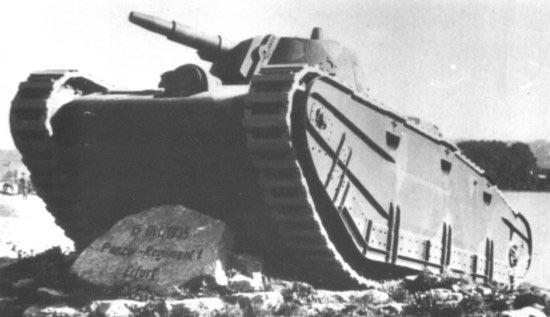
at the barracks of Panzer Regiment 1 in Erfurt.
Since 1926 till 1929, at least 146 officers finished the training school at Kama. The most famous "cadet" was Von Kleist. The person responsible for the training in Germany was Gen. Lutz and in USSR, the NKVD Komissar Unshlicht. All the German "tractor" prototypes were on trial at Kama Proving Grounds. The training program was quickly finished at the beginning of 1929. A very interesting thing - the training was not under the control of the NKO (Ministry of Defence), but under the control of the NKVD ( Ministry of State Security). The German pilots were at the same time on training in Lipetzk Military Air School and the officers of the Chemical defence in Astrachan Military School of the Chemical Warfare. At least 500 officers graduated succesfully from these two schools. In 1939, USSR purchased samples of the all German AFVs. They were put on trials and the comission came up with the verdict that they had poor reliability. The opposite "verdict" was made concerning Me-109, which was purchased at the same time. The pilots said that it was better than Soviet fighters.
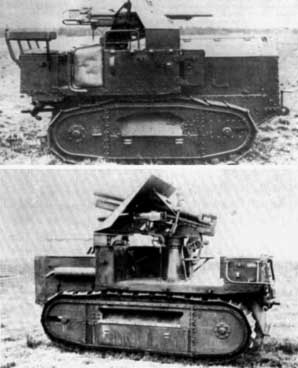
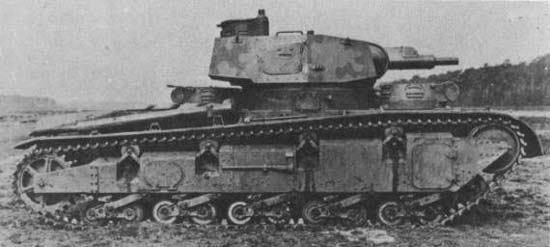
Development of light tanks was initiated in May of 1928 and in October of 1928, Krupp and Rheinmetall-Borsig were ordered to design light tanks. The vehicle was to be based on the chassis that could be also used as a base for a self-propelled mount for 37mm gun, armored supply carrier and tractor. Krupp in co-operation with Rheinmetall-Borsig began work on three prototypes. Krupp produced 4 men prototype powered by 6 cylinder 100hp Daimler-Benz M36 truck engine. Rheinmetall's 4 men prototype was powered also powered by Daimler-Benz M36 truck engine. Both designs had very similar specifications and were very similar in their design with the main difference being the suspension. Krupp used coil springs, while Rheinmetall used leaf springs suspension. Both vehicles known as Leichte Traktor (VK 31) were armed with 37mm KwK L/45 and light machine gun mounted in a turret (designed and produced by Swedish AB Landsverk and Bofors) mounted in the rear. Prototypes were ready in April and May of 1930 and two Krupp and two Rheinmetall vehicles were then tested in Kama in June of 1930. Rheinmetall-Borsig also produced third (mild steel) prototype, which was a 3 men self-propelled mount for 37mm Pak L/45 gun. This early Panzerjager was basically the same as the tank version with main difference being smaller turret and modified superstructure. Leichte Traktor vehicles proved to be successful during tests and were used for training purposes at Kama but were seen as not totally suited for combat. From 1931 to 1932, Rheinmetall worked on improving and modifying their prototypes (e.g. new track type and suspension). In 1931, 289 were ordered but in 1932, this project was cancelled in favour of other developments (such as Kleintraktor / La.S) and both Krupp and Rheinmetall produced only 3 prototypes. In 1933, co-operation with the Soviet Union ended and all four vehicles returned to Germany, where they were used for training at Panzer Gunnery School at Alt-Gaarz at Wustrow. Eventually, one of Rheinmetall's prototypes with modified suspension ended up as a monument at Putlos.
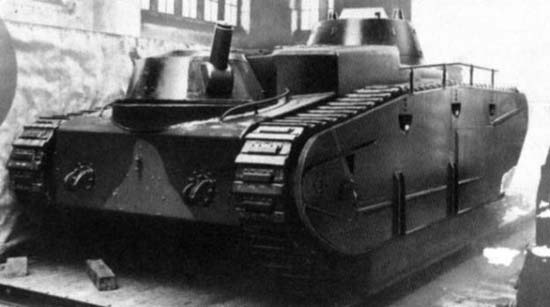
In 1925, Rheinmetall-Borsig, Daimler Benz and Krupp were ordered to design medium (heavy) tanks - codenamed Armeewagen 20 (Army Car 20). The following specifications were to be fulfilled: length of 6m, width of 2.4m, 75mm gun mounted in a rotating turret and weigth of 15tons. Each company was to produce two mild steel (6-14mm) prototypes disguised as commercial vehicles. Krupp designed their own turret, while Rheinmetall designed a turret to be mounted on their own design and that of Daimler-Benz. Work started in 1925 and tests were planned for 1929/30. Daimler Benz's Grosstraktor I was designed by Dr.Porsche and was armed with single 75mm KwK L/24 gun and three to four 7.92mm schwere MGs. It had amphibious capabilities and was powered by Daimler M182206, 6-cylinder gasoline engine with total power of 255(260)hp. It had a leaf springs sophisticated suspension and hull design. Only two mild steel prototypes were built in 1929 (nr.41) and 1930 (nr.42) and were secretly tested. It appears that one of the prototypes was rearmed with a longer version of 75mm gun. Both vehicles had problems with their transmissions and their testing was limited.
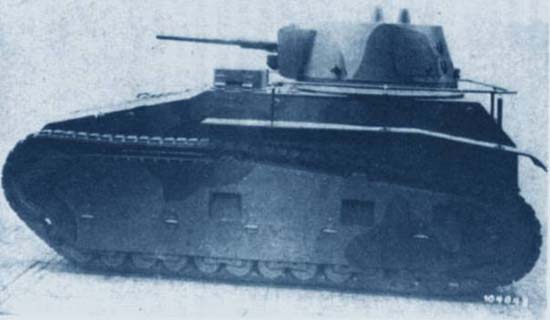
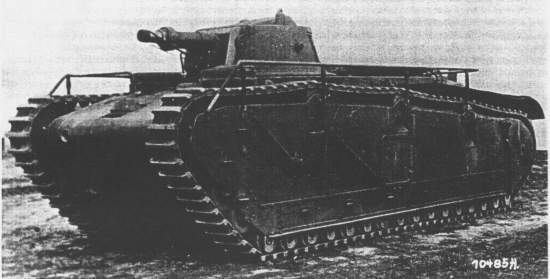
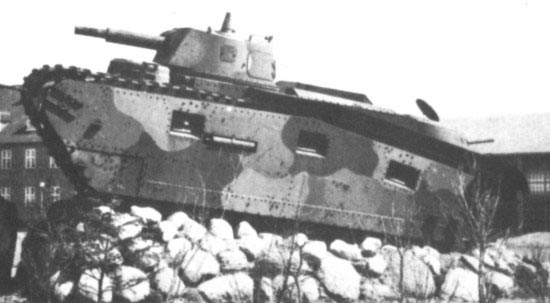
Rheinmetall-Borsig's Grosstraktor II was armed with single 75mm KwK L/24 gun and three to four 7.92mm schwere MGs. Its overall design was simpler from that of Grosstraktor I, it included side access doors and also had amphibious capabilities. Only two prototypes were produced, first in 1928 (nr.45) and the second one in 1929 (nr.46), while both were then modified in 1930, 1932 and 1933. Rheinmetall's design was powered by 6-cylinder BMW Va engine with total power of 250hp. Krupp's Grosstraktor III was also similar to other designs but differed with many detail differences. Also only two prototypes were produced, first in 1928 (nr.43) and the second one in 1929 (nr.44), while both were then modified in 1931. Both vehicles had coil springs suspension and their weight (16-16.4tons) and speed (40-44km/h) depended on the prototype. In general, all were similar in design to British Medium Tank Mark III and Medium Tank Mark C.
at the barracks of Panzer Regiment 5 in Wunsdorf, 1937. None of those prototypes entered production due to numerous problems and defects encountered during tests. In 1933, after completed test and completed co-operation with the Soviet Union, four functional vehicles returned to Germany. Krupp and Rheinmetall-Borsig prototypes were used for training purposes in continuation with work started at Kama. Eventually, they were handed over to the 1st Panzer Division and took part in maneuvers in August of 1935. Both Daimler-Benz Grosstraktors ended up as monuments at 1st Panzer Regiment headquarters at Erfurt and 5th Panzer Regiment headquarters at Wundsdorf. After 1935, remaining four prototypes were used for training purposes at Panzer Gunnery School at Putlos. In 1937, one of Krupp and Rheinmetall Grosstraktors ended up as a monument at 5th Panzer Regiment headquarters at Wunsdorf. The remaining two were either scrapped or used for target practice. Grosstraktors were extensively tested and lessons learned from them provided the German designers with valuable experience, which was then used in the direct development of Neubaufahrzeug and eventually of other designs. Another of early German armored fighting vehicles was Räder-Raupen Kampfwagen M 28 (GFK). The vehicle was designed by Merker in 1928 and was a light tank with a switchable running gear. The vehicle was developed for Swedish Landsverk (partially owned by the Germans) and six prototypes were produced. Single one was tested at Kama in 1930, but the vehicle proved to be problematic. Germans were not interested in continuation of the development and in 1929, further development took place in Sweden by Landsverk. Based on Räder-Raupen Kampfwagen M 28 (GFK) in 1931, Landsverk produced few L-30 (Strv fm/31) and in 1933, L-80 prototype. numbers and
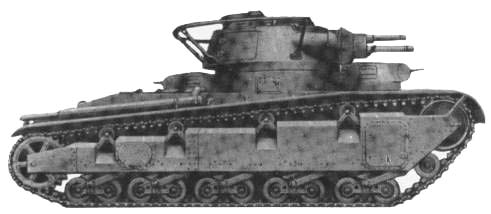
Development of new medium tank started in October of 1932 and in 1933, Army High Command (Reichswehr) granted a contract for a development of "heavy tractor" (Grosstraktor). Both Rheinmetall-Borsig and Krupp were ordered to develop heavy tank and both provided their designs. At first vehicles were designated as PzKpfw VII (PzKpfw IV neu Art), but in October of 1933, they were designated as Neubaufahrzeug ("Newly Built Vehicle"). Rheinmetall's Model A and Krupp's Model B were very similar in their overall design and mainly differed in the armament and arrangement of the weapons mounted in the turret. Rheinmetall's (PzKpfw NbFz V) design had 37mm Tankkanone L/45 installed over a 75mm KwK L/24 and Krupp's (PzKpfw NbFz VI) design had 37mm Tankkanone L/45 installed beside 75mm KwK L/24. Both designs had two slightly modified Panzer I's turrets armed with machine guns (one mounted in the front and other in the rear). Those two tank designs were to complete the family of standardized German tanks.
PzKpfw NbFz V and VI's designs were very similar to the British Vickers "Independent" tank, Soviet T-35, French Char-2C and proved to be too complex to produce and did not perform as expected. Only two (designated Nr.1 and Nr.2) mild steel prototypes were built by Rheinmetall in 1934 and three more armored prototypes (designated Nr.3, Nr.4 and Nr.5) in 1935/36. NbFz Nr.1 was the only one mounted with Rheinmetall's turret armed with 37mm Tankkanone L/45 installed over a 75mm KwK L/24 gun and turret mounted frame antenna. Other four vehicles were mounted with Krupp's turret armed with 37mm Tankkanone L/45 installed beside 75mm KwK L/24, while 105mm KwK L/28 gun was planned. In August of 1935, Nr.1 and Nr.2 took part in the exercises of a Panzer Division, while the other three were extensively tested on the proving grounds at Putloss in 1935 and 1936. In 1937, it was decided to convert NbFz tanks to Nebel Panzer armed with 105mm gun able to fire smoke ammunition, but there is no further evidence. At that time the German Army wanted to gain experience with multi-turreted tanks but soon this project was cancelled in favour of the Panzerkampfwagen IV development which would eventually become the main battle tank of the Panzertruppe. Overall multi-turreted tanks were inferior to German designs and tactics which relied on high mobility rate instead of firepower. In Spring of 1939, Krupp's PzKpfw NbFz VI was shown at the International Automobile Exposition in Berlin.
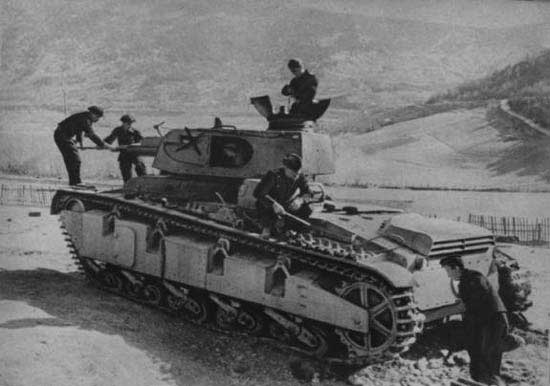
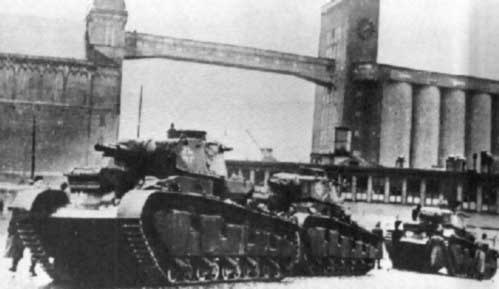
Three (with Krupp turret) of the five saw service with Panzer Abteilung zur besonderer Vervendung 40 in Norway in 1940. All three formed platoon size unit known as Panzerzug Horstmann / Zug Putloss, commanded by Lieutenant Hans Horstmann. They arrived in Oslo on April 19th of 1940 and gave the appearance of Germany having heavy tanks. Two served with PzAbt zbV 40, while the thirdserved with 196th Infantry Division. This particular vehicle was immobilized but not destroyed by the British soldiers (see "The History of a Rare Panzer" below), while one of two from PzAbt zbV 40, drove into the swampy area at Andalsnes and got stuck and was eventually blown up by the German engineers (that explains "The History of a Rare Panzer" below).On May 16th, the lost Nbfz was replaced by one of the mild steel prototypes and PzAbt zbV 40 had once again three NbFz tanks.It is known that PzAbt zbV 40 was stationed at Akershus Fortress (Oslo) in Norway in 1941 and then in Finland in 1942, but it seems that NbFz tanks never left Norway and were eventually captured by the Allies in 1945 and then scrapped.
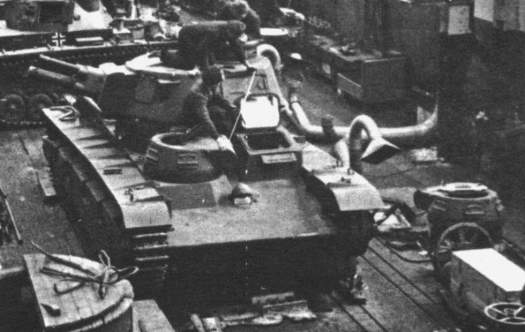
Picture provided by Bjørn Jervås. German source states that NbFz tanks were part of von Kleist's 1st Panzer Gruppe on the Eastern Frontand that one of them was destroyed near Dubno on June 28th or 29th of 1941. Another source states that other two were destroyed near Romanian border in June of 1941. It is also reported that both returned to Germany in November of 1941. The only photographic evidence is that from Krupp factory from mid 1942, where one of Nbfz (Nr.1) tanks is being repaired with Sturmgeschutz III(40) assault guns on production line in the background. Probably one of two mild steel prototypes built in 1934 remained in Germany for tests and was eventually scrapped in 1941. The development of Leichte Traktor, Grosstraktors and Neubaufahrzeugs provided German designers and manufacturers with valuable experience in designing and producing the next generation of more powerful panzers that were soon to come.
Specifications for Krupp Design - PzKpfw NbFz VI
The History of a Rare Panzer. |
 |